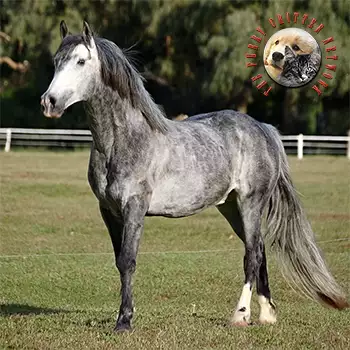

Origins & Development

The Paso Fino traces its ancestry to the horses brought to the Americas by Spanish conquistadors during the early sixteenth century. These foundation horses were a blend of Andalusian, Barb, and Spanish Jennet stock, each contributing qualities of endurance, refinement, and smooth lateral gaits. When Christopher Columbus arrived in the Caribbean on his second voyage in 1493, he carried horses aboard his ships, and these animals became the seed stock from which many New World breeds would eventually emerge.

Spanish settlers quickly recognized that certain horses within their herds possessed an unusually smooth, natural four-beat lateral gait that made long hours in the saddle far more comfortable than riding a trotting horse. Over successive generations, selective breeding in Puerto Rico, Colombia, and other parts of Latin America refined this trait until it became a defining hallmark. The gait was not taught but inherited, appearing in foals from their very first steps.

The isolation of island and mountain populations played a critical role in fixing the gait genetically. In Puerto Rico, breeders developed a strain emphasizing collection and finesse, while Colombian breeders favored a slightly taller, more forward-moving horse known as the Colombian Paso Fino or Trocha variant. Despite regional differences, both lines shared the same Spanish ancestry and the same remarkably smooth way of going.

By the mid-twentieth century, the breed had developed into a well-established type throughout Latin America, prized by landowners and plantation managers who spent long days on horseback overseeing crops and cattle. The Paso Fino was a working horse first and foremost, valued not only for its comfort but for its stamina, surefootedness, and ability to navigate difficult terrain without exhausting rider or mount.

Historical Roles

For centuries the Paso Fino served as the primary mode of transportation across the mountainous and often roadless interiors of Puerto Rico, Colombia, Venezuela, and other Latin American countries. Plantation owners relied on these horses to travel between fields and settlements, and the smooth gait allowed riders to cover long distances without the fatigue associated with posting a trot or absorbing the jarring impact of a rough-gaited horse.

In Colombia, the Paso Fino became deeply embedded in the culture of the coffee-growing regions, where narrow trails wound through steep hillsides and a surefooted mount was not a luxury but a necessity. Farmers used Paso Finos to transport harvested coffee and supplies, and the horse's compact build and careful foot placement made it ideal for the terrain. The breed was similarly essential in cattle ranching operations throughout the Caribbean basin.

Military history also intersected with the Paso Fino's story. During various conflicts in Latin America, officers and cavalry units valued gaited horses for their ability to carry riders smoothly over rough ground, allowing commanders to remain alert and comfortable during extended campaigns. While the breed was never the primary cavalry horse of any national army, individual Paso Finos served with distinction in regional conflicts.

The breed's role began to shift in the twentieth century as roads and automobiles reduced the practical need for riding horses. However, the Paso Fino transitioned smoothly into the world of pleasure riding and competition, carrying forward its centuries of utility into a new era of appreciation for its beauty, temperament, and incomparable gait.

Cultural Symbolism

In Puerto Rico the Paso Fino is considered a national treasure and a living symbol of the island's cultural heritage. The breed appears in folk art, traditional music, and regional festivals, and owning a fine Paso Fino carries deep social significance. Annual fiestas patronales across the island frequently feature Paso Fino exhibitions, where horses are paraded through town squares and riders wear traditional attire reflecting centuries of equestrian custom.

Colombia shares a similarly intense cultural connection with the breed. The Feria de las Flores in Medellín and other regional ferias include elaborate cabalgatas, or horse parades, in which thousands of riders on Paso Finos fill the streets. These events are celebrations of regional identity, and the Paso Fino stands at their center as a symbol of pride, tradition, and craftsmanship in horse breeding.

Beyond the Caribbean and South America, the Paso Fino has become a cultural ambassador for Latin equestrian traditions in North America and Europe. Demonstrations at international horse expos often introduce audiences to the breed's signature gait, and many spectators are struck by the combination of animation, smoothness, and rider composure that defines a well-trained Paso Fino under saddle.

The breed also carries symbolic weight in discussions about the preservation of heritage livestock. Advocates argue that the Paso Fino represents centuries of careful selective breeding and cultural knowledge that could be lost if the breed's gene pool is not actively maintained and protected. This perspective has fueled conservation breeding programs and registry efforts on both the island of Puerto Rico and the mainland United States.

Breed Clubs & Standards

The Paso Fino Horse Association (PFHA) is the primary breed registry in the United States and was founded in 1972 to promote, register, and preserve the Paso Fino breed. The PFHA maintains a studbook, sanctions shows, and publishes breed standards that define the ideal conformation, gait mechanics, and temperament expected of a registered Paso Fino. Registration requires proof of parentage from approved bloodlines, and the association offers both full and conditional registration pathways.

In Puerto Rico, the Federación del Deporte de Paso Fino de Puerto Rico oversees breed competitions and works closely with the island's breeders to maintain the purity and quality of the Puerto Rican strain. Colombian Paso Fino breeding is governed by Fedequinas, the Colombian federation that manages one of the largest gaited-horse registries in the world. Each organization has its own subtle variations in breed standards, reflecting the regional differences in type that have developed over centuries.

The breed standard across registries emphasizes a refined head, well-arched neck, strong and compact body, and clean legs with dense bone. However, the gait is paramount. Judges evaluate the regularity, timing, and evenness of the four-beat lateral gait, often using a sounding board — a wooden platform placed in the show ring — to amplify the footfalls so that the rhythmic precision of the gait can be heard as well as seen.

International collaboration between breed organizations has grown in recent decades, with efforts to harmonize judging criteria and facilitate the exchange of breeding stock across borders. These partnerships have helped raise the breed's profile globally while preserving the genetic diversity that sustains the Paso Fino's most valued traits.

The Breed Today

Today the Paso Fino enjoys a dedicated and passionate following across the Americas and increasingly in Europe and other parts of the world. In the United States, the breed is represented at hundreds of sanctioned shows each year, ranging from small regional events to the PFHA Grand National Championship, which draws top horses and riders from across the country. The show circuit evaluates horses in a variety of classes including Bella Forma (conformation), Classic Fino (the most collected and refined gait), Performance Paso (a faster and more forward gait), and Pleasure classes that emphasize trail-readiness and manners.

Beyond the show ring, the Paso Fino has found enthusiastic adoption as a trail and pleasure mount. The smooth gait makes the breed especially popular among riders with back or joint issues who find trotting breeds uncomfortable, and the typically willing and people-oriented temperament of the Paso Fino endears it to amateur and recreational riders alike. Endurance riding, mounted shooting, and drill-team exhibitions have all seen growing Paso Fino participation.

Breeding programs in the United States continue to draw on both Puerto Rican and Colombian bloodlines, and some breeders specialize in crossing the two strains to produce horses that combine the collection and refinement of the Puerto Rican type with the size and forward movement of the Colombian type. This practice is not without debate, as purists on both sides argue for maintaining the integrity of each distinct line.

The breed faces challenges common to many heritage and specialty breeds, including competition for market share with larger and more widely known breeds, the cost of maintaining quality breeding programs, and the need to attract younger riders to ensure the breed's future. However, the Paso Fino's unique combination of history, beauty, and functional comfort keeps it firmly established as one of the most distinctive and cherished horse breeds in the world.

Notable Individuals

Throughout the breed's history, certain individual horses have achieved legendary status for their contributions to the Paso Fino gene pool and the show ring. Dulce Sueño, a Colombian-bred stallion imported to the United States in the mid-twentieth century, is widely regarded as one of the most influential sires in the American Paso Fino breeding program. His offspring demonstrated exceptional gait quality and conformation, and his bloodline remains prominent in pedigrees today.

Capuchino, a Puerto Rican-bred stallion, became one of the most celebrated Classic Fino horses in PFHA show history. Known for his extraordinary collection, rhythm, and presence, Capuchino earned multiple Grand National titles and sired a generation of horses that dominated the Classic Fino division for years. His legacy is a touchstone in discussions of what defines excellence in the breed's most refined gait.

Beyond individual horses, certain breeding farms have shaped the breed's trajectory in the United States. Ranches in Florida, Texas, and the southeastern states became hubs of Paso Fino breeding in the late twentieth century, and their programs drew on the best bloodlines available from Puerto Rico and Colombia to establish the breed on the mainland.

The contributions of individual breeders and trainers deserve recognition as well. Dedicated professionals who traveled to Latin America to study the breed firsthand and brought knowledge, horses, and breeding philosophies back to the United States played an essential role in building the infrastructure of registries, shows, and educational programs that support the breed today. Their collective efforts transformed the Paso Fino from a regional treasure into an internationally recognized breed with a growing global community of admirers.

Always consult a qualified professional before making any health-related decisions. This content is provided for informational reference only and should not replace professional guidance specific to your animal.