
Origins & Development

The Irish Draught evolved over centuries on the farms of Ireland, shaped by the practical demands of rural Irish life rather than by any single deliberate breeding program. The breed's ancestors included native Irish horses, Anglo-Norman warhorses brought to Ireland during the medieval period, and Iberian horses that arrived through trade and the aftermath of the Spanish Armada. This blend of influences produced a versatile, sound horse that could plow fields during the week, pull a cart to market, and carry a rider to hounds on the weekend.

Ireland's climate and terrain played a significant role in shaping the breed. The mild, wet conditions and the prevalence of rough, hilly pasture selected for hardiness, strong bone, and the ability to thrive on modest forage. Irish farmers could not afford to keep separate horses for different tasks, so the horse that survived and was bred from was inevitably the one that could do everything adequately and many things well.

The breed developed without formal registry until the early twentieth century, when the Irish government recognized the need to document and preserve the country's native horse stock. The first Irish Draught studbook was established in 1917, and inspections were conducted to identify and register mares and stallions that met the emerging breed standard. This formalization came at a time when the breed's numbers were already under pressure from mechanization and the disruptions of war.

The Irish Draught's development was also shaped by the tradition of crossing it with Thoroughbreds to produce the Irish Sport Horse, a practice that has both sustained and threatened the purebred population. While the crossbred offspring have achieved enormous success in international competition, the demand for crossing stock has sometimes led to the best Irish Draught mares being bred to Thoroughbred stallions rather than to purebred Irish Draught sires, diluting the purebred gene pool over time.

Historical Roles

The Irish Draught was, for centuries, the indispensable working horse of the Irish countryside. On small and medium-sized farms, a single Irish Draught might serve as plow horse, cart horse, and riding horse, switching between roles as the season and the day's work demanded. This versatility was not a luxury but a necessity in an agricultural economy where few families could afford more than one horse.

The breed's jumping ability and courage across rough country made it a natural hunter, and the tradition of hunting in Ireland is deeply intertwined with the history of the Irish Draught. Farmers who rode their work horses to hounds on weekends helped select for the athleticism, boldness, and soundness that remain hallmarks of the breed today. The hunting field served as an informal proving ground where the best horses demonstrated their quality under demanding conditions.

During both World Wars, Irish Draughts were among the horses requisitioned or purchased for military service. Their strength, endurance, and calm temperament made them valuable for hauling artillery and supplies, and many were exported to the British and allied armies. The wartime drain on Ireland's horse population was severe, and the loss of breeding stock during these periods contributed to the long-term decline of the purebred Irish Draught population.

The mechanization of Irish agriculture in the mid-twentieth century removed the breed's primary economic role. As tractors replaced horses on farms across Ireland, the number of purebred Irish Draughts plummeted. By the 1970s and 1980s, the breed was recognized as being at serious risk, prompting conservation efforts by the Irish government, breed societies, and individual breeders determined to prevent the loss of Ireland's native horse.

Cultural Symbolism

The Irish Draught holds a unique place in the cultural identity of Ireland, representing the resilience, practicality, and quiet determination of rural Irish life. The breed's history is inseparable from the history of Irish farming communities, and its image evokes a connection to the land, to tradition, and to a way of life that has largely disappeared but continues to shape Irish identity.

In the world of equestrian sport, the Irish Draught is celebrated as the foundation of the Irish Sport Horse, which has become one of the most successful competition breeds in the world. Irish-bred horses, carrying Irish Draught blood, have won medals at Olympic Games, World Championships, and major international events in show jumping, eventing, and dressage. This sporting legacy is a source of considerable national pride and has cemented the Irish Draught's reputation as a breed of exceptional quality and athletic potential.

The breed also symbolizes the broader challenge of preserving indigenous genetic resources in the face of modernization. As Ireland has urbanized and its agricultural sector has transformed, the Irish Draught has become a touchstone for conversations about heritage, biodiversity, and the value of maintaining native breeds. Conservation organizations and government agencies have framed the breed's survival as a matter of national cultural heritage, not merely an agricultural concern.

Irish Draughts are a familiar presence at agricultural shows, breed inspections, and rural festivals throughout Ireland, where they serve as living links to the country's farming past. Their appearance at these events reinforces community bonds and provides opportunities for knowledge transfer between generations of horsemen and horsewomen who share a commitment to the breed's future.

Breed Registries & Standards

The Irish Draught Horse Society, operating under Horse Sport Ireland, maintains the breed's studbook and administers the inspection and registration process for Irish Draughts in Ireland. The studbook was originally established by the Irish Department of Agriculture in 1917 and has been maintained continuously since then, making it one of the most important records of the breed's genetic history.

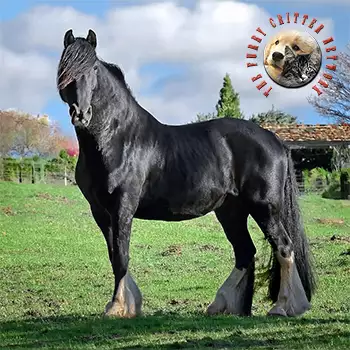
The breed standard describes a strong, well-built horse standing between 15.2 and 17 hands, with clean, hard bone, a well-proportioned head, and a powerful but not coarse body. The Irish Draught should move freely and straight, with natural balance and impulsion. Unlike heavier continental draft breeds, the Irish Draught is expected to show quality and athleticism alongside its substance, reflecting the breed's dual heritage as both a working horse and a riding horse.

Registration involves inspection by approved assessors who evaluate conformation, movement, and overall type. Stallions must pass rigorous performance testing in addition to conformation inspections before being approved for breeding, a process designed to ensure that only horses meeting the breed standard contribute to the gene pool. Mare inspections, while less intensive, also play an important role in maintaining quality and identifying animals suitable for conservation breeding.

Internationally, Irish Draught societies operate in the United Kingdom, North America, Australia, and several European countries. These organizations maintain their own branches of the studbook, coordinate with Horse Sport Ireland on registration standards, and work to promote and preserve the breed in their respective regions. The international network of Irish Draught societies reflects the breed's global appeal and the widespread commitment to its conservation.

The Breed Today

The Irish Draught remains classified as an at-risk breed, with the purebred population significantly smaller than the crossbred Irish Sport Horse population it helps produce. Conservation efforts led by Horse Sport Ireland, the Irish Draught Horse Society, and government-supported breeding incentive programs have stabilized the breed's numbers to some degree, but the purebred population remains vulnerable and requires ongoing attention.

Modern Irish Draughts are found in a wide range of roles. Many serve as foundation breeding stock for the Irish Sport Horse industry, where their bone, temperament, and jumping ability are crossed with Thoroughbred athleticism to produce elite competition horses. Others are valued as riding horses in their own right, prized for their calm temperament, comfortable gaits, and all-around versatility. They excel as hunting horses, trail mounts, and family horses, continuing the tradition of doing many things well.

The breed has gained a growing following outside Ireland, with active breeding communities in the United Kingdom, the United States, Canada, and Australia. International interest has brought new genetic diversity into some populations and has created additional markets for Irish-bred stock. However, the distance between these populations and the challenges of coordinating breeding across borders mean that the global Irish Draught community must work consciously to maintain cohesion and adherence to the breed standard.

Government support for the Irish Draught in Ireland has included premium schemes for approved stallions and mares, grants for DNA testing and pedigree verification, and funding for breed promotion and education. These programs reflect a recognition that the Irish Draught is not merely a breed of horse but a component of Ireland's agricultural heritage and a contributor to the country's internationally successful sport horse industry.

Notable Individuals

Several Irish Draught stallions have had a profound influence on the breed and on the broader Irish Sport Horse population. Donaghmore Donn, a stallion that stood in the mid-twentieth century, is remembered for producing offspring of exceptional quality and for contributing significantly to the gene pool during a period when purebred numbers were dangerously low. His descendants are found throughout modern Irish Draught and Irish Sport Horse pedigrees.

King of Diamonds is perhaps the most famous Irish Draught-influenced sire in sport horse breeding. Though a crossbred himself, his Irish Draught dam line gave him the bone, substance, and temperament that he passed to generations of international-caliber competition horses. His offspring and descendants have competed at the highest levels of show jumping and eventing, and his name remains a byword for quality in Irish breeding circles.

Among purebred Irish Draughts, stallions like Donaghmore Donn, Donaghmore Donn's immediate descendants, and more recent approved sires have been celebrated for maintaining breed type while producing athletic, sound offspring. The breed community closely follows the careers of approved stallions and their progeny, recognizing that individual sires can have an outsized impact on a small breed's genetic future.

Mares, too, have played critical roles in the breed's survival and development, though they are less often named individually in breed histories. The foundation mares recorded in the earliest studbook inspections represent the genetic bedrock on which the modern Irish Draught was built, and their contribution is increasingly recognized by historians and breeders who understand that maternal lines are as important as sire lines in shaping a breed's character and resilience.

Always consult a qualified professional before making any health-related decisions. This content is provided for informational reference only and should not replace professional guidance specific to your animal.