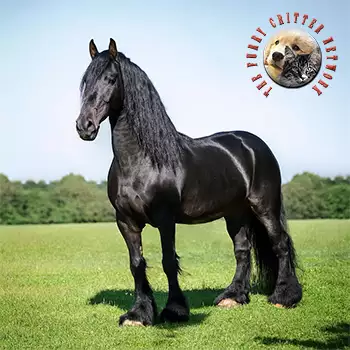

The Friesian horse originates from the province of Friesland in the northern Netherlands, where it has been bred for centuries. Archaeological evidence and historical records suggest that a heavy, cold-blooded horse type existed in the region as far back as the 13th century. These early Friesians were compact, strong animals well suited to the marshy terrain and demanding agricultural work that defined daily life in the Low Countries.
During the Middle Ages, Friesian horses gained recognition as capable warhorses. Their combination of strength, agility, and calm temperament made them ideal mounts for armored knights. Crusaders returning from the Middle East may have introduced Eastern bloodlines into the breed, contributing to the Friesian's distinctive high-stepping gait and refined head carriage that set it apart from other heavy European breeds of the era.
Over the following centuries, the Friesian was shaped by crossbreeding with Andalusian and Barb horses brought to the Netherlands during the period of Spanish rule. These influences added elegance and athleticism to the breed without sacrificing its fundamental power. By the 16th and 17th centuries, the Friesian had emerged as a versatile horse prized by nobility and working people alike, equally at home under saddle and in harness.
The breed faced severe decline in the late 19th and early 20th centuries as industrialization reduced the demand for working horses. By the early 1900s, the Friesian population had dwindled to critically low numbers, with only a handful of breeding stallions remaining. Dedicated breeders in Friesland organized to save the breed from extinction, establishing strict breeding programs that preserved the Friesian's unique characteristics while gradually rebuilding the population.