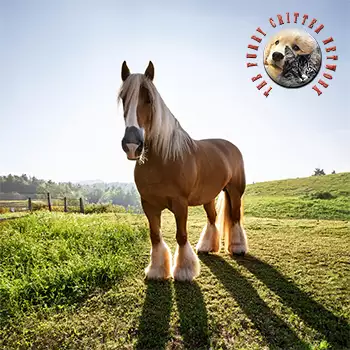

The Belgian Draft horse traces its lineage to the heavy war horses of medieval Flanders, a region encompassing much of present-day Belgium. These powerful animals carried armored knights into battle during the Middle Ages and were prized throughout Europe for their combination of immense strength and surprisingly cooperative temperaments. The fertile lowlands of Brabant province became the epicenter of breeding programs that would eventually produce the modern Belgian Draft.
During the post-medieval period, as the need for warhorses diminished, Flemish farmers redirected their breeding efforts toward agricultural power. The rich, heavy soils of the Belgian countryside demanded horses capable of sustained pulling through dense clay, and selective breeding over centuries refined the breed into a supremely efficient draft animal. The Brabant, as the breed was known in Europe, became the undisputed workhorse of the Low Countries.
Formalized breeding efforts began in earnest during the late 18th and early 19th centuries, with the Belgian government establishing official studbooks and breeding standards. The founding stallions of the modern breed are generally traced to three principal bloodlines: the Gros de la Dendre, the Gris du Hainaut, and the Colosses de la Méhaigne. Each contributed distinct characteristics that breeders carefully combined to produce horses of extraordinary size, soundness, and tractability.
The breed's reputation spread rapidly through international exhibitions and agricultural fairs in the 19th century. Belgian Draft horses consistently dominated pulling competitions and conformation classes at European expositions, drawing the attention of breeders and importers from North America. The first significant wave of imports to the United States began in the 1880s, establishing a breeding population that would diverge somewhat from the European Brabant type over the following century.