
Origins & Development

The Arabian horse is widely regarded as one of the oldest and most influential horse breeds in recorded history. Archaeological evidence and ancient art suggest that horses with distinctly Arabian characteristics existed on the Arabian Peninsula as far back as 4,500 years ago. The Bedouin tribes of the desert are credited with selectively breeding these horses over centuries, prioritizing endurance, agility, and a cooperative temperament suited to the harsh conditions of arid environments.

The Bedouin approach to breeding was meticulous and deeply personal. Mares were especially prized, as lineage was traced through the dam. Breeders maintained detailed oral pedigrees passed down through generations, making the Arabian one of the first breeds with a documented heritage. This careful stewardship produced a horse with a distinctive dished face, high tail carriage, and a compact yet powerful frame capable of covering vast distances on minimal water and forage.

The breed's isolation in the desert contributed to its genetic purity. Unlike European breeds that were frequently crossbred for size or draft work, the Arabian remained remarkably consistent in type for thousands of years. This genetic integrity would later make the Arabian an unmatched foundation sire for dozens of modern breeds, from the Thoroughbred to the Morgan, embedding its influence into the broader history of horse breeding worldwide.

Early written references to the Arabian appear in texts from ancient Egypt, Mesopotamia, and Persia, where horses matching the breed's description were depicted in battle scenes and royal processions. By the time of the early Islamic period, the Arabian horse had become inseparable from the culture, economy, and military strategy of the Middle East, setting the stage for the breed's global dispersal through trade, diplomacy, and conquest.

Historical Roles

The Arabian horse served as a critical military asset for thousands of years. Bedouin warriors relied on their Arabians for swift raids, where speed, stamina, and the ability to survive on scant resources were matters of life and death. The bond between rider and horse was legendary; mares were often kept inside family tents to strengthen the relationship and ensure they remained calm and responsive in battle.

During the Islamic expansion of the seventh and eighth centuries, Arabian horses carried cavalry forces across North Africa, into the Iberian Peninsula, and eastward through Persia and Central Asia. Their superior endurance gave mounted forces a decisive tactical advantage, and the breed became a symbol of power and prestige among military leaders. The Ottoman Empire later continued this tradition, maintaining royal studs of purebred Arabians for both warfare and ceremonial purposes.

Beyond the battlefield, Arabians served as essential transport and communication animals across the vast deserts. Bedouin tribes depended on them for trade caravans and long-distance travel between oases and market towns. The horse's ability to thrive in extreme heat with limited water made it uniquely suited to this role, and its value was reflected in elaborate customs surrounding the gifting, trading, and inheritance of prized animals.

In Europe, the Arabian became a coveted diplomatic gift. Ottoman sultans, Egyptian rulers, and Persian shahs sent Arabians to European monarchs, where the horses transformed local breeding programs. Three foundational stallions of Arabian or part-Arabian descent—the Byerly Turk, the Darley Arabian, and the Godolphin Arabian—became the patrilineal ancestors of every modern Thoroughbred, illustrating the breed's extraordinary influence on global equine development.

Cultural Symbolism

In Bedouin culture, the Arabian horse occupied a position of reverence that extended well beyond its practical utility. Horses were considered gifts from God, and numerous hadiths and traditional sayings attribute spiritual significance to the breed. The Prophet Muhammad is recorded as having encouraged the care and breeding of horses, and early Islamic tradition holds that the Arabian was created from the south wind, imbuing it with swiftness and an indomitable spirit.

This spiritual dimension shaped how Arabians were treated in daily life. Prized mares were given names, celebrated in poetry, and mourned upon death. The concept of "asil," meaning purebred and of noble descent, was central to Bedouin horse culture. An asil horse carried not just genetic value but the honor of its lineage, and breeding an asil mare to an inferior stallion was considered a serious transgression.

The Arabian's image has also served as a national and cultural symbol across the Middle East. Today, the horse appears on currency, government seals, and corporate logos throughout the Gulf states. Arabian horse festivals and heritage celebrations are major cultural events in countries like Saudi Arabia, the United Arab Emirates, and Bahrain, reinforcing the breed's role as a living link to pre-modern identity and tradition.

In Western culture, the Arabian came to symbolize exoticism, beauty, and untamed freedom. Romantic-era painters and writers idealized the breed, often depicting it alongside desert landscapes and noble riders. This imagery persisted into the twentieth century and continues to shape popular perceptions of the Arabian as the quintessential horse of legend and lore.

Breed Clubs & Standards

Formal breed registries for the Arabian horse emerged in the late nineteenth and early twentieth centuries as Western breeders sought to document and preserve the bloodlines that had been imported from the Middle East. The Arabian Horse Registry of America, established in 1908, became one of the first organizations dedicated to maintaining a studbook for purebred Arabians in the Western Hemisphere. It later merged with the International Arabian Horse Association to form the Arabian Horse Association (AHA) in 2003.

The World Arabian Horse Organization (WAHO) serves as the international governing body for Arabian horse registration and works to coordinate standards across more than 95 member countries. WAHO's primary mandate is to protect the purity of the breed by establishing criteria for what constitutes a purebred Arabian. Only horses whose lineage traces entirely to accepted desert-bred or historically documented sources may be registered, a standard that reflects the Bedouin tradition of asil breeding.

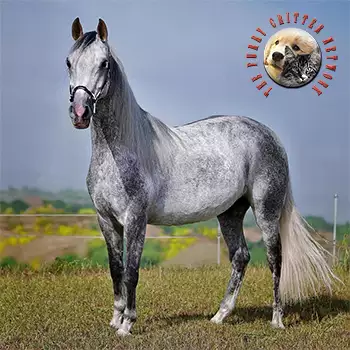
Breed standards emphasize the Arabian's unique conformation: a refined, wedge-shaped head with a concave profile, large expressive eyes, and small curved ears. The neck should be arched and set high, the back short and strong, and the tail naturally elevated. Judges at Arabian shows evaluate horses on type, conformation, movement, and overall presence, with particular attention to the qualities that distinguish the breed from all others.

National and regional clubs also play an important role in education, youth programs, and recreational riding initiatives. Organizations like the AHA sponsor competitive events ranging from halter and western pleasure to endurance racing and dressage, reflecting the Arabian's versatility. These clubs serve as stewards of the breed's welfare, advocating for responsible breeding practices and promoting adoption and rescue efforts for Arabians in need.

The Breed Today

The Arabian remains one of the most popular and widely distributed horse breeds in the world. Estimated global population figures place the number of registered Arabians in the millions, with significant populations in the United States, Europe, Australia, the Middle East, and South America. The breed's versatility continues to drive its appeal, as Arabians compete successfully in endurance racing, dressage, show jumping, western disciplines, and halter shows.

Endurance riding is perhaps the discipline most closely associated with the modern Arabian. The breed dominates international endurance competitions, including the prestigious Tevis Cup in California and FEI World Endurance Championships. The Arabian's cardiovascular efficiency, dense bone structure, and natural stamina make it the clear leader in events that test a horse's ability to cover 50 to 100 miles in a single day while maintaining soundness and metabolic health.

The breeding industry has also evolved significantly. While traditional breeders in the Middle East continue to emphasize desert-bred purity and heritage lines, Western breeding programs have diversified to produce Arabians suited to a wide range of competitive disciplines. This has led to ongoing debates within the community about the balance between preserving historic type and adapting the breed for modern performance demands.

Recreational ownership of Arabians continues to grow as well. The breed's intelligence, sensitivity, and willingness to bond with handlers make it a favorite among amateur riders and families. Arabian rescue organizations have also expanded, working to rehome horses displaced by economic downturns, overbreeding, or changes in owner circumstances. The breed's enduring combination of beauty, athleticism, and character ensures that it remains a central figure in the global equestrian community.

Notable Individuals

Throughout history, individual Arabian horses have achieved legendary status for their influence on the breed and their accomplishments in competition. Crabbet Park Stud in England, founded by Wilfrid Scawen Blunt and Lady Anne Blunt in the 1870s, produced many of the most important foundation Arabians in the West. Their importations from the deserts of Egypt, Syria, and the Najd region established bloodlines that remain prominent in pedigrees worldwide.

Skowronek, a stallion bred in Poland and later acquired by Crabbet Park, is arguably the single most influential Arabian sire in modern history. Born in 1909, Skowronek's refined type and prepotent genetics made him the ancestor of a vast proportion of today's show and breeding Arabians. His descendants dominate halter competition and have contributed to the development of the breed across multiple continents.

In the realm of endurance, horses like Donoghue's Dorado and Donoghue's Dorina demonstrated the Arabian's unmatched stamina in long-distance competition. The mare Donoghue's Dorina completed multiple 100-mile endurance rides with distinction, earning recognition as one of the top endurance horses of her era. These competitive achievements reinforced the breed's reputation as the ultimate distance horse.

More recently, Arabian stallions like Marwan Al Shaqab and Padron have become global icons through their success in international halter shows and their widespread influence as breeding sires. Marwan Al Shaqab, owned by Al Shaqab Stud in Qatar, was named World Champion Stallion and has sired champions across the Americas, Europe, and the Middle East. These individuals represent the ongoing vitality of the Arabian breed and the passion of the global community dedicated to its preservation and advancement.

Always consult a qualified professional before making any health-related decisions. This content is provided for informational reference only and should not replace professional guidance specific to your animal.