
Origins & Development

The Appaloosa's roots stretch back thousands of years, with depictions of spotted horses appearing in prehistoric cave paintings across Europe and Central Asia. These ancient images suggest that the leopard-complex coat patterns characteristic of the breed have existed in equine populations for millennia. Horses bearing similar spotted markings were prized across many early civilizations, from the courts of imperial China to the riding academies of Habsburg Austria.

The breed as it is recognized today owes its most direct lineage to the Nez Perce people of the Pacific Northwest, particularly in the region surrounding the Palouse River in present-day Idaho, Oregon, and Washington. Spanish explorers reintroduced horses to North America in the sixteenth century, and through trade networks these animals gradually reached the plateau tribes of the interior Northwest. The Nez Perce developed a reputation as exceptionally skilled horse breeders, selectively choosing animals for speed, endurance, intelligence, and the distinctive spotted coat patterns that would come to define the Appaloosa.

Unlike many other Indigenous nations who practiced open-range breeding, the Nez Perce employed deliberate selection practices, gelding inferior stallions and trading away horses that did not meet their standards. This careful approach over several generations produced a horse of remarkable quality that European and American settlers repeatedly noted in their journals and correspondence. The name "Appaloosa" itself is believed to derive from the Palouse River region, with early settlers referring to them as "a Palouse horse," which gradually contracted into the modern name.

The devastating Nez Perce War of 1877 nearly destroyed the breed entirely. After Chief Joseph's surrender, the U.S. Army confiscated and dispersed Nez Perce horse herds, and many Appaloosas were crossbred indiscriminately with draft and other common stock. The breed's numbers and quality declined sharply over the following decades, and for a time the Appaloosa seemed destined to vanish as a distinct type.

Historical Roles

Among the Nez Perce, the Appaloosa served as a versatile working horse essential to daily life on the Columbia Plateau. These horses carried hunters across vast stretches of rugged terrain in pursuit of game, served as reliable pack animals during seasonal migrations, and functioned as valuable currency in intertribal trade. The Nez Perce were known to travel hundreds of miles to trade their prized horses with other nations, and Appaloosa-type horses became symbols of wealth and status across the region.

During the early American frontier era, Appaloosas found roles as ranch horses, trail mounts, and general riding animals throughout the West. Their hardiness, sure-footedness in mountainous terrain, and natural cow sense made them valued working partners for cattlemen and settlers. Explorers and trappers who encountered Nez Perce horses frequently commented on their endurance and the striking visual impression created by their spotted coats.

In the twentieth century, as the breed was formally reconstituted, Appaloosas transitioned from primarily working animals into versatile sport and pleasure horses. They proved competitive in Western riding disciplines such as reining, cutting, and roping, while also demonstrating aptitude for English events, endurance racing, and even jumping. The breed's intelligence and calm disposition also made it a popular choice for therapeutic riding programs and youth equestrian activities.

The Nez Perce tribe has undertaken its own modern revival effort, launching the Nez Perce Horse Registry in 1995 to breed Appaloosas crossed with Akhal-Teke horses. This program aims to recreate the athletic, elegant horse that the tribe originally developed, honoring centuries of breeding knowledge while producing a distinctive new type suited to long-distance trail riding and endurance competition.

Cultural Symbolism

The Appaloosa occupies a unique position in American cultural memory as a living symbol of the Nez Perce people and the broader heritage of the American West. The horse's spotted coat has become an instantly recognizable icon, evoking images of wide-open landscapes, frontier independence, and the deep bond between Indigenous peoples and their animals. Idaho designated the Appaloosa as its official state horse in 1975, cementing the breed's association with the Pacific Northwest.

For the Nez Perce nation, the Appaloosa carries profound cultural and spiritual significance that extends far beyond its utility as a working animal. The horse represents a tangible connection to pre-colonial traditions, ancestral lands, and a way of life that was violently disrupted by westward expansion. Contemporary Nez Perce cultural programs use the Appaloosa as a focal point for teaching younger generations about tribal history, horsemanship traditions, and environmental stewardship.

The breed's dramatic appearance has also made it a powerful artistic subject. Appaloosas feature prominently in Western art, from the paintings of Charles Russell and Frederic Remington to contemporary Native American artists who depict the horse as an emblem of resilience and cultural continuity. The spotted patterns themselves carry aesthetic and symbolic weight, with traditional Nez Perce culture associating certain markings with particular qualities or spiritual attributes.

Beyond North America, the Appaloosa has gained international recognition as a symbol of the American frontier experience. The breed's journey from near extinction to global popularity mirrors broader narratives of cultural preservation and recovery, making the Appaloosa a potent symbol not only of Western heritage but of the enduring capacity of dedicated communities to protect what they value.

Breed Clubs & Standards

The Appaloosa Horse Club (ApHC) was founded in 1938 by Claude Thompson, a wheat farmer from Moro, Oregon, who recognized that the breed was in danger of disappearing entirely. Thompson and a small group of enthusiasts began identifying and registering horses that displayed characteristic Appaloosa traits, working to establish a formal breed standard and registry. From an initial enrollment of just a few hundred horses, the ApHC has grown into one of the largest breed registries in the world, with more than 700,000 horses registered since its founding.

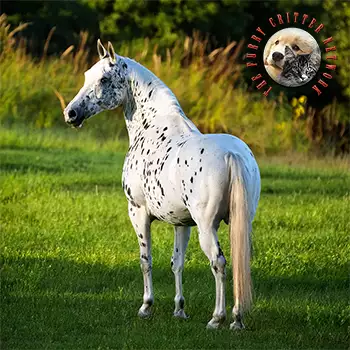
The breed standard recognizes several distinct coat patterns, including blanket, leopard, snowflake, varnish roan, and few-spot. In addition to coat patterns, the ApHC standard identifies mottled skin, striped hooves, and visible white sclera around the eyes as characteristic breed traits. Registration requirements have evolved over the decades, with the club establishing rules regarding parentage verification, genetic testing, and the minimum expression of Appaloosa characteristics needed for full registration.

The ApHC maintains its international headquarters in Moscow, Idaho, in the heart of the breed's historic homeland. The organization sponsors an extensive competitive program, hosting world championship shows and approving hundreds of regional events annually. Affiliated clubs exist in numerous countries, including Canada, Australia, several European nations, and South Africa, reflecting the breed's global reach.

In parallel with the ApHC, the Nez Perce Horse Registry operates as an independent program focused on producing a cross between Appaloosa and Akhal-Teke bloodlines. This registry follows its own distinct standards, emphasizing athleticism, endurance, and the preservation of the original qualities that the Nez Perce valued in their horses. The existence of multiple registries reflects the breed's complex cultural heritage and the diverse goals of the communities that steward it.

The Breed Today

The modern Appaloosa is one of the most popular and widely distributed horse breeds in the world. While the breed's heartland remains the American West, Appaloosas are now bred and competed on every inhabited continent. Their versatility continues to be a primary selling point, with individual horses excelling in disciplines as varied as barrel racing, dressage, eventing, and endurance riding. The breed's generally calm and willing temperament also makes it a favorite among recreational riders and families.

Genetic research has shed new light on the Appaloosa in recent decades. Scientists have identified the leopard-complex gene (LP) responsible for the breed's characteristic spotting, along with pattern modifiers that determine the extent and type of markings. This research has practical implications for breeders seeking to produce specific coat patterns and has also contributed to a broader understanding of equine color genetics. The discovery that the LP gene is linked to congenital stationary night blindness in homozygous horses has prompted important conversations within the breeding community about responsible genetic management.

The Appaloosa community faces ongoing discussions about breed direction, particularly regarding the influence of Quarter Horse bloodlines on the registry. Decades of crossbreeding have produced Appaloosas with increasingly stock-horse conformation, which some breeders view as an improvement in athletic ability while others argue it has diluted the breed's original type. Foundation Appaloosa breeders advocate for preserving older bloodlines that more closely resemble the horses historically bred by the Nez Perce.

Cultural tourism and heritage programs have created new avenues for public engagement with the breed. The Appaloosa Museum and Heritage Center in Moscow, Idaho, draws visitors from around the world, and trail riding programs in Nez Perce country offer immersive experiences that connect participants with the landscape and history that shaped the breed. These initiatives ensure that the Appaloosa's story continues to reach new audiences.

Notable Individuals

Several individual Appaloosas have achieved lasting fame and helped define public perception of the breed. Sundance F-500, foaled in 1933, is often cited as one of the foundational sires of the modern Appaloosa. Registered as the 500th horse in the ApHC studbook, Sundance produced a remarkable number of quality offspring that helped establish the breed's reputation for athleticism and striking appearance during the critical early decades of the registry.

Knobby, an Appaloosa stallion foaled in 1918, is considered one of the most influential foundation sires in the breed's history. His descendants can be found throughout modern Appaloosa pedigrees, and his legacy is credited with helping to transmit the hardiness and working ability that characterized the original Nez Perce horses. Breeders focused on preserving foundation bloodlines continue to seek out horses that trace back to Knobby and other early registered stallions.

In the competitive arena, horses like Prince Donat and Colida have demonstrated the Appaloosa's capacity to excel at the highest levels of performance. Prince Donat dominated open halter classes during the 1960s, showcasing the breed's conformation qualities, while Colida earned national recognition in Western pleasure and trail events. More recently, Appaloosas have made their mark in open competition against all breeds, particularly in endurance and trail disciplines.

Beyond the show ring, the Appaloosa named Cowboy, owned by the Nez Perce tribe's Young Horsemen program, has become a symbol of the tribe's ongoing efforts to reconnect youth with traditional horsemanship. Horses like Cowboy serve as living ambassadors for the breed's cultural heritage, carrying forward a tradition of partnership between humans and horses that spans centuries. Their stories remind enthusiasts that the Appaloosa's significance extends well beyond competition placings and registration numbers.

Always consult a qualified professional before making any health-related decisions. This content is provided for informational reference only and should not replace professional guidance specific to your animal.