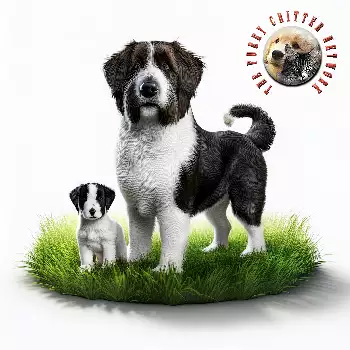

The Stabyhoun traces its roots to the Friesland province of the Netherlands, where it has been documented since at least the early 1800s. The breed's name is believed to derive from the Frisian words "sta mij bij," meaning "stand by me," a fitting description of the dog's unwavering devotion to its family. Early written references appear in the works of Joost Halbertsma and Waling Dykstra, prominent 19th-century Frisian authors who described a versatile farm dog used across the region's rural communities.
The Stabyhoun was developed as an all-purpose working dog suited to the modest means of Frisian farmers and laborers. Unlike wealthy landowners who could afford specialized hunting dogs, working-class families needed a single dog capable of performing many tasks. The Stabyhoun filled this role admirably, serving as a pointer, retriever, watchdog, and even a mole catcher. Its ability to work independently in the field while remaining gentle and tractable at home made it indispensable to Frisian rural life.
For much of its early history, the Stabyhoun was frequently crossbred with the Wetterhoun, another Frisian breed. Both breeds shared overlapping working roles and were often found on the same farms. It was not until dedicated breed enthusiasts in the early 20th century began advocating for the separation and preservation of both breeds that clear distinctions were drawn. This effort laid the groundwork for formal breed recognition and the careful breeding programs that would follow.
The geographic isolation of Friesland played a significant role in shaping the Stabyhoun's development. Because the breed remained largely confined to its province of origin for centuries, it retained a remarkably consistent type without heavy external influence. This insularity preserved the breed's health, temperament, and working instincts but also contributed to its relative obscurity outside the Netherlands.