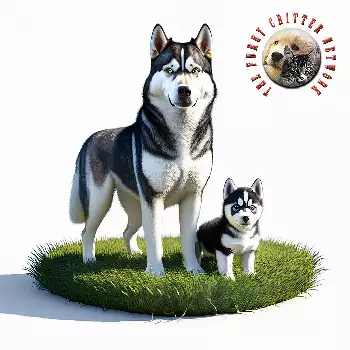

The Siberian Husky traces its lineage back thousands of years to the Chukchi people of northeastern Siberia, an indigenous group who relied on sled dogs for transportation, companionship, and survival in one of the most punishing climates on Earth. Archaeological and genetic evidence suggests that the Chukchi selectively bred their dogs over many generations, producing a line of animals uniquely adapted to endurance running in subzero temperatures. These dogs were not merely tools of labor but cherished members of the household, often sleeping alongside children to provide warmth during the long Arctic nights.
The breed's development was shaped by the extreme demands of its environment. Chukchi dogs needed to haul moderate loads over vast distances on minimal food, requiring an efficient metabolism and a cooperative temperament that allowed them to work harmoniously in teams. Unlike many working breeds developed for guarding or herding, the Siberian Husky was bred for stamina and sociability rather than aggression or territorial instincts. This selective pressure produced a dog that is remarkably friendly toward humans and other dogs alike.
When Russian fur traders and explorers first encountered these dogs in the eighteenth and nineteenth centuries, they recognized their extraordinary capabilities but largely left the Chukchi breeding programs undisturbed. It was not until the early twentieth century that Siberian Huskies were brought to Alaska, where they would capture the imagination of the Western world and begin their journey toward international recognition as a distinct breed.
The transition from a regional working dog to a globally recognized breed involved significant changes in breeding priorities. While the original Chukchi dogs were selected purely for function, Western breeders gradually introduced aesthetic standards that emphasized the breed's striking appearance, including its wolf-like facial markings and vivid blue or multicolored eyes. Despite these shifts, the core traits of endurance, friendliness, and resilience have remained remarkably consistent across the breed's long history.