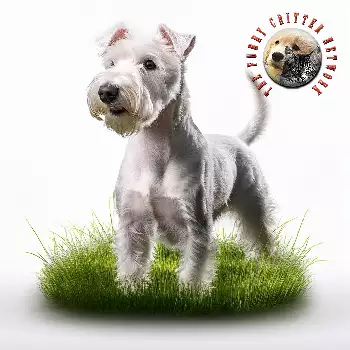

The Sealyham Terrier takes its name from Sealyham House in Haverfordwest, Pembrokeshire, Wales, where Captain John Edwardes began developing the breed around 1850. Edwardes sought to create a small, sturdy terrier capable of working alongside his Otterhounds, flushing badgers, otters, and foxes from their underground dens. He drew from a deliberate mix of working terrier stock, likely including the now-extinct white English Terrier, the Dandie Dinmont Terrier, the West Highland White Terrier, the Wire Fox Terrier, and the Bull Terrier, among others.
Edwardes was famously rigorous in his breeding program, selecting only dogs that demonstrated exceptional courage, stamina, and tenacity in the field. According to accounts of his program, dogs that failed to perform adequately during hunts were culled, ensuring that only the most capable animals contributed to the developing line. This exacting approach over several decades produced a distinctive, low-set terrier with a powerful jaw, a weatherproof double coat, and an unyielding work ethic.
By the time Captain Edwardes passed away in 1891, the breed had attracted the attention of other terrier enthusiasts in Wales and across Britain. Breeders in the surrounding Pembrokeshire region continued refining the Sealyham, maintaining its compact build and gameness while gradually standardizing its appearance. The transition from a strictly working terrier to a breed with a recognizable type was well underway by the turn of the twentieth century.
The Sealyham's development is notable for the clarity of purpose behind it. Unlike many breeds that evolved gradually through regional working traditions, the Sealyham was the product of a single individual's deliberate vision, carried out over roughly forty years. This focused origin story gives the breed a particularly well-documented lineage and a direct connection to the sporting culture of Victorian Wales.