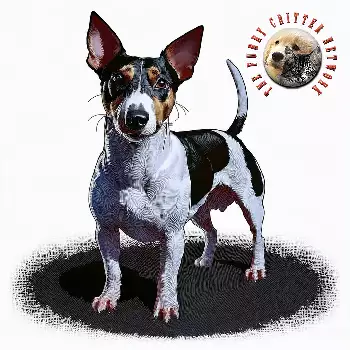

The Rat Terrier is a distinctly American breed whose roots stretch back to the mixed terrier dogs brought to the United States by British immigrants in the late 19th and early 20th centuries. These early working terriers were bred primarily for their ability to control vermin on farms and homesteads, and they represented a practical crossroads of several established terrier lines. The foundation stock included Smooth Fox Terriers, Manchester Terriers, and Old English White Terriers, all of which contributed speed, tenacity, and keen prey drive.
As the breed developed across different regions of the United States, farmers selectively crossed these terriers with other breeds to enhance specific traits suited to local conditions. Whippet and Italian Greyhound blood was introduced to increase speed, particularly in the Midwest where the dogs were expected to chase jackrabbits across open terrain. Beagle crosses added pack mentality and improved scenting ability, making the dogs more versatile hunters. This pragmatic, performance-driven breeding philosophy meant that the Rat Terrier was shaped more by function than by a formal written standard.
By the early 1900s, the Rat Terrier had become one of the most common farm dogs in rural America. Their small size meant they were economical to feed, and their extraordinary ratting ability made them invaluable in barns, granaries, and chicken coops. Unlike many breeds that were developed within the framework of kennel clubs and breed registries, the Rat Terrier was a grassroots creation, refined by working people who needed a reliable, multi-purpose dog.
The name itself reflects the breed's primary occupation. While various terrier breeds have been used to hunt rats, the Rat Terrier earned its name through sheer effectiveness. Stories of individual dogs dispatching dozens or even hundreds of rats in a single session were common in rural communities, and ratting competitions became a popular form of entertainment in farming towns throughout the American South and Midwest.