
Origins & Development

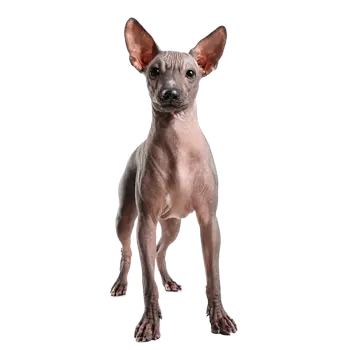
The Peruvian Inca Orchid, known in its homeland as the Perro sin Pelo del Perú, is among the oldest documented dog breeds in the Americas. Archaeological evidence places hairless dogs along the coastal regions of Peru as far back as 750 CE, with ceramic depictions and burial remains found at sites associated with the Moche, Chimú, and Chancay civilizations. These early representations show dogs with the distinctive hairless skin and elegant proportions that define the breed today, confirming an unbroken lineage stretching well over a thousand years.

The breed's hairlessness results from a naturally occurring genetic mutation that became fixed over generations of selective breeding by pre-Columbian peoples. Ancient Peruvian cultures valued the trait not merely as a curiosity but for practical reasons — the warm, bare skin of these dogs made them prized bed warmers in the cool desert nights of the coastal lowlands. Over centuries, breeders refined the dogs into three distinct size varieties, from a small companion type to a larger hunting and guarding form.

Spanish conquistadors arriving in the sixteenth century recorded encounters with hairless dogs kept in orchid-filled rooms of Incan noble households, which eventually gave rise to the breed's European name. Despite the upheaval of colonization, the dogs survived in rural communities along the Peruvian coast, where indigenous families continued to breed them according to longstanding traditions. Their survival through centuries of political and social disruption speaks to the deep bond between these dogs and the people who kept them.

Modern breed development accelerated in the mid-twentieth century when Peruvian cynologists began formal efforts to document and standardize the breed. Jack Walklin, an American visitor to Peru in the 1960s, is credited with bringing the first specimens to the United States and coining the English name Peruvian Inca Orchid. His efforts, combined with those of dedicated Peruvian breeders, laid the groundwork for international recognition and the breed's gradual emergence onto the global stage.

Historical Roles

In pre-Columbian Peru, the hairless dog served a remarkable range of functions that extended well beyond companionship. The Chimú civilization, which flourished along the northern coast from roughly 900 to 1470 CE, kept hairless dogs as hunting companions for small game and as guardians of homesteads. Their keen senses and alert disposition made them effective watchdogs, while their agility and speed allowed them to assist in chasing down prey in the arid coastal landscape.

Perhaps the most distinctive historical role of the Peruvian Inca Orchid was its use as a living heat source. The breed's lack of fur means its skin radiates body heat more readily than that of coated dogs, and ancient Peruvians took advantage of this by allowing the dogs to sleep alongside people suffering from arthritis, respiratory ailments, and other conditions. This practice of using the dogs as therapeutic warmers persisted for centuries and contributed to the belief that the breed possessed healing properties.

The spiritual and ceremonial significance of hairless dogs in ancient Peru cannot be overstated. Archaeological excavations at Chimú and Chancay burial sites have uncovered dog remains interred alongside human bodies, suggesting that the animals were believed to guide the souls of the deceased into the afterlife. Some burials included dogs wrapped in textiles and accompanied by offerings, indicating that they held a status comparable to honored family members rather than mere animals.

During the Incan Empire, which absorbed the Chimú and other coastal cultures, hairless dogs continued to occupy a privileged position. Inca nobility reportedly kept them in garden courtyards, and their presence in elite households reinforced their association with wealth and refinement. When the Spanish arrived, they noted the dogs' prominence in aristocratic settings, further cementing the historical record of a breed deeply interwoven with the ruling classes of ancient Peru.

Cultural Symbolism

The Peruvian Inca Orchid carries a weight of cultural symbolism that few modern dog breeds can match. In pre-Columbian cosmology, the hairless dog was associated with the moon, the night, and the passage between the world of the living and the realm of the dead. This lunar connection may have arisen from the dogs' sensitivity to sunlight — their bare skin burns easily, leading their keepers to exercise them primarily at dusk and dawn — which gave them an association with twilight and the nocturnal world.

In Peruvian folk tradition, the hairless dog became a symbol of duality. The breed naturally produces both hairless and coated puppies within the same litter, and this trait was interpreted by indigenous cultures as a reflection of complementary forces — light and dark, warmth and cold, the seen and the unseen. This symbolism aligned with broader Andean philosophical concepts of reciprocity and balance that pervaded religious and social life throughout the region.

The breed's association with healing further deepened its symbolic resonance. Communities along the Peruvian coast developed a tradition of attributing curative powers to the warmth of the hairless dog's body, and this belief system persisted well into the modern era. Even today, some rural Peruvians regard the dogs as beneficial companions for people with joint pain or circulatory problems, maintaining a thread of cultural continuity that stretches back centuries.

In contemporary Peru, the Peruvian Inca Orchid has been embraced as a national symbol and a source of cultural pride. The breed represents an unbroken connection to the country's pre-Columbian heritage, and its survival through colonization, modernization, and urbanization has made it an emblem of resilience. Public institutions, museums, and cultural organizations in Peru frequently reference the breed in materials celebrating the nation's indigenous history.

Breed Clubs & Standards

The formal standardization of the Peruvian Inca Orchid began in earnest during the 1960s and 1970s, when Peruvian breeders and cynologists worked to establish a written breed standard that captured the essential characteristics of the dogs as they had been bred for centuries. The Kennel Club Peruano played a central role in this effort, collaborating with breeders from coastal communities to document the three size varieties and the physical traits that distinguished the breed from other hairless dogs around the world.

The Fédération Cynologique Internationale officially recognized the breed in 1981, granting it international standing under the name Perro sin Pelo del Perú. The FCI standard describes three size categories — small, medium, and large — and allows for a range of skin colors and patterns. It also acknowledges the coated variety, which carries one copy of the hairless gene and is essential to maintaining the genetic health of the breed. This recognition was a landmark moment for Peruvian breeders who had worked for decades to gain international visibility for their national dog.

In the United States, the breed gained recognition through the American Kennel Club's Foundation Stock Service in 1996, a preliminary step toward full recognition. The AKC granted the Peruvian Inca Orchid full recognition in the Miscellaneous Class in 2011 and moved the breed into the Hound Group in 2024. These milestones reflected growing interest among American fanciers and a steady increase in the breed's population outside South America.

Breed clubs dedicated to the Peruvian Inca Orchid operate in several countries, including the United States, Germany, Finland, and, of course, Peru. These organizations work to promote responsible breeding, educate prospective owners about the breed's unique care requirements, and preserve the genetic diversity that is critical for a breed with a relatively small global population. Annual specialty shows and gatherings provide opportunities for breeders to evaluate breeding stock and share knowledge about health testing and lineage documentation.

The Breed Today

The Peruvian Inca Orchid remains a rare breed worldwide, but its profile has risen steadily over the past two decades thanks to increased media exposure, dedicated breed clubs, and a growing appreciation for ancient and indigenous dog breeds. In Peru, the breed enjoys a level of recognition and reverence that few other national dogs achieve — a 2001 Peruvian law declared the breed part of the nation's cultural heritage and mandated its presence at major archaeological sites and museums as living ambassadors of pre-Columbian history.

Modern owners of the Peruvian Inca Orchid tend to be drawn to the breed's striking appearance and deeply affectionate temperament. These dogs bond intensely with their families and can be reserved or cautious around strangers, traits that reflect their long history as household companions rather than working dogs in the conventional sense. Their intelligence and sensitivity make them responsive to positive training methods, though their independent streak requires patience and consistency.

The breed's unique skin care needs set it apart from most other dogs. Owners must protect the hairless variety from sunburn, cold temperatures, and skin irritation, which means applying pet-safe sunscreen before outdoor excursions and providing clothing or blankets in cooler weather. Despite these requirements, many owners find the grooming routine simpler overall than that of heavily coated breeds — there is no shedding to manage, and regular bathing and moisturizing keep the skin healthy.

Breeding populations remain small, and responsible breeders emphasize health testing, genetic diversity, and temperament evaluation when planning litters. The coated variety, while less visually dramatic, plays a vital role in breeding programs by contributing genetic diversity and reducing the incidence of dental abnormalities associated with the hairless gene. As awareness of the breed continues to grow, breeders face the ongoing challenge of expanding the gene pool without sacrificing the qualities that make the Peruvian Inca Orchid a living link to one of the world's oldest canine traditions.

Notable Individuals

While the Peruvian Inca Orchid has not produced the kind of globally famous individual dogs associated with breeds like the German Shepherd or Golden Retriever, several notable dogs and human advocates have shaped the breed's modern trajectory. Jack Walklin, the American who brought the first Peruvian hairless dogs to the United States in the 1960s, is widely regarded as the single most important figure in establishing the breed outside South America. His efforts to promote the dogs among American fanciers helped spark international interest at a time when the breed was virtually unknown outside Peru.

In Peru, breeder and cynologist Ermanno Maniero dedicated much of his career to documenting the breed's history, advocating for its legal protection, and refining breeding practices. His work was instrumental in the passage of the 2001 heritage protection law and in shaping the breed standard that the FCI and other international organizations adopted. Maniero's writings on the breed remain foundational texts for anyone studying the Peruvian Inca Orchid's origins and development.

The dogs stationed at Peruvian archaeological sites under the heritage law have themselves become minor celebrities. Visitors to sites such as the Huaca Pucllana in Lima and the Chan Chan complex near Trujillo frequently encounter Peruvian Inca Orchids living on the grounds, and these dogs have appeared in countless travel articles, documentaries, and social media posts. Their presence at ancient ruins creates a vivid, living connection between the modern breed and its historical roots that few other cultural preservation efforts can match.

In the international show ring, Peruvian Inca Orchids have earned recognition at major events including the Westminster Kennel Club Dog Show and the World Dog Show. Although entries remain modest in number compared to more popular breeds, the dogs consistently draw attention from spectators and judges alike for their distinctive appearance and graceful movement. Each show appearance helps raise the breed's profile and introduces new audiences to its remarkable history.

Always consult a qualified professional before making any health-related decisions. This content is provided for informational reference only and should not replace professional guidance specific to your animal.