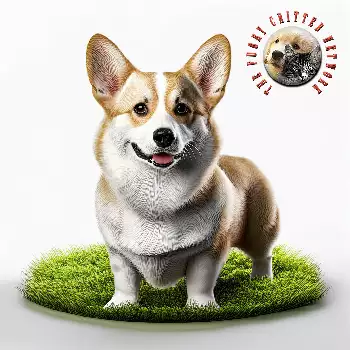

The Pembroke Welsh Corgi traces its roots to the rolling farmlands of Pembrokeshire in southwestern Wales, where it has served as a versatile herding dog for centuries. The breed's name reflects its geographic heritage: "Corgi" is widely believed to derive from the Welsh words "cor" (dwarf) and "gi" (dog), a fitting description for this compact, low-slung herder. While the exact timeline of the breed's emergence is debated, historical evidence suggests that small herding dogs resembling the modern Pembroke have been present in Wales since at least the 10th century.
One of the most enduring origin theories connects the Pembroke Welsh Corgi to Flemish weavers who migrated to Wales during the reign of Henry I in the early 12th century. These settlers are thought to have brought small Spitz-type herding dogs with them, which were then crossbred with native Welsh dogs. The resulting animals combined the alertness and agility of the Spitz breeds with the hardiness demanded by the rugged Welsh countryside. Over generations, selective breeding refined the Corgi into the efficient cattle drover and farm guardian recognized today.
The Pembroke Welsh Corgi was developed as a distinct breed separate from its close relative, the Cardigan Welsh Corgi. Although the two breeds share a similar body type and were once freely interbred, they have different ancestral lines and were eventually recognized as separate breeds. The Pembroke is generally distinguished by its shorter tail, more fox-like facial features, and slightly smaller frame. This distinction became official in 1934 when The Kennel Club in the United Kingdom recognized the Pembroke and Cardigan as separate breeds.
Early breeders prized the Pembroke for its low center of gravity and surprising agility, traits that made it exceptionally effective at nipping the heels of cattle and quickly ducking beneath retaliatory kicks. The breed's compact stature was not a limitation but an evolutionary advantage on the farm, allowing it to move swiftly through the legs of livestock while remaining difficult to strike. This practical design ensured the breed's survival and popularity among Welsh farmers long before it gained wider recognition.