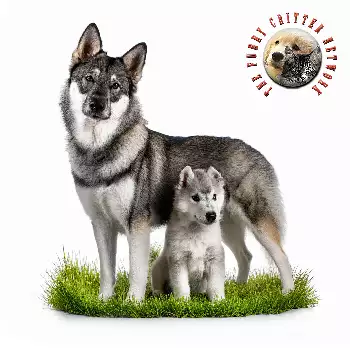

The Norwegian Elkhound is one of the oldest dog breeds in existence, with archaeological evidence placing its ancestors alongside human settlements in Scandinavia as far back as 5000 BCE. Stone-age skeletal remains discovered in western Norway bear a striking resemblance to the modern Elkhound, suggesting that the breed's core physical traits have remained remarkably stable across millennia. These early dogs lived in close partnership with Viking-era hunters and farmers, serving as indispensable working companions in some of the harshest terrain and climates in Europe.
The breed's name in Norwegian, "Norsk Elghund," translates roughly to "Norwegian moose dog," reflecting its primary historical function as a hunter of large game. The word "elg" refers to the European moose, not the North American elk, a distinction that sometimes causes confusion in English-speaking countries. Over centuries of selective use in rugged mountain environments, the Elkhound developed its characteristic dense double coat, compact muscular frame, and tightly curled tail, all traits that served practical purposes in cold, demanding conditions.
Genetic studies conducted in the early twenty-first century confirmed the Norwegian Elkhound's deep ancestral roots, placing it among the most ancient of the spitz-type breeds. Its genetic profile closely aligns with other northern breeds such as the Finnish Spitz and the Jämthund, yet the Elkhound occupies a distinct lineage that reflects thousands of years of geographic and functional isolation in Norway's fjords and highlands. This remarkable continuity from ancient times to the present day makes the breed a living link to the earliest chapters of the human-canine bond.
By the nineteenth century, the Norwegian Elkhound had begun to attract the attention of formal dog breeding circles. The first dog shows featuring the breed took place in Norway in the 1870s, marking the beginning of its transition from a purely utilitarian working dog to a recognized and standardized breed. This period also saw the first efforts to document and preserve the breed's lineage through organized record-keeping and selective breeding programs.