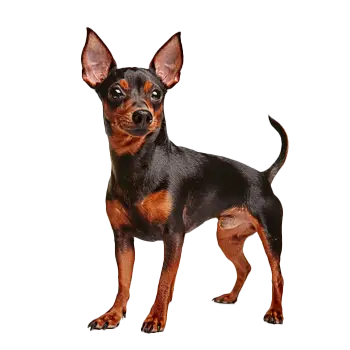

The Miniature Pinscher is a distinctly German breed whose origins trace back several centuries to the farmlands and households of central Europe. Despite a common misconception, the breed is not a scaled-down version of the Doberman Pinscher. In fact, the Miniature Pinscher predates the Doberman by at least a couple of hundred years. Early references to small, smooth-coated pinscher-type dogs appear in German artwork and written records from the 1600s and 1700s, where they were valued as efficient ratters and alert watchdogs on rural properties.
The breed's development likely involved crosses between the German Pinscher, the Italian Greyhound, and the smooth-coated Dachshund. Breeders in Germany selectively refined the dog for its compact size, sleek coat, and animated personality. The word "pinscher" itself is believed to derive from the German or French term for "to seize" or "to nip," reflecting the breed's original purpose as a vermin hunter. By the mid-1800s, the Miniature Pinscher had become a recognizable and increasingly popular breed in Germany.
As selective breeding intensified during the 19th century, German breeders worked to standardize the Miniature Pinscher's appearance and temperament. They favored the breed's characteristic high-stepping hackney gait, its erect carriage, and its bold demeanor. These refinements helped distinguish the Miniature Pinscher from other small terrier and pinscher-type dogs that were common throughout Europe at the time.
The breed was initially known as the Reh Pinscher in its homeland, a reference to the small roe deer found in German forests. The comparison was drawn because of the breed's sleek, elegant build and its graceful, prancing movement. This name persisted in Germany for many years before the breed became more widely known internationally under its current designation.