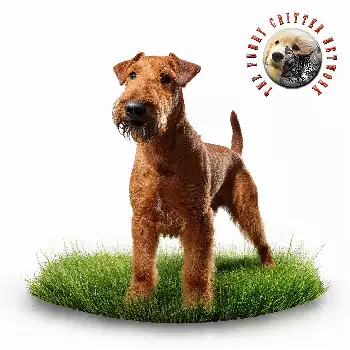

Origins & Development

The Irish Terrier is widely regarded as one of the oldest terrier breeds, with roots that stretch deep into Irish agricultural history. While the precise date of the breed's emergence is difficult to pinpoint, dogs matching the Irish Terrier's general description appear in Irish records and artwork dating back several centuries. Early examples of the breed were kept by farmers and rural families throughout Ireland, where they served as versatile working dogs capable of guarding property, hunting vermin, and accompanying their owners on long days in the field.

Before the era of formal breed standards, Irish Terriers varied considerably in size, coat texture, and color. Some early specimens were black-and-tan or brindle, a far cry from the solid red and wheaten shades that define the breed today. It was not until the latter half of the nineteenth century that breeders began to pursue a more uniform appearance, selectively breeding for the distinctive wiry red coat and refined but muscular build that became the hallmark of the modern Irish Terrier.

The breed's development was also shaped by its competitive debut on the show bench. Irish Terriers appeared at Dublin dog shows as early as the 1870s, and their striking looks and confident demeanor quickly attracted admirers. The push toward standardization accelerated during this period, with breeders working to eliminate mixed coloring and establish a consistent type. By the 1880s, the Irish Terrier had become one of the most popular breeds in the British Isles and was beginning to attract attention overseas.

A pivotal moment in the breed's history came in 1889, when the Irish Terrier Club in Dublin took the progressive step of banning the practice of cropping ears. This made the Irish Terrier the first breed in the British Isles to advocate for an end to ear cropping, a move that was widely praised and helped set a precedent for animal welfare reforms in the dog show world.

Historical Roles

The Irish Terrier earned its reputation as a fearless and adaptable working dog long before it became a fixture of the show ring. In rural Ireland, the breed was prized for its ability to control rats, foxes, and other vermin that threatened crops and livestock. Their courage and tenacity made them invaluable on farms, where they would pursue quarry both above and below ground with relentless determination.

Beyond pest control, Irish Terriers served as loyal guardians of home and family. Their alert nature and deep-throated bark made them effective watchdogs, while their affectionate temperament ensured they were trusted companions within the household. Many families relied on a single Irish Terrier to fill multiple roles — ratter, guard dog, and devoted family pet — a testament to the breed's remarkable versatility.

The breed's bravery was put to an extraordinary test during World War I, when Irish Terriers were recruited as messenger dogs on the Western Front. Their small size, intelligence, and unflinching courage under fire made them ideally suited for carrying dispatches across dangerous terrain. Numerous accounts from soldiers describe these terriers dashing through shellfire and barbed wire to deliver messages between units. The breed earned the nickname "Daredevil" during this period, a distinction that reflected both their battlefield valor and their broader temperament.

Irish Terriers also played a role in search-and-rescue efforts during wartime, locating wounded soldiers in the chaos of no man's land. Their contributions to the war effort brought the breed to international attention and cemented their reputation as dogs of exceptional courage and loyalty.

Cultural Symbolism

In Irish culture, the Irish Terrier has long been viewed as an embodiment of national character — spirited, resilient, and fiercely independent. The breed's association with Ireland goes beyond geography; it is woven into the cultural fabric of the country as a symbol of tenacity and heart. For many Irish families, owning an Irish Terrier was a matter of cultural pride, a living connection to a heritage of self-reliance and determination.

The breed's striking red coat has also contributed to its symbolic resonance. Often described in shades of bright red, golden red, and red wheaten, the Irish Terrier's color palette echoes the warm tones of the Irish landscape and has been likened to the flame of a hearth fire. This visual distinctiveness helped set the breed apart from other terriers and reinforced its identity as a uniquely Irish creation.

During periods of Irish nationalist sentiment in the late nineteenth and early twentieth centuries, the Irish Terrier took on additional symbolic weight. Owning and breeding Irish Terriers became, for some, an expression of cultural identity and pride in Irish heritage. The breed appeared on postcards, in illustrations, and in popular literature as a representative of Irish spirit, often depicted alongside imagery of the Irish countryside.

The Irish Terrier's association with courage and loyalty also gave it a symbolic role in military contexts. Following the breed's distinguished service in World War I, the Irish Terrier became associated with bravery and sacrifice, themes that resonated powerfully in a nation with its own complex relationship to wartime service and remembrance.

Breed Clubs & Standards

The formal organization of Irish Terrier enthusiasts began in the 1870s, when the breed's growing popularity on the show circuit prompted the formation of dedicated breed clubs. The Irish Terrier Club was established in Dublin in 1879 and quickly became the primary authority on breed type and standards. The club's early work focused on defining the ideal Irish Terrier — a medium-sized, racy terrier with a dense, wiry coat in shades of red or wheaten, a long head, and an expression of keen intelligence.

The breed was recognized by The Kennel Club in the United Kingdom during the same era, and a formal standard was adopted that emphasized the Irish Terrier's balanced proportions, athletic build, and characteristic fire. The standard called for a dog that was neither too heavy nor too slight, with a coat that was hard and wiry to the touch, lying close to the body. These guidelines helped ensure consistency as the breed spread beyond Ireland.

In the United States, the Irish Terrier gained recognition from the American Kennel Club in 1885, making it one of the earliest terrier breeds to be registered in America. The Irish Terrier Club of America was founded shortly thereafter and has worked continuously to promote the breed through conformation shows, performance events, and public education. The American standard closely mirrors its British and Irish counterparts, reflecting the breed's shared heritage.

Breed clubs around the world have also played an important role in health initiatives, encouraging responsible breeding practices and supporting research into conditions that can affect the breed. These organizations serve as custodians of the Irish Terrier's legacy, balancing the preservation of historic type with the ongoing health and welfare of the breed.

The Breed Today

The Irish Terrier remains a beloved breed among terrier enthusiasts, though it is far less common than it was during its peak popularity in the early twentieth century. Today, the breed is considered relatively rare in many countries, with annual registration numbers that place it well behind more widely known terrier breeds. Dedicated breeders and breed clubs work diligently to maintain the Irish Terrier's quality and visibility, but the breed's modest numbers have placed it on watch lists for vulnerable native breeds in the United Kingdom and Ireland.

Despite its rarity, the Irish Terrier continues to excel in a variety of pursuits. In the conformation ring, the breed is admired for its elegant outline, fiery red coat, and confident showmanship. Irish Terriers also compete successfully in agility, obedience, and earthdog trials, demonstrating the versatility that has defined the breed throughout its history. Their keen intelligence and eagerness to engage make them natural candidates for performance events that challenge both body and mind.

As a companion, the Irish Terrier is valued for its loyalty, playfulness, and protective instincts. Owners frequently describe the breed as deeply devoted to its family, with a lively personality that brings energy and warmth to any household. The breed's moderate size and adaptable nature make it suitable for a range of living situations, from rural properties to urban apartments, provided it receives adequate exercise and mental stimulation.

Efforts to promote the Irish Terrier continue through breed-specific rescue organizations, social media communities, and educational outreach. Enthusiasts hope that increased awareness will introduce new generations to this historic breed, ensuring that the Irish Terrier's legacy endures well into the future.

Notable Individuals

Throughout the breed's history, individual Irish Terriers have distinguished themselves in ways that brought wider recognition to the breed. One of the most celebrated early show dogs was Champion Dooney, who dominated the Irish Terrier ring in the late nineteenth century and helped establish the breed's type during a formative period. Dooney's influence on the breed's development was profound, and his descendants went on to shape Irish Terrier bloodlines for generations.

The breed's wartime service produced its own set of heroes. During World War I, several Irish Terriers were singled out for commendation for their bravery as messenger dogs. These dogs carried dispatches under heavy fire, and their exploits were reported in newspapers and military dispatches, helping to elevate the breed's profile on both sides of the Atlantic. While individual names from this period are not always well documented, the collective bravery of these wartime terriers remains a proud chapter in the breed's story.

In the twentieth century, Irish Terriers continued to make their mark in the show world. Notable champions earned top honors at prestigious events, and their wins helped sustain interest in the breed during periods when registrations were declining. Breeders who dedicated their lives to the Irish Terrier — through careful selection, health testing, and mentorship of newcomers — are themselves notable figures in the breed's history, even if their names are less widely known than those of their dogs.

More recently, Irish Terriers have gained visibility through breed rescue efforts and social media, where individual dogs with compelling stories have attracted followings that introduce the breed to audiences who might never encounter one in person. These modern ambassadors play an important role in keeping the Irish Terrier in the public eye and inspiring new enthusiasts to explore the breed's rich heritage.

Always consult a qualified professional before making any health-related decisions. This content is provided for informational reference only and should not replace professional guidance specific to your animal.