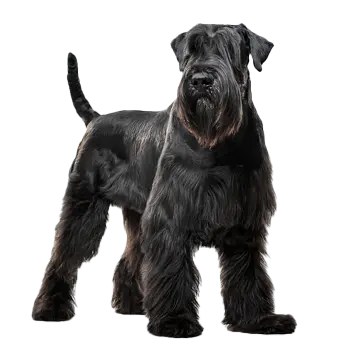

Origins & Development

The Giant Schnauzer originated in the Bavarian Alps and surrounding agricultural regions of Germany during the mid-to-late 1800s. Local farmers and cattlemen needed a larger, more powerful version of the Standard Schnauzer that could drive cattle from farm to market and serve as a dependable yard dog. To achieve the size and strength they required, breeders crossed the Standard Schnauzer with larger breeds, likely including the Great Dane, Bouvier des Flandres, and rough-coated sheepdogs native to the region.

The result was a robust, weather-resistant dog with the intelligence and alertness of the Schnauzer family combined with considerably more physical power. Early specimens varied widely in appearance, as function mattered far more than uniformity. Farmers selected dogs based on working ability, favoring animals that could control stubborn livestock, guard property, and endure long days outdoors in harsh alpine conditions.

As the breed became more established toward the end of the nineteenth century, German breeders began refining its appearance and standardizing its characteristics. The wiry double coat, distinctive beard and eyebrows, and square-built frame became hallmarks of the breed. By the early 1900s, the Giant Schnauzer had moved beyond agricultural work and was beginning to attract attention from dog fanciers who recognized its potential as both a working dog and a show competitor.

Historical Roles

The Giant Schnauzer's original purpose was cattle driving, a demanding job that required a dog capable of controlling large, headstrong animals across considerable distances. In the bustling stockyards and open pastures of Bavaria, these dogs proved indispensable. Their size allowed them to physically manage cattle, while their intelligence made them responsive to commands from drovers who needed reliable partners on long market drives.

As industrialization reduced the demand for cattle dogs in the early twentieth century, the Giant Schnauzer found new employment. Breweries and butcher shops in Munich and other German cities adopted the breed as a guard dog, taking advantage of its imposing appearance, territorial instincts, and fierce loyalty to its handler. The breed earned the informal nickname "the Munich Schnauzer" during this period, reflecting its popularity in the city's commercial establishments.

During both World Wars, the German military and police forces recognized the Giant Schnauzer's trainability and courage. The breed served in various capacities, including messenger duty, patrol work, and sentry assignments. This military and police service significantly elevated the breed's reputation and laid the groundwork for its continued use in law enforcement and security roles throughout the twentieth century.

Following the Second World War, Giant Schnauzers became increasingly valued in professional protection and police work across Europe. Their combination of intelligence, physical capability, and strong handler loyalty made them competitive with more commonly used breeds in these roles. Police departments in Germany, the Netherlands, and several other European nations incorporated Giant Schnauzers into their canine units with notable success.

Cultural Symbolism

In German culture, the Giant Schnauzer has long symbolized reliability, strength, and working-class determination. The breed's origins among Bavarian farming communities connect it to a tradition of practical, no-nonsense craftsmanship that values function over ornament. This cultural association has given the Giant Schnauzer a reputation as a serious, purposeful dog that earns its keep through dedicated work.

The breed's distinctive appearance has also contributed to its symbolic presence. The heavy beard, bushy eyebrows, and powerful stance project an image of dignified authority that has resonated with owners who appreciate a dog that commands respect without aggression. In many European countries, owning a Giant Schnauzer signals an appreciation for well-trained, disciplined working dogs rather than purely decorative companions.

Among Schnauzer enthusiasts worldwide, the Giant variety is often regarded as the most demanding and rewarding of the three Schnauzer sizes. This perception has created a dedicated subculture of owners who take pride in the breed's need for consistent training, mental stimulation, and active partnership. The Giant Schnauzer community tends to emphasize the breed's working heritage, and many owners pursue working titles, obedience competitions, and protection sports as a way of honoring the breed's functional roots.

Breed Clubs & Standards

The Pinscher-Schnauzer Klub 1895 in Germany was among the first organizations to formally recognize and register the Giant Schnauzer. The club established early standards for the breed, defining the physical and temperamental qualities that distinguished the Giant Schnauzer from its smaller relatives. These German standards emphasized the breed's working capability and structural soundness, setting a template that would influence breed standards worldwide.

The American Kennel Club recognized the Giant Schnauzer in 1930, placing it in the Working Group. The Giant Schnauzer Club of America, founded to promote and protect the breed in the United States, has played a central role in maintaining breed standards, supporting health research, and organizing specialty shows. The club has also been instrumental in encouraging working titles and performance events that keep the breed connected to its functional heritage.

Internationally, the Fédération Cynologique Internationale classifies the Giant Schnauzer under Group 2, Section 1, alongside other Pinscher and Schnauzer types. The FCI standard closely mirrors the German original and emphasizes the breed's balanced proportions, wiry coat texture, and bold yet approachable temperament. Breed clubs across Europe, Australia, and other regions maintain active membership and hold regular specialty events that bring together breeders, exhibitors, and working dog enthusiasts.

Breed standards across all major registries specify two acceptable coat colors: solid black and pepper-and-salt. The wiry outer coat and dense undercoat are considered essential breed characteristics, and proper grooming techniques, including hand-stripping, are strongly encouraged by breed clubs to maintain correct coat texture for the show ring.

The Breed Today

The Giant Schnauzer remains a relatively uncommon breed compared to more popular working dogs, but it enjoys a devoted and growing following. In the United States, the breed consistently ranks in the middle tier of AKC registration statistics, reflecting a community of dedicated owners rather than mass-market popularity. This moderate popularity is generally viewed as beneficial by breed enthusiasts, who believe it helps protect the breed from the overbreeding and health problems that sometimes accompany sudden surges in demand.

In the modern era, Giant Schnauzers excel in a wide range of activities beyond their traditional working roles. They are competitive in conformation shows, obedience trials, agility courses, herding tests, and protection sports such as Schutzhund and IPO. Their versatility continues to attract owners who want a single breed capable of participating in multiple disciplines at a high level.

The breed has also found a growing role as a family companion for active households that can meet its considerable exercise and training needs. Giant Schnauzers thrive in environments where they receive consistent mental stimulation, physical activity, and close bonding with their families. Breed rescue organizations have expanded in recent years, reflecting both increased awareness and the reality that the breed's intensity can be challenging for unprepared owners.

Health-conscious breeding practices have become a priority within the Giant Schnauzer community. Responsible breeders routinely screen for conditions including hip dysplasia, eye disorders, and autoimmune thyroiditis. Breed clubs actively promote health testing and maintain databases to help breeders make informed decisions, contributing to the overall health and longevity of the breed.

Notable Individuals

Several Giant Schnauzers have achieved significant recognition in competitive events and working roles. In the conformation ring, the breed has produced multiple Best in Show winners at prestigious all-breed events, demonstrating that the Giant Schnauzer can compete at the highest levels against more numerically popular breeds. These wins have helped raise the breed's profile and attract new enthusiasts to the Giant Schnauzer community.

In the world of working dogs, Giant Schnauzers have served with distinction in police and military units across several countries. Individual dogs have earned commendations for their work in narcotics detection, patrol operations, and search-and-rescue missions. Their performance in these demanding real-world roles serves as ongoing validation of the breed's intelligence, courage, and trainability.

The Giant Schnauzer has also made its mark in the world of competitive obedience and protection sports. Several individuals have earned the highest titles in Schutzhund and IPO competition, proving that the breed can match or exceed the performance of breeds more commonly associated with these disciplines. These achievements are a source of considerable pride within the Giant Schnauzer community and help maintain the breed's reputation as a serious working dog.

Beyond competitive achievements, many Giant Schnauzers have served as therapy dogs, service animals, and community ambassadors. Their dignified appearance and calm confidence in public settings have made them effective representatives for the breed at educational events, school visits, and public demonstrations organized by breed clubs and rescue organizations.

Always consult a qualified professional before making any health-related decisions. This content is provided for informational reference only and should not replace professional guidance specific to your animal.