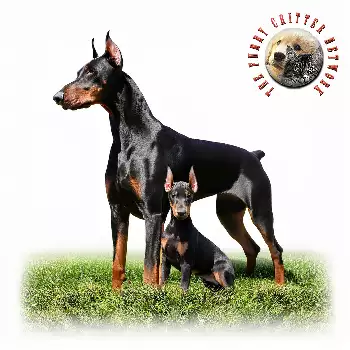

The Doberman Pinscher owes its existence to Karl Friedrich Louis Dobermann, a German tax collector and night watchman from the town of Apolda in Thuringia. Working in the late nineteenth century, Dobermann needed a loyal, intimidating companion to accompany him on his rounds through sometimes dangerous neighborhoods. He also managed the local dog pound, which gave him access to a wide variety of breeds that he could selectively cross to achieve the temperament and physical traits he desired.
While no exact breeding records survive from Dobermann's program, canine historians believe his foundation stock included early examples of the Rottweiler, German Pinscher, Weimaraner, Greyhound, and Manchester Terrier, among others. The goal was a medium-to-large dog that combined speed, endurance, strength, and a fierce yet controllable disposition. By the 1880s, Dobermann's dogs were already well known in the Apolda region as reliable guardians.
After Karl Dobermann's death in 1894, breeders such as Otto Goeller and Philip Greunig continued to refine the line. Goeller is credited with shaping the breed into a more standardized form and is largely responsible for its recognition by the German Kennel Club in 1900. The breed was originally registered as the Dobermann Pinscher, with the suffix later dropped in most countries outside of North America. Over the following decades, breeders worked to temper some of the early aggression while preserving the intelligence, loyalty, and athleticism that defined the breed.
The Doberman Pinscher was among the earliest breeds developed with a deliberate purpose from the start, rather than evolving organically through centuries of rural work. This intentional creation gives the Doberman a unique place in canine history as a breed engineered for companionship, protection, and versatility, qualities that continue to define it more than a century later.