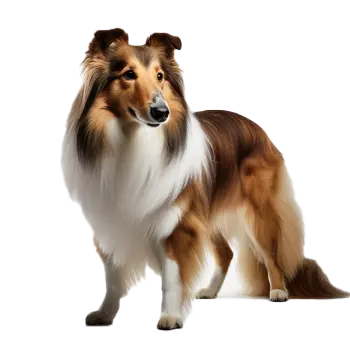

The Collie's roots stretch deep into the pastoral landscapes of Scotland and northern England, where these dogs were indispensable partners to shepherds tending flocks across rugged terrain. The name itself is believed to derive from the Scottish word for the black-faced sheep they herded, known as "Colleys," though some historians suggest it may come from the Gaelic word for "useful." Whatever its linguistic origin, the breed's identity was forged on windswept hillsides where intelligence, stamina, and an instinct for livestock management meant the difference between a thriving flock and a scattered one.
Early Collies bore little resemblance to the refined show dogs of today. They were smaller, sturdier working dogs with coarser coats suited to the harsh Highland weather. Their coloring varied widely, and breeders placed no emphasis on appearance beyond functional traits. What mattered was the dog's ability to read a shepherd's commands, anticipate the movement of sheep, and work tirelessly from dawn to dusk. These dogs were bred for brains and endurance, and their reputation as the finest herding dogs in the British Isles was well established by the early eighteenth century.
The transformation of the Collie from humble farm worker to aristocratic companion began in the mid-nineteenth century when Queen Victoria encountered the breed during her visits to Balmoral Castle in Scotland. Her enthusiasm for the dogs sparked a fashion among the British upper classes, and breeders began refining the Collie's appearance, selecting for the elongated muzzle, luxurious coat, and elegant carriage that define the breed today. This period also saw the emergence of the two recognized varieties: the Rough Collie, with its abundant double coat, and the Smooth Collie, which shares the same structure and temperament beneath a shorter, denser coat.
By the 1870s and 1880s, Collies were being exported to the United States, Australia, and other countries where their herding talents and striking looks found eager audiences. American breeders embraced the breed with particular enthusiasm, and the Collie quickly became one of the most popular dogs in the country. The breed's journey from Scottish hillside to international prominence represents one of the most dramatic transformations in the history of domestic dogs.