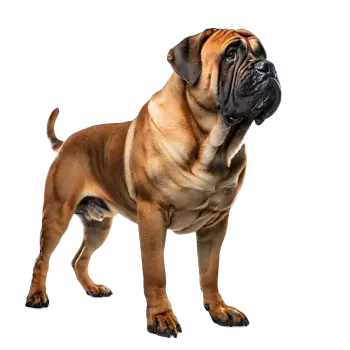

The Bullmastiff emerged in mid-nineteenth-century England as a deliberate cross between the English Mastiff and the Old English Bulldog. Gamekeepers on large country estates needed a dog powerful enough to subdue poachers yet disciplined enough to hold them without mauling. The Mastiff contributed size and strength while the Bulldog added tenacity, agility, and a shorter muzzle that allowed the dog to breathe more easily during physical confrontations. Through careful selective breeding, estate managers arrived at a ratio widely cited as roughly sixty percent Mastiff and forty percent Bulldog.
Early breeders prioritized function over form. The ideal gamekeeper's night dog was dark brindle to blend into the shadows, fast enough to close distance on a fleeing man, and heavy enough to pin an adult to the ground. These dogs were trained to track silently, knock a poacher down, and guard the fallen intruder until the keeper arrived. The breed earned the nickname "The Gamekeeper's Night Dog" precisely because of this specialized role.
As poaching declined in the late nineteenth and early twentieth centuries, the Bullmastiff's role gradually shifted from working estate guardian to companion and show dog. Breeders began refining the look of the breed, favoring a more uniform appearance while preserving the powerful build and steady temperament that had made the dog so effective in the field. Fawn and red coat colors grew in popularity alongside the original dark brindle.
The transition from working dog to recognized breed took decades of deliberate effort. Enthusiasts kept detailed breeding records and worked to standardize traits such as head shape, body proportion, and gait. By the early twentieth century the Bullmastiff was breeding true to type, and fanciers began organizing to gain official recognition from kennel clubs.