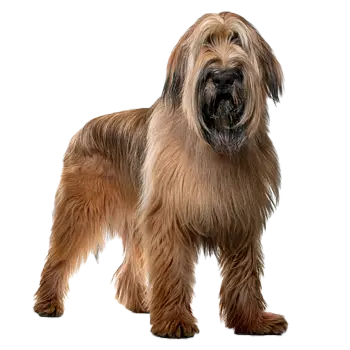

The Briard is one of the oldest and most storied herding breeds of France, with roots that stretch back many centuries into the agricultural heartland of the country. Historical references to large, long-coated sheepdogs in the Brie region of northern France appear as early as the eighth century, though definitive breed documentation emerged much later. The name itself is commonly attributed to the province of Brie, though some historians have debated whether the word derives from an older French term for a working pastoral dog. Regardless of the precise etymology, the breed's identity has always been inseparable from the rolling farmland where it was developed.
For centuries, the Briard served as a dual-purpose farm dog, both herding flocks across open pastures and guarding them against predators such as wolves. French shepherds prized the breed for its intelligence, stamina, and fierce loyalty. The Briard's imposing size and thick, protective coat made it well-suited for long days in variable weather, and its natural guarding instincts meant that it required little additional training to defend livestock. These qualities made the Briard an indispensable partner for the rural communities that depended on sheep farming for their livelihoods.
The transition from purely working dog to recognized breed began in earnest during the nineteenth century, when French dog fanciers took an interest in standardizing the country's native herding breeds. Early breed descriptions appeared in French agricultural texts, and by the late 1800s the Briard was being shown at dog exhibitions in Paris. The first French breed standard was formalized in 1897, establishing the physical and temperamental benchmarks that would guide breeders for generations to come.
The Briard's development was shaped by the practical demands of its work. Unlike breeds that were refined primarily for appearance, the Briard was bred for function first, with traits like double dewclaws on the rear legs considered a hallmark of sound herding structure. This emphasis on working ability over aesthetics gave the breed a rugged, athletic build that it retains to this day, even as the majority of modern Briards live as companions rather than working sheepdogs.