
Origins & Development

The Beauceron is one of the oldest and most distinguished French herding breeds, with a lineage that can be traced back several centuries across the plains and farmlands of northern France. The breed takes its name from the agricultural region of La Beauce, a vast stretch of flat, fertile land southwest of Paris. Historical references to large, smooth-coated herding dogs matching the Beauceron's description appear in French manuscripts dating as far back as the 1500s, though the breed was not formally distinguished by name until much later.

In 1863, a pivotal moment in canine classification occurred when French veterinarian and zoologist Pierre Mégnin drew a clear distinction between two types of French sheepdogs. The long-coated variety was designated the Berger de Brie, or Briard, while the short-coated variety was named the Berger de Beauce, or Beauceron. This separation gave the Beauceron its own identity and set the stage for formal breed development. Prior to this distinction, the two types were often grouped together and referred to simply as working sheepdogs of the French countryside.

The first breed standard for the Beauceron was drafted in 1893 by the French shepherd dog enthusiast Emmanuel Boulet, and the breed was formally registered with the Société Centrale Canine in 1911. Throughout the late 19th and early 20th centuries, dedicated breeders worked to refine the Beauceron's conformation and working ability while preserving its distinctive double dewclaws on the hind legs, a hallmark feature that remains a breed requirement to this day.

The development of the Beauceron was guided almost exclusively by function. Farmers and shepherds in France prized the breed for its ability to manage large flocks of sheep across open terrain, sometimes covering distances of up to fifty miles in a single day. This emphasis on working utility over aesthetic appearance ensured that the Beauceron retained its muscular build, keen intelligence, and tireless stamina through generations of selective breeding.

Historical Roles

The Beauceron earned its reputation as a versatile working dog through centuries of service in the demanding agricultural landscape of France. As a herding dog, the Beauceron excelled at managing flocks of sheep numbering in the hundreds, using a combination of physical presence and calm authority to move livestock across vast stretches of open pasture. Unlike some herding breeds that rely on eye contact or nipping, the Beauceron was known for its ability to drive flocks from behind while also heading off strays with remarkable speed and agility.

Beyond herding, the Beauceron served as a reliable guardian of farms and homesteads. Its imposing size, deep bark, and natural suspicion of strangers made it an effective deterrent against predators and intruders alike. In rural France, it was common for a single Beauceron to serve the dual role of herder by day and watchdog by night, a testament to the breed's stamina and adaptability.

The Beauceron's intelligence and trainability brought it to the attention of the French military during both World Wars. During World War I, Beaucerons were used as messenger dogs, carrying communications between trenches under hazardous conditions. Their steady nerves and ability to navigate difficult terrain made them invaluable in the chaos of the front lines. In World War II, the breed was employed in mine detection, supply transport, and sentry work. Military handlers praised the Beauceron for its ability to remain calm under fire and follow complex commands without hesitation.

In the postwar era, the Beauceron transitioned into roles in law enforcement and search and rescue. French police and gendarmerie units adopted the breed for patrol work, suspect apprehension, and tracking. The Beauceron's combination of loyalty, physical power, and quick learning made it well suited to these demanding roles, and it continues to serve in professional working capacities across Europe today.

Cultural Symbolism

In France, the Beauceron holds a place of quiet pride as a symbol of the nation's rural heritage and agricultural traditions. Unlike flashier breeds that gained international fame through aristocratic patronage, the Beauceron's reputation was built in the fields and farms of the French heartland. It is often referred to as the "gentleman farmer's dog," a reflection of its dignified bearing and unwavering work ethic.

The breed's association with the Beauce region ties it closely to the identity of the French countryside. For many rural families, the Beauceron represents a living connection to the traditions of pastoral life that shaped France's agricultural economy for centuries. This cultural resonance has helped the breed maintain a loyal following in its homeland even as other herding breeds have gained broader international popularity.

The Beauceron's double dewclaws, a distinctive anatomical feature, have taken on symbolic significance within the breed community. These extra toes on the hind legs are not merely a breed standard requirement but are viewed by enthusiasts as a mark of authenticity and heritage. The feature is shared with only a handful of other French breeds, reinforcing the Beauceron's deep roots in the nation's canine history.

In broader cultural terms, the Beauceron embodies qualities that the French have long admired in working dogs: intelligence without showiness, strength without aggression, and loyalty without dependence. These traits have made the breed a quiet but enduring presence in French culture, even if it has never achieved the household-name status of breeds like the Poodle or the French Bulldog.

Breed Clubs & Standards

The formal organization of the Beauceron breed began with the founding of the Club des Amis du Beauceron in 1922, which remains the primary breed club in France to this day. The club was established to promote responsible breeding, preserve the breed's working abilities, and maintain the integrity of the breed standard. Under its guidance, the Beauceron has retained its identity as a functional herding and guarding dog rather than drifting toward a purely show-oriented conformation.

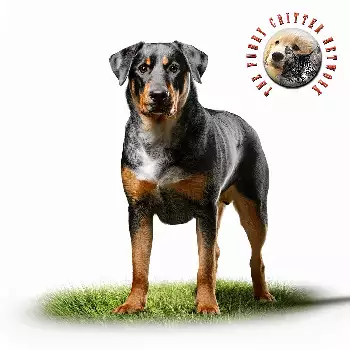
The breed standard maintained by the Fédération Cynologique Internationale describes the Beauceron as a large, solid, and muscular dog with a short, dense coat. Two color varieties are recognized: black and tan, known as "bas rouge" for the red stocking markings on the legs, and harlequin, which features a blue-gray merle pattern with tan markings. The double dewclaws on the hind legs are an absolute requirement in the breed standard, and their absence is considered a disqualifying fault.

In the United States, the American Beauceron Club was established to support the breed following its recognition by the American Kennel Club in 2007, placing it in the Herding Group. The AKC standard closely mirrors the FCI standard, with particular emphasis on the breed's working structure and temperament. The club promotes health testing, working evaluations, and responsible ownership among its members.

Beauceron breed clubs around the world have placed a strong emphasis on preserving the breed's dual-purpose nature. Many clubs sponsor herding trials, obedience competitions, and protection sport events to encourage owners to develop and demonstrate their dogs' working capabilities. This focus on function over form has helped the Beauceron avoid many of the health and temperament issues that can arise when breeding priorities shift toward aesthetics alone.

The Breed Today

The Beauceron remains a relatively uncommon breed outside of France, though its reputation has grown steadily among enthusiasts who value working dogs with strong temperaments and versatile abilities. In France, the breed continues to be used in herding, protection work, and law enforcement, maintaining the functional heritage that has defined it for centuries. Annual registrations in France typically number in the low thousands, making it a well-established but not overly commercialized breed in its homeland.

In the United States and other countries, the Beauceron has found a niche following among experienced dog owners who are drawn to its intelligence, athleticism, and independence. The breed has gained visibility in competitive venues including herding trials, obedience, agility, and French Ring Sport, a demanding protection sport discipline that originated in France and is well suited to the Beauceron's capabilities.

The breed's relative rarity has been both a blessing and a challenge. On one hand, it has helped protect the Beauceron from the overbreeding and puppy-mill proliferation that can accompany surges in popularity. On the other hand, the limited breeding population outside of France means that prospective owners may face long wait times for puppies from responsible breeders, and the genetic diversity of the breed requires careful management.

Modern Beauceron enthusiasts are increasingly focused on health screening and genetic testing to ensure the long-term viability of the breed. Hip dysplasia, dilated cardiomyopathy, and bloat are among the health concerns that breeders monitor, and many breed clubs now require or strongly recommend specific health clearances before breeding. This proactive approach to health management reflects the breed community's commitment to producing dogs that are not only beautiful and capable but also healthy and sound.

Notable Individuals

While the Beauceron has not produced the same roster of celebrity dogs as some more widely known breeds, individual Beaucerons have distinguished themselves through remarkable achievements in working roles and competitive events. French military records from both World Wars reference Beaucerons that served with distinction as messenger and detection dogs, though individual names were rarely recorded in official documentation of the era.

In the world of French Ring Sport, the Beauceron has produced numerous champions that have demonstrated the breed's exceptional combination of athleticism, obedience, and controlled aggression. Ring Sport competitions test a dog's ability to perform complex obedience routines, navigate obstacle courses, and execute controlled bite work, and the Beauceron's natural aptitude for these tasks has made it a perennial contender at the highest levels of the sport.

The breed has also gained recognition through its contributions to search and rescue operations in Europe. Beaucerons have been deployed in disaster response scenarios including earthquake recovery and wilderness search missions, where their endurance, tracking ability, and willingness to work in challenging conditions have proven invaluable. Individual dogs in these roles have been credited with locating survivors in conditions that challenged both human rescuers and other canine breeds.

In the show ring, Beaucerons have earned top honors at major European kennel club events, including the prestigious Exposition Canine Internationale. These wins have helped raise the breed's profile among the broader dog fancy and have introduced new audiences to the Beauceron's striking appearance and commanding presence. While show success alone does not define the breed's legacy, it has played a role in expanding awareness and appreciation of this distinguished French herding dog.

Always consult a qualified professional before making any health-related decisions. This content is provided for informational reference only and should not replace professional guidance specific to your animal.