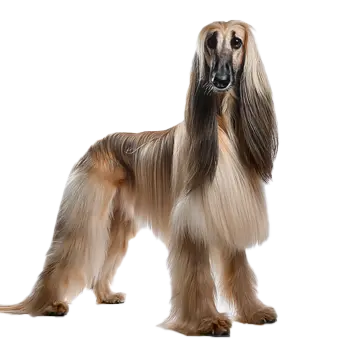

Origins & Development

The Afghan Hound is widely regarded as one of the oldest dog breeds in existence, with a lineage that stretches back thousands of years to the mountainous regions of Afghanistan, Pakistan, and surrounding areas of Central and South Asia. Ancient depictions of dogs bearing a striking resemblance to the modern Afghan Hound have been found in cave paintings and artifacts throughout the region, suggesting that the breed's basic form has remained remarkably consistent over millennia. While the precise timeline of the breed's development remains a subject of scholarly debate, the Afghan Hound's deep roots in the ancient world are beyond question.

The breed evolved in the rugged terrain of the Hindu Kush mountains and the vast deserts and plains of the Afghan countryside. This harsh and varied landscape demanded a dog of extraordinary athletic ability, keen eyesight, and independent thinking. Afghan Hounds were selectively bred by nomadic tribes and settled communities alike to course game across punishing terrain, and their long, flowing coats developed as insulation against the extreme temperature swings common to high-altitude environments. The combination of speed, endurance, and resilience made them indispensable companions for hunters who relied on their dogs to secure food in unforgiving conditions.

The breed first came to Western attention in the late nineteenth and early twentieth centuries, when British soldiers and diplomats stationed in Afghanistan and India brought specimens back to England. Early imports varied considerably in type, reflecting the diverse regional strains that existed across the breed's homeland. Two primary types emerged in the British fancy: a heavier-coated mountain type associated with the Ghazni region and a rangier, lighter-coated desert type. The blending of these types, guided by early breed standards, gradually produced the elegant and uniform Afghan Hound recognized in show rings today.

The Afghan Hound was officially recognized by the American Kennel Club in 1926, and the breed quickly attracted admirers drawn to its dramatic appearance and aristocratic bearing. Early American breeders worked to refine the breed's silhouette while preserving the athletic structure essential to its original function. The interwar period saw a surge of interest in the breed among affluent dog enthusiasts, and the Afghan Hound became a fixture at prestigious dog shows on both sides of the Atlantic.

Historical Roles

The Afghan Hound's primary historical role was that of a coursing hound, used by the peoples of Afghanistan and surrounding regions to hunt a wide variety of game. Their quarry included gazelles, hares, marmots, wolves, snow leopards, and other animals found across the diverse landscapes of Central Asia. The breed's remarkable speed, agility, and independent decision-making made it exceptionally well suited for pursuing fast and elusive prey across rough terrain where human hunters could not easily follow on foot or horseback.

Beyond hunting, Afghan Hounds served as guardians of livestock and camp. Their keen senses and alert nature made them effective sentinels, and their imposing presence was enough to deter many would-be predators. In some tribal communities, the dogs held a position of honor within the household and were considered valuable assets, with prized hunting dogs commanding significant trade value. The bond between Afghan Hound and handler was one of mutual respect rather than rigid obedience, a dynamic that persists in the breed's temperament today.

The breed also played a ceremonial and symbolic role in Afghan tribal culture. Fine hunting dogs were often given as diplomatic gifts between tribal leaders, and the ownership of a particularly talented Afghan Hound conferred status and prestige. The dogs featured in local folklore and oral traditions, where they were celebrated for their beauty, courage, and loyalty. These cultural roles elevated the Afghan Hound beyond the status of a mere working animal and cemented its place as a living symbol of the region's heritage.

With the breed's arrival in the West, its role shifted dramatically from working hunter to show dog and companion. While a handful of enthusiasts have explored lure coursing and other performance events to honor the breed's athletic heritage, the vast majority of Afghan Hounds in North America and Europe live as companion animals and show dogs. This transition has sparked ongoing conversations within the breed community about balancing aesthetic refinement with the preservation of the functional traits that defined the Afghan Hound for centuries.

Cultural Symbolism

In its homeland, the Afghan Hound carries deep cultural symbolism. The breed is closely associated with the rugged independence, dignity, and resilience of the Afghan people themselves. Afghan Hounds appear in regional art, poetry, and storytelling traditions, often depicted as noble companions worthy of kings and warriors. The breed's striking appearance and proud carriage have made it a natural symbol of elegance and aristocracy across many cultures that have encountered it.

In the Western world, the Afghan Hound became a symbol of glamour and sophistication during the twentieth century. The breed's dramatic silky coat and fashion-model bearing attracted the attention of artists, photographers, and designers. During the 1970s in particular, the Afghan Hound became a cultural icon associated with the era's aesthetic sensibilities, appearing frequently in fashion photography and design. The breed's visual impact was so strong that it transcended the dog world and entered the broader cultural consciousness as shorthand for luxury and refinement.

The Afghan Hound has also become a symbol within the dog fancy of the tension between form and function. Debates about whether the breed's increasingly exaggerated show coat and refined structure have moved too far from its working origins are a recurring theme in breed circles. These discussions reflect broader questions about the purpose and ethics of purebred dog breeding, making the Afghan Hound a touchstone in conversations about the future of pedigree dogs.

In Afghanistan itself, the breed holds significance as a point of national pride. Efforts to preserve and protect native Afghan Hound populations have gained attention in recent decades, particularly as conflict and instability have threatened the breed's presence in its ancestral homeland. International organizations and breed enthusiasts have worked to document and support indigenous Afghan Hound populations, recognizing the cultural and genetic value they represent.

Breed Clubs & Standards

The Afghan Hound Club of America, founded in 1940, is the parent club for the breed in the United States and serves as the guardian of the breed standard under the auspices of the American Kennel Club. The club has played a central role in shaping the direction of Afghan Hound breeding in North America, hosting national specialties, supporting health research, and providing educational resources for breeders and owners. Its breed standard emphasizes the Afghan Hound's exotic expression, proud carriage, and powerful, smooth gait.

In the United Kingdom, the Afghan Hound Association and several regional breed clubs oversee the breed under Kennel Club standards. The British standard shares many features with its American counterpart but reflects subtle differences in emphasis that have led to recognizable stylistic distinctions between American and British breeding programs. European and Australasian breed clubs maintain their own standards and traditions, contributing to a rich international tapestry of Afghan Hound type.

The Fédération Cynologique Internationale recognizes the Afghan Hound under Group 10, Sighthounds, and its standard serves as the reference point for breeders in the many FCI-member countries. The FCI standard places strong emphasis on the breed's functional structure and movement, reflecting the organization's broader commitment to preserving working ability alongside aesthetic qualities. This international framework has facilitated the exchange of breeding stock and ideas across borders, enriching the global Afghan Hound gene pool.

Breed clubs at all levels have increasingly focused on health and genetic diversity in recent years. Hip dysplasia, thyroid disorders, and certain eye conditions are among the health concerns that have prompted organized screening programs and research initiatives. The Afghan Hound community has been proactive in embracing health testing and transparent record-keeping, recognizing that the breed's long-term viability depends on a commitment to both beauty and soundness.

The Breed Today

The Afghan Hound today occupies a distinctive niche in the dog world. While it has never been among the most popular breeds in terms of registration numbers, it commands a devoted and passionate following. The breed's dramatic appearance and challenging temperament appeal to owners who appreciate an independent, intelligent companion that defies the stereotype of eager-to-please obedience. Afghan Hound ownership is often described as a lifestyle rather than a casual hobby, given the considerable grooming demands and exercise needs the breed requires.

In the show ring, the Afghan Hound remains a formidable competitor and a perennial crowd favorite. The spectacle of a beautifully presented Afghan Hound in full coat moving around the ring is one of the most visually arresting sights in the sport of purebred dogs. Top Afghan Hounds have claimed Best in Show at the most prestigious events in the world, and the breed's show career continues to attract dedicated exhibitors who invest enormous time and skill in conditioning and presentation.

Lure coursing has experienced a resurgence of interest among Afghan Hound owners seeking to connect with the breed's hunting heritage. Organizations such as the American Sighthound Field Association offer competitive events that allow Afghan Hounds to demonstrate their speed and prey drive in a controlled setting. These events provide valuable physical and mental stimulation for the dogs and offer breeders a means of evaluating the functional qualities that are difficult to assess in the conformation ring alone.

The breed faces ongoing challenges related to genetic diversity and population size. As with many purebred dogs, the Afghan Hound's gene pool is finite, and responsible breeders must balance the desire for typey, beautiful dogs with the imperative to maintain genetic health. Breed clubs and health foundations continue to invest in research and education, working to ensure that the Afghan Hound thrives for generations to come.

Notable Individuals

Among the most celebrated Afghan Hounds in breed history is Shirkhan of Doornkop, an early import whose influence on the breed's development in America was profound. Shirkhan's type and structure set a standard that shaped breeding programs for decades, and his descendants can be found in the pedigrees of many modern Afghan Hounds. His legacy illustrates the outsized impact that a single outstanding individual can have on a breed's trajectory.

Ch. Coastwind Doubletime, known as Canaan, was named Westminster Kennel Club Best in Show in 1957, bringing the breed into the mainstream consciousness and elevating its profile among the general public. The breed's fortunes in the show world continued to rise with subsequent wins, including Kabul's milestone in 1973 and other landmark victories that demonstrated the breed's ability to compete at the highest levels against all comers.

In the world of lure coursing, several Afghan Hounds have earned dual championships, excelling in both the conformation ring and on the coursing field. These versatile individuals serve as living proof that beauty and athleticism need not be mutually exclusive, and they inspire breeders to pursue a balanced ideal that honors the breed's dual heritage as both a stunning show dog and a capable working hound.

Beyond the competitive arena, individual Afghan Hounds have made their mark as therapy dogs, ambassadors for sighthound rescue organizations, and beloved companions whose stories have touched the hearts of dog lovers around the world. The breed's unique combination of elegance, independence, and quiet devotion ensures that each Afghan Hound leaves a lasting impression on those fortunate enough to share their lives.

Always consult a qualified professional before making any health-related decisions. This content is provided for informational reference only and should not replace professional guidance specific to your animal.