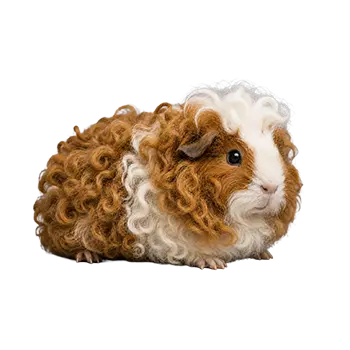

The Peruvian guinea pig takes its name from the South American country most closely associated with guinea pig domestication, though the breed as it is recognized today was largely developed through selective breeding in Europe. All domestic guinea pigs descend from wild cavies native to the Andean regions of South America, where domestication is believed to have begun around 5000 BCE. The indigenous peoples of what is now Peru, Bolivia, and Ecuador raised guinea pigs primarily as a food source, but these animals also held deep spiritual and ceremonial significance.
The long-haired trait that defines the Peruvian breed likely appeared as a natural genetic mutation among domesticated guinea pig populations. While short-haired guinea pigs dominated early domesticated stocks, occasional long-haired individuals would have emerged through spontaneous variation. In the Andean environment, these long-haired variants may not have been specifically selected for, as the practical demands of guinea pig husbandry in indigenous communities favored hardier, easier-to-maintain animals.
European traders and explorers brought guinea pigs to Europe during the 16th century, where they were initially kept as exotic curiosities by the wealthy. The arrival of guinea pigs in European courts and households created conditions favorable to selective breeding for aesthetic traits, and the long-haired variants that eventually became the Peruvian breed attracted attention from early fanciers drawn to their dramatic, flowing coats.
By the 19th century, European breeders had begun systematically selecting for coat length, texture, and growth pattern, refining the Peruvian into a distinct breed with a coat that could reach impressive lengths. The breed's development paralleled the growth of the Victorian-era animal fancy movement, which celebrated elaborate physical traits in a wide range of domestic animals. The Peruvian guinea pig, with its sweeping, floor-length coat, became one of the most visually striking products of this era of selective breeding.