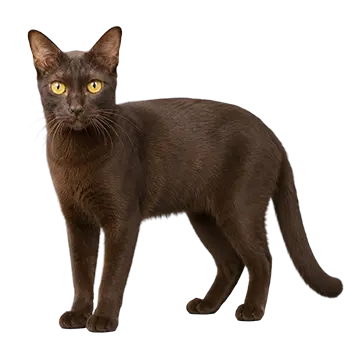

Film & Television

The Suphalak has almost no footprint in mainstream film and television, a direct consequence of its extreme rarity. Unlike common breeds that are easy to cast and recognizable to audiences, a cat that exists in only small numbers is seldom available for productions and would rarely be identified as a distinct breed on screen.

Where copper-brown cats do appear in film or television, they are far more likely to be domestic shorthairs or the well-established Burmese, with which the Suphalak is easily confused. Casual viewers and even production teams generally cannot distinguish the heritage Thai cat from look-alikes.

As a result, the breed's screen presence is best described as effectively absent rather than iconic. Its cultural visibility comes overwhelmingly from documentary and news coverage of Thai cat-preservation efforts rather than from scripted entertainment.

Literature & Manuscript Art

The Suphalak's most significant and enduring appearance in any medium is in literature and art — specifically the Tamra Maew, the illustrated Thai manuscripts that both describe and depict the copper cat. These Cat-Book Poems, associated with the Ayutthaya period, are the breed's foundational record, predating modern photography by centuries.

Surviving examples of these manuscripts are preserved in institutions in Thailand and abroad, where they are studied as cultural artifacts documenting which cats Thai society once prized. The verses pair physical description with poetic claims about the fortune each cat could bring its owner.

In the present day the breed appears chiefly in reference works, breed encyclopedias, and articles about rare and heritage cats. This nonfiction, educational presence — rather than novels, comics, or commercial illustration — defines its literary footprint.

Internet & Social Media

The internet has become the Suphalak's primary modern stage. Rare-breed enthusiasts, preservation organizations, and individual breeders use websites and social platforms to document the cats, share photographs of their distinctive copper coats, and explain how the variety differs from the Burmese.

Much of this online content is educational in tone, aimed at correcting the widespread confusion between the Suphalak and similar brown cats and at raising awareness of ongoing conservation work in Thailand.

Because verified Suphalaks are so scarce, online interest tends to outpace the supply of authentic images, and enthusiasts often emphasize provenance and genetic testing when sharing photos. The breed's digital presence is therefore niche but passionate, concentrated among people specifically interested in Thai heritage cats.

Tourism, Advertising & National Branding

As a recognized piece of Thai cultural heritage, the Suphalak occasionally features in contexts that celebrate the country's traditional cats, alongside better-known varieties such as the Wichienmaat, the old-style Siamese, and the Korat.

Thai cat-preservation centers and heritage initiatives sometimes draw visitors interested in seeing rare native breeds, which links the cat loosely to cultural tourism. Coverage of milestones such as international breed recognition has also been used to highlight Thailand's stewardship of its indigenous animals.

Compared with globally marketed breeds, however, the Suphalak has little commercial or advertising presence. Its branding value lies almost entirely in national pride and cultural identity rather than in mass-market promotion.

The Popularity Effect

For most popular breeds, media exposure drives demand that can outrun responsible breeding. The Suphalak illustrates almost the opposite dynamic: its scarcity, not its fame, is the defining feature, and demand is constrained by how few authentic cats exist.

This rarity creates its own risks. Strong interest in owning a lucky copper cat has historically encouraged sellers to label ordinary brown cats as Suphalaks, which is part of why preservationists place such emphasis on genetic verification and documented lineage.

The healthiest path for the breed, in the view of its custodians, is measured growth that protects bloodline integrity rather than a surge of popularity. Any future rise in visibility is generally framed as something to manage carefully so that demand does not undermine the very heritage that makes the cat special.

Always consult a qualified professional before making any health-related decisions. This content is provided for informational reference only and should not replace professional guidance specific to your animal.