
Origins & Development

The Sphynx cat as a recognized breed traces its origins to 1966, when a domestic cat in Toronto, Canada, gave birth to a hairless kitten named Prune. This natural genetic mutation, caused by a recessive gene, sparked immediate interest among breeders who saw the potential for developing an entirely new breed. Early efforts to establish a breeding program using Prune and his relatives met with limited success, as the gene pool was extremely small and many of the resulting kittens suffered from health problems related to inbreeding.

Throughout the 1970s, additional hairless kittens appeared in natural litters in both North America and Europe, providing fresh genetic material that proved essential to the breed's survival. Breeders in the Netherlands and Minnesota made particularly important contributions by crossing these naturally occurring hairless cats with Devon Rex cats, which carried a gene for very short, sparse fur. This crossbreeding strategy widened the gene pool while maintaining the signature hairless appearance, and it laid the foundation for the healthy, robust Sphynx cats known today.

The breed's development was far from straightforward. Several cat registries initially refused to recognize the Sphynx, citing concerns about the health implications of hairlessness and questioning whether a breed built around what was essentially a genetic anomaly could be sustained responsibly. Dedicated breeders spent decades refining breeding programs, documenting health outcomes, and demonstrating that the Sphynx could thrive as a healthy and genetically diverse breed. Their persistence gradually won over skeptics in the cat fancy world.

By the mid-1990s and into the early 2000s, the Sphynx had earned recognition from most major cat registries, including The International Cat Association and the Cat Fanciers' Association. Today the breed stands as a testament to careful, patient breeding practices and the passion of a dedicated community of fanciers who believed in the potential of an unusual-looking cat that won hearts with its extraordinary personality.

Historical Roles

While the modern Sphynx is a relatively recent creation, hairless cats have appeared throughout recorded history in various parts of the world. Aztec writings and artwork reference hairless cats, and similar cats were reported in several other cultures long before any formal breeding program existed. These historical sightings suggest that the recessive gene responsible for hairlessness has surfaced naturally in domestic cat populations many times over the centuries, only to disappear again when the cats were not selectively bred.

Unlike many cat breeds that were originally developed for practical purposes such as pest control or vermin hunting, the Sphynx has always been valued primarily as a companion animal. Its lack of fur made it unsuitable for the outdoor working roles that many other breeds filled historically, but its intense sociability and desire for human contact made it an ideal indoor companion. Early Sphynx owners quickly discovered that these cats craved warmth and closeness, behaviors driven in part by their need to regulate body temperature without the insulation that fur provides.

The breed also found an early niche in the world of cat shows, where its dramatic appearance made it a crowd favorite long before it earned official recognition. Show judges and spectators were fascinated by the Sphynx's wrinkled skin, large ears, and lemon-shaped eyes, and the breed's outgoing, almost dog-like personality in the show ring helped win over audiences who might otherwise have been put off by its unconventional looks.

In the realm of allergy research, the Sphynx has played a small but notable role. Although not truly hypoallergenic—cat allergies are triggered by proteins in saliva and skin oils rather than fur itself—the Sphynx became a subject of interest for researchers studying feline allergens. The breed's visibility helped educate the public about the actual mechanisms behind cat allergies, dispelling the common myth that hairless cats are automatically safe for allergy sufferers.

Cultural Symbolism

The Sphynx cat carries a powerful cultural presence that far exceeds its relatively small population among domestic cat breeds. Its striking, otherworldly appearance has made it a symbol of the exotic and the unconventional. The breed's name itself, borrowed from the Great Sphinx of Giza, deliberately evokes mystery, antiquity, and a sense of the extraordinary. While the modern Sphynx has no actual connection to ancient Egypt, the name has helped cement its image as a cat apart from all others.

In contemporary culture, the Sphynx has become something of an icon for embracing uniqueness and challenging conventional beauty standards. Owners and breed enthusiasts frequently describe the experience of falling in love with a Sphynx as transformative—an initial reaction of surprise or even discomfort giving way to deep appreciation for the breed's warmth, expressiveness, and charm. This narrative of looking beyond surface appearances has resonated broadly, making the Sphynx a popular symbol in discussions about acceptance and individuality.

The breed has also become associated with luxury, sophistication, and high fashion. Its sleek, sculptural appearance has drawn comparisons to modern art, and Sphynx cats are frequently featured in editorial photography, fashion spreads, and design-oriented media. This association with the avant-garde has helped the Sphynx cultivate a devoted following among creative professionals, artists, and designers who appreciate the breed's aesthetic impact.

At the same time, the Sphynx has occasionally been cast in a less flattering cultural light. Its unusual appearance has made it a go-to choice for villains and antagonists in film and television, reinforcing an association with the sinister or the unsettling. Breed enthusiasts have worked to counter these portrayals by showcasing the Sphynx's genuinely affectionate and playful nature, and in recent years public perception has shifted substantially in the breed's favor.

Breed Clubs & Standards

The establishment of breed clubs and formal standards was a critical milestone in the Sphynx's journey from genetic curiosity to recognized breed. The International Cat Association was among the first major registries to grant the Sphynx championship status, doing so in 2005. The Cat Fanciers' Association followed with its own recognition in 2002, marking the breed's acceptance by the two largest cat registries in North America. European registries, including the Fédération Internationale Féline, also recognized the breed, solidifying its international standing.

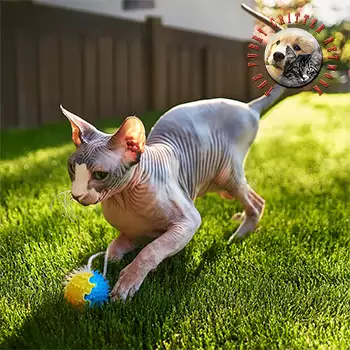
Breed standards for the Sphynx emphasize a medium-sized, muscular body with a broad chest, a rounded abdomen, and a whip-like tail. The head should be a modified wedge shape with prominent cheekbones, large lemon-shaped eyes, and strikingly large ears. The skin should feel like warm suede or chamois and may display fine, almost invisible peach fuzz. Wrinkles are desirable, particularly on the head, neck, and shoulders, though excessive wrinkling that impairs vision or movement is penalized.

Sphynx breed clubs around the world serve multiple functions beyond setting show standards. They act as educational resources for prospective owners, providing guidance on the breed's unique care requirements, including the need for regular skin bathing, ear cleaning, and protection from temperature extremes. Many clubs also coordinate health registries that track genetic conditions within the breed, helping breeders make informed decisions about pairings and contributing to the long-term health of the Sphynx population.

The breed club community has also been instrumental in addressing ethical concerns surrounding Sphynx breeding. Responsible clubs advocate strongly against breeding practices that prioritize extreme physical traits at the expense of health, and many have established codes of ethics that require health screening for known genetic conditions such as hypertrophic cardiomyopathy. This proactive approach to health and welfare has helped the Sphynx maintain its reputation as a breed supported by a conscientious and dedicated community.

The Breed Today

The Sphynx has experienced a dramatic surge in popularity over the past two decades, rising from a niche curiosity to one of the most sought-after cat breeds in the world. Registration numbers have climbed steadily across all major cat registries, and the breed consistently ranks among the top ten most popular breeds in North America and Europe. This popularity has been fueled in large part by social media, where the Sphynx's expressive face and unusual appearance make it extraordinarily photogenic and shareable.

Modern Sphynx breeders benefit from decades of careful genetic work that has produced a breed with significantly greater genetic diversity and overall health than the early Sphynx lines possessed. Responsible breeders continue to outcross with approved breeds to maintain this diversity, and ongoing health screening programs have helped reduce the incidence of inherited conditions. The breed's gene pool is now broad enough to support a healthy, sustainable population, though vigilance remains essential.

The Sphynx's role in the cat world today extends well beyond the show ring. The breed has become popular as a therapy and emotional support animal, thanks to its intensely social and affectionate nature. Sphynx cats are known for seeking out human contact, often curling up against their owners for warmth and companionship, qualities that make them well-suited to providing comfort and emotional support.

Despite its growing popularity, the Sphynx remains a breed that requires a committed and knowledgeable owner. The unique care demands of a hairless cat—regular bathing, sun protection, temperature management, and attentive health monitoring—mean that the breed is not a casual choice. Breed clubs and responsible breeders continue to emphasize education as a cornerstone of Sphynx ownership, ensuring that new owners understand what it takes to provide these remarkable cats with the care they deserve.

Notable Individuals

Several individual Sphynx cats have left a lasting mark on the breed's history and public image. Among the most historically significant is Epidermis, born in 1975 in Minnesota as part of a litter that included another hairless kitten named Dermis. These two cats were sent to a breeder in Oregon and became foundational contributors to the modern Sphynx gene pool. Their bloodlines, crossed with lines from Canadian and European hairless cats, helped establish the genetic base upon which today's Sphynx population is built.

In the world of cat shows, numerous Sphynx cats have earned distinguished titles and best-in-show honors that helped elevate the breed's profile among judges and the public alike. Show-winning Sphynx cats have played an outsized role in changing perceptions of the breed, demonstrating that hairless cats can compete at the highest levels of the cat fancy and win on merit against breeds with more conventionally appealing coats.

Social media has produced its own generation of famous Sphynx cats, with several individuals amassing hundreds of thousands or even millions of followers across platforms. These feline influencers have done more to shape public perception of the Sphynx than perhaps any other factor in the breed's recent history. By showcasing the breed's playful antics, expressive personalities, and affectionate nature in daily posts and videos, these cats and their owners have transformed the Sphynx from a breed that many found unsettling into one that millions find irresistible.

The breed has also gained visibility through its association with notable public figures. Several celebrities and public personalities have been photographed with their Sphynx cats, bringing mainstream media attention to the breed and further fueling its popularity. While this celebrity association has sometimes been criticized for driving impulse purchases by unprepared owners, it has undeniably raised the Sphynx's profile and contributed to its status as one of the most recognizable cat breeds in the world.

Always consult a qualified professional before making any health-related decisions. This content is provided for informational reference only and should not replace professional guidance specific to your animal.