
Film & Television

The Sokoke's extreme rarity means it has almost no presence in mainstream film and television, unlike breeds such as the Siamese or Maine Coon that have appeared in countless productions. A casual viewer is far more likely to encounter the breed in specialized programming than in a feature film.

Where the Sokoke does appear is in cat-fancy and educational media: televised cat shows, documentary segments on unusual or rare breeds, and breed-profile features produced for pet-focused channels and streaming platforms. Such programs typically highlight the cat's tree-bark coat, its Kenyan origins, and its athletic, dog-like behavior.

This limited screen presence is partly a function of supply. With so few Sokokes in the world, the breed simply is not available for the kind of repeated casting that makes other cats visually familiar to general audiences.

Literature & Art

In print, the Sokoke appears chiefly in cat breed encyclopedias, fanciers' magazines, and reference works that catalog the world's recognized breeds. These sources document its history, standard, and temperament, and they remain the most reliable places to learn about the breed in depth.

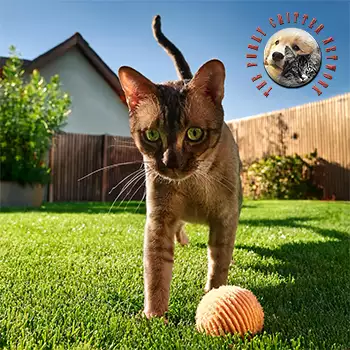
Artistically, the Sokoke's marbled, wood-grain coat makes it a striking subject for photographers and illustrators who specialize in animals. Fine-art and photographic studies tend to emphasize the interplay of light and pattern across the short coat, treating the cat almost as a natural design study.

The breed's connection to a specific landscape, the Arabuko-Sokoke Forest, also gives writers and artists a strong sense of place to draw on, linking the animal to themes of coastal Kenya, biodiversity, and natural heritage.

Internet & Social Media

Online, the Sokoke has a small but devoted following. Breed enthusiasts, breeders, and a handful of owners share photos and videos through niche groups, breed-club pages, and pet communities, where the cat's unusual appearance reliably draws interest from people who have never heard of it.

Because so few Sokokes exist, the breed has not generated the viral, meme-driven fame of more common cats. Its internet presence is best understood as a quiet, enthusiast-driven niche rather than a mass phenomenon.

That niche still serves an important function: it connects prospective owners with reputable breeders and helps spread accurate information about a breed that many people encounter for the very first time through an online photo or short video.

Advertising & Branding

The Sokoke rarely features in mainstream advertising, where recognizable or conventionally cute cats are usually preferred. Its scarcity and relative obscurity make it an unlikely choice for campaigns aiming at broad, instant recognition.

When the breed does appear in a branding context, it tends to be tied to themes of rarity, natural heritage, or exotic origin, occasionally in materials connected to Kenyan wildlife and the Arabuko-Sokoke Forest region. In these settings the cat serves as an emblem of something uncommon and place-specific rather than as a familiar mascot.

For that reason, the Sokoke is more likely to be used deliberately, as a symbol chosen for its uniqueness, than incidentally, as a stand-in for cats in general.

The Popularity Effect

For many popular breeds, a surge of media exposure can trigger demand spikes that strain ethical breeding and animal welfare. The Sokoke has largely been insulated from this popularity effect precisely because it is so rare and because the supply of kittens is so limited.

This scarcity is a double-edged sword. It protects the breed from impulse buying and overbreeding, but it also means that responsible expansion of the gene pool depends on a small, committed community working carefully over time.

Advocates generally argue that any growth in the breed's visibility should be matched by attention to genetic health and to placing cats in homes prepared for an exceptionally active companion, so that interest sparked by media never outpaces the breed's capacity to grow responsibly.

Always consult a qualified professional before making any health-related decisions. This content is provided for informational reference only and should not replace professional guidance specific to your animal.