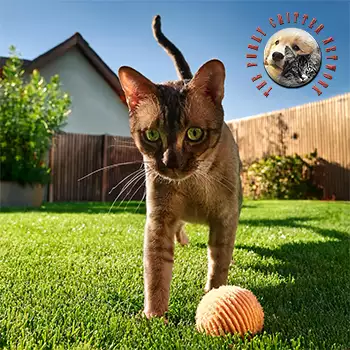

The Sokoke traces its roots to the Arabuko-Sokoke Forest along the southeastern coast of Kenya, near the towns of Malindi and Watamu. The breed descends from a naturally occurring population of domestic cats long familiar to the local Giriama people, part of the wider Mijikenda community, who called them khadzonzo, a word commonly translated as 'looks like tree bark' in reference to the cats' distinctive coat. In 1978, Jeni Slater, who managed a coastal plantation in the area, found a litter of kittens with this unusual marbled pattern and began keeping and breeding them, marking the start of the breed's documented development.
In the mid-1980s, Slater's friend Gloria Moeldrup brought several of these cats to Denmark, establishing the first European breeding line and introducing the Sokoke to the international cat fancy. Because the founding population was small, breeders later imported additional cats from Kenya in the 2000s to widen the gene pool. These later imports are sometimes distinguished from the earlier Danish line, and many modern pedigrees blend both to maintain genetic health.
Despite a strikingly wild appearance, the Sokoke is a fully domestic cat, not a hybrid with any African wildcat. Genetic studies have placed it within domestic lineages associated with the Indian Ocean and Arabian or Asian trade routes, suggesting its ancestors may have arrived on the Kenyan coast through centuries of maritime commerce rather than emerging from a local wild species. This combination of natural origin and ancient trade heritage gives the breed an unusual place among recognized cats.