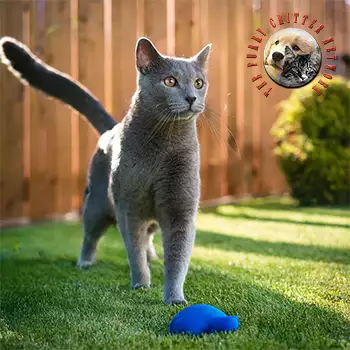

Origins & Early History

The Russian Blue is widely believed to have originated in the port city of Arkhangelsk (Archangel) in northern Russia, earning the breed one of its earliest names: the Archangel Cat. Sailors traveling trade routes between Russia and northern Europe are thought to have carried these striking silver-blue cats aboard their ships, both as companions and as natural pest controllers. The harsh subarctic climate of northern Russia likely contributed to the development of the breed's remarkably dense double coat, which insulates against cold far more effectively than the coats of most shorthaired breeds.

While the precise timeline of the breed's emergence remains a matter of some scholarly debate, references to blue-coated cats from Russia appear in records dating back several centuries. Some breed historians point to accounts from the 1600s and 1700s describing cats with plush blue-gray fur kept by Russian czars and aristocratic families, though verifiable documentation from that era is scarce. What is more firmly established is that by the mid-nineteenth century, cats matching the Russian Blue's description were being transported westward to England and Scandinavia, where they would soon capture the attention of early cat fanciers.

The breed's journey from working ship cat to refined show animal began in earnest during the Victorian era. England's growing fascination with pedigree animals and organized exhibitions provided the perfect stage for the Russian Blue's international debut. The cats that arrived on British shores were noted for their unusually soft, seal-like coats and their vivid green eyes, traits that set them apart from other blue-coated cats already known in Europe.

It is worth noting that the Russian Blue's early history is intertwined with broader patterns of maritime trade and cultural exchange between Russia and western Europe. Cats were valuable commodities on sailing vessels, and breeds that proved hardy and good-natured travelers often found new homes in distant ports. The Russian Blue's calm disposition and adaptability made it particularly well suited to life at sea, a temperamental quality that continues to define the breed today.

Rise in the Western Cat Fancy

The Russian Blue made its first documented appearance at a major cat show in 1875 at the Crystal Palace in London, where it was exhibited alongside other blue cats under the general classification of blue shorthairs. At that time, there was no separate category for Russian Blues, and they competed directly against the stockier British Blue (now known as the British Shorthair) and other blue-coated breeds. Despite their elegance, the leaner, finer-boned Russian cats often lost to their more robustly built British counterparts, whose heavier frames were favored by the judges of the day.

Recognizing the distinct qualities of the breed, enthusiasts began advocating for a separate class. By 1912, the Governing Council of the Cat Fancy (GCCF) in Britain granted the Russian Blue its own competitive category, distinguishing it from the British Blue and other similar cats. This milestone was crucial for the breed's development, as it allowed breeders to focus on refining the specific traits that made the Russian Blue unique: its fine bone structure, wedge-shaped head, brilliant green eyes, and distinctively plush double coat with silver-tipped guard hairs that give the fur its characteristic shimmer.

The two World Wars took a devastating toll on Russian Blue breeding programs across Europe. By the end of World War II, the breed's population had dwindled to dangerously low numbers. Determined breeders in England and Scandinavia undertook careful outcrossing programs to save the breed, introducing Siamese bloodlines in Britain and working with local blue cats in Scandinavia. These parallel efforts produced slightly different lines—the British crosses resulted in a more angular, Siamese-influenced type, while the Scandinavian programs maintained a rounder, more traditional appearance.

The post-war decades saw ongoing refinement as breeders worked to reconcile these different lines and establish a consistent breed standard. By the mid-twentieth century, the Russian Blue had been fully re-established with a stable gene pool and a clearly defined type that balanced the best qualities of both the British and Scandinavian breeding programs.

Cultural Symbolism & Folklore

In Russian folklore, blue-gray cats have long been associated with good fortune, protection, and spiritual well-being. While these traditions are not exclusively linked to the Russian Blue as a defined breed, the cultural reverence for blue-coated cats in Russia almost certainly contributed to the breed's early prestige. In some rural Russian traditions, a blue cat placed in the cradle of a newborn was believed to ward off evil spirits, and the gift of a blue cat to a bride was considered a blessing on the marriage.

The breed's association with Russian aristocracy and the imperial court has added an enduring layer of mystique. While hard evidence that Russian czars specifically kept Russian Blues is limited, the legend persists in breed lore and has become an integral part of the breed's identity. Stories of blue cats roaming the halls of the Winter Palace in St. Petersburg have been passed down through generations of breeders, lending the Russian Blue an air of regal refinement that resonates in its dignified bearing and reserved temperament.

Beyond Russia, the breed has acquired symbolic associations in other cultures. In Japan, blue cats are sometimes regarded as lucky, and the Russian Blue has become a popular breed among Japanese cat enthusiasts who appreciate its quiet elegance. In western cat culture, the Russian Blue is often used as a symbol of grace, intelligence, and understated beauty, qualities that align with the breed's actual temperament and appearance.

The Russian Blue's cultural symbolism extends into the modern era, where the breed is frequently associated with sophistication and exclusivity. Its relatively limited numbers compared to more common breeds, combined with its striking appearance and gentle personality, have given it a reputation as a connoisseur's cat—a breed chosen by those who value subtlety over showiness.

Breed Registries & Standards

The Russian Blue is recognized by all major cat registries worldwide, though the specific standards vary slightly from organization to organization. The Cat Fanciers' Association (CFA) in the United States describes the ideal Russian Blue as a cat of fine bone, long body, and firm muscle, with a short, dense, plush coat of an even bright blue color with silver-tipped guard hairs. The eyes must be vivid green, set wide apart, and the head should be a smooth, medium wedge shape.

The International Cat Association (TICA) maintains a similar standard but allows for slightly more variation in body type. The GCCF standard in Britain and the Fédération Internationale Féline (FIFe) standard used across much of Europe emphasize the breed's overall balance and elegance, with particular attention to the quality and texture of the coat. All registries agree that the Russian Blue's coat should be distinctly different from that of any other blue cat—shorter, denser, and standing out from the body due to the thickness of the undercoat.

Breed clubs dedicated to the Russian Blue exist in most countries with active cat fancies. The Russian Blue Fanciers and the Russian Blue Breed Council within CFA have been instrumental in guiding the breed's development in North America, while European breed clubs have maintained close ties to the Scandinavian lines that played a vital role in the breed's post-war recovery. These organizations hold specialty shows, publish breed-specific newsletters, and provide mentoring programs for new breeders.

The breed standard has evolved over the decades, reflecting changing aesthetic preferences and a deeper understanding of feline genetics. Early standards were relatively brief and left considerable room for interpretation, whereas modern standards are highly detailed documents that specify everything from the angle of the nose profile to the precise shade of green required in the eyes. This increasing specificity has helped produce greater consistency in the breed while preserving the essential qualities that have defined the Russian Blue for over a century.

The Breed Today

Today the Russian Blue enjoys steady popularity among cat enthusiasts worldwide, consistently ranking among the more sought-after pedigreed cat breeds. Unlike some breeds that experience dramatic surges and declines in popularity driven by media exposure, the Russian Blue has maintained a remarkably stable following. This consistency is often attributed to the breed's appeal to a particular type of owner—one who values a quiet, intelligent, deeply bonded companion rather than a high-energy, attention-demanding pet.

Modern Russian Blue breeders face the ongoing challenge of maintaining genetic diversity within a relatively small breed population. Responsible breeding programs prioritize health testing, careful lineage planning, and occasional collaboration with breeders in other countries to introduce fresh bloodlines. The breed is generally healthy, with fewer hereditary health concerns than many pedigreed cats, a benefit partly attributable to the diverse genetic foundation established during the post-war reconstruction of the breed.

The Russian Blue has found a particularly enthusiastic following among people with mild cat allergies. While no cat breed is truly hypoallergenic, the Russian Blue is known to produce lower levels of Fel d 1, the primary allergen found in cat saliva and skin secretions. This characteristic, combined with the breed's minimal shedding due to its dense double coat, has made it a popular choice for allergy sufferers who wish to share their homes with a feline companion.

In the show ring, the Russian Blue continues to be a competitive and respected breed. Top Russian Blues regularly earn high awards at major cat shows, and the breed's elegant appearance makes it a favorite among spectators and judges alike. Beyond the show world, the breed has also gained recognition as an exceptional therapy and companion animal, valued for its sensitivity to human emotions and its calm, reassuring presence.

Notable Cats & Historical Figures

While the Russian Blue has not produced as many individually famous cats as some more widely popularized breeds, several notable Russian Blues have left their mark on the breed's history and on popular culture. In the early days of the cat fancy, a Russian Blue named Dobroye earned considerable attention at British cat shows in the late nineteenth century, helping to establish the breed's reputation as a distinct and desirable type separate from the British Blue.

In the mid-twentieth century, a cat named Donetsk from a Scandinavian breeding program became one of the foundation sires for the modern Russian Blue type. Donetsk and his descendants were instrumental in re-establishing the breed after the devastation of World War II, and his influence can be traced in the pedigrees of many contemporary Russian Blues. Similarly, several important British cats from the post-war era helped shape the breed through the Siamese outcross program, though the specific goal was always to return to the traditional Russian Blue type.

More recently, Russian Blues have gained visibility through social media, where their photogenic silver-blue coats and striking green eyes make them popular subjects. Several Russian Blue cats have amassed significant followings on platforms like Instagram, introducing the breed to audiences who might never have encountered one in person. These social media stars have contributed to a modest increase in breed awareness, though Russian Blue breeders generally emphasize quality of homes over quantity of placements.

The breed has also been associated with several notable human figures throughout history. While specific ownership claims are often difficult to verify, Russian Blues are said to have been favored by various European royals and cultural figures. In the modern era, the breed's reputation for intelligence and loyalty has made it a favorite among writers, artists, and other creative individuals who appreciate a quiet, thoughtful companion.

Always consult a qualified professional before making any health-related decisions. This content is provided for informational reference only and should not replace professional guidance specific to your animal.