
Origins & Early History

The European Shorthair traces its ancestry to the African wildcat, Felis lybica, which began its association with human settlements in the Fertile Crescent roughly ten thousand years ago. As agriculture spread westward across the Mediterranean basin, cats followed the grain stores and the rodent populations that accompanied them. By the time the Roman Empire reached its territorial peak, domestic cats had become established throughout Europe, serving as indispensable pest controllers in granaries, homes, and military outposts from Iberia to the Danube.

Roman legions are widely credited with accelerating the spread of domestic cats across northern and western Europe. Archaeological evidence from Roman-era sites in Britain, Gaul, and the Germanic territories includes cat remains alongside household artifacts, confirming that cats traveled with soldiers and traders along imperial roads. These early European cats were working animals first and companions second, valued for their ability to protect food supplies from mice and rats in an era when stored grain represented the difference between survival and famine.

Over the centuries that followed the fall of the Western Roman Empire, European cats developed regional variations shaped by local climates and the practical needs of the communities they served. Cats in Scandinavia tended toward heavier builds with denser coats suited to harsh winters, while those around the Mediterranean retained a leaner frame. Despite these variations, the basic type remained remarkably consistent: a medium-to-large, muscular cat with a short, dense coat and a robust constitution forged by natural selection rather than deliberate human breeding.

This long period of unmanaged, natural development is what distinguishes the European Shorthair from breeds that were shaped through intensive selective breeding programs. For most of its history, the European Shorthair was simply the common cat of Europe, so ubiquitous that it required no special name. Its identity as a distinct breed would not emerge until the twentieth century, when the organized cat fancy began to formalize distinctions among the continent's native feline populations.

Historical Roles

Throughout the medieval period, cats occupied an ambivalent position in European society. They remained essential as mousers on farms, in monasteries, and aboard trading vessels, yet they also fell victim to superstitious persecution, particularly during the centuries of witch trials when black cats and their owners could face deadly consequences. Despite this hostility, the practical value of cats ensured their survival in every corner of the continent. Ships' cats, many of them ancestors of today's European Shorthairs, traveled the world's trade routes and helped establish feline populations in ports from the Baltic to the Levant.

In the agricultural communities that formed the backbone of European economies for centuries, cats were regarded as working members of the household. Farmers relied on them to control rodent populations in barns, cellars, and fields, and a good mouser was considered a valuable asset passed from one generation to the next. The cats that excelled in this role were sturdy, self-sufficient, and resilient, traits that remain hallmarks of the European Shorthair breed today.

The rise of urbanization in the eighteenth and nineteenth centuries brought cats into a new context. As European cities expanded, so did their rat populations, and cats transitioned from rural workers to urban pest controllers. The cat colonies that sprang up around markets, dockyards, and tenement blocks were composed largely of the sturdy, adaptable cats that would later be classified as European Shorthairs. City dwellers who kept cats as household companions began to appreciate them for qualities beyond mousing ability, noting their calm temperaments, cleanliness, and quiet self-reliance.

By the late nineteenth century, the emerging cat fancy movement in Britain and continental Europe began to take notice of these common house cats. Early cat shows occasionally featured classes for short-haired domestic cats, though they received far less attention than the more exotic imported breeds. It would take several more decades before breeders recognized the European house cat as a breed worthy of formal documentation and selective preservation.

Breed Recognition & Separation from the British Shorthair

The formal history of the European Shorthair as a recognized breed is inseparable from the story of its long confusion with the British Shorthair. When the organized cat fancy emerged in Britain during the 1870s, breeders began selectively refining the common British house cat into what would become the British Shorthair. On the European continent, breeders in Scandinavia and elsewhere were working with their own native house cats, which shared a common ancestry but had developed under different selective pressures and in different climatic conditions.

For decades, the Federation Internationale Feline and other European registries classified these continental cats under the same standard as the British Shorthair. This created mounting frustration among Scandinavian breeders, who argued that their cats represented a distinct type: leaner, less cobby, and more variable in appearance than the increasingly round-faced, heavy-boned British Shorthair that was being refined in the United Kingdom. The continental cats retained a more natural appearance, closer to what an unmanaged European house cat might look like after centuries of natural selection.

The turning point came in 1982, when the Federation Internationale Feline formally separated the European Shorthair from the British Shorthair and granted it recognition as an independent breed. This decision was driven largely by the efforts of Swedish and Finnish breeders who had championed the cause of the continental cat for years. The new breed standard emphasized the European Shorthair's natural proportions, moderate build, and wide range of acceptable coat colors and patterns, explicitly distancing it from the rounder, more compact British type.

This separation was a landmark moment in the cat fancy, as it acknowledged that a naturally evolved population of cats could merit breed recognition without the intensive selective breeding that typically defines a pedigree breed. The European Shorthair became one of the few breeds recognized precisely because of its closeness to a natural, unmanipulated feline type, a distinction that continues to shape how the breed is perceived and managed within the fancy.

Cultural Symbolism

The European Shorthair occupies a unique symbolic position among cat breeds. While many pedigree breeds are associated with luxury, exoticism, or aristocratic patronage, the European Shorthair represents the common heritage of an entire continent. It is the cat of the farmyard and the fishing village, the monastery garden and the city alley, and its cultural significance is rooted in this ordinariness rather than in any claim to rarity or exclusivity.

In Scandinavian culture, where the breed's formal recognition originated, the European Shorthair is closely associated with concepts of practicality, resilience, and unpretentious beauty. Swedish and Finnish breeders who fought for the breed's recognition often framed their argument in terms of cultural preservation, contending that the common European house cat deserved the same respect and documentation as any selectively bred fancy breed. This ethos of valuing the natural and the everyday over the exotic and the manufactured resonates with broader Nordic cultural values.

Across the European continent, the sturdy house cat that the European Shorthair represents has appeared in art and literature for centuries. Dutch and Flemish paintings from the seventeenth century frequently depict short-haired tabby cats in domestic scenes, lounging by hearths or stalking through kitchen still-life compositions. These artistic representations document the continuous presence of the European Shorthair type in everyday life long before anyone thought to classify it as a breed.

The breed also carries symbolic weight in contemporary discussions about biodiversity and genetic health in pedigree animals. Advocates for the European Shorthair often point to its robust health, long lifespan, and broad genetic base as evidence that natural selection produces healthier, more resilient animals than intensive selective breeding. In this context, the breed serves as a counterpoint to the trend toward increasingly extreme physical traits in some pedigree cat breeds, representing a philosophy of feline stewardship that prioritizes function, health, and natural beauty.

Breed Clubs & Standards

The formal stewardship of the European Shorthair falls primarily under the jurisdiction of the Federation Internationale Feline, the organization that granted the breed its independent status in 1982. FIFe member clubs across Europe maintain breeding programs, register litters, and organize shows where European Shorthairs are judged against the breed standard. The standard itself reflects the breed's natural origins, calling for a well-proportioned, muscular cat without the exaggerated features found in some other pedigree breeds.

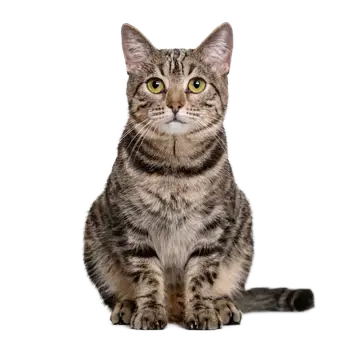
The breed standard permits an exceptionally wide range of coat colors and patterns, including solid, tabby, bicolor, and tortoiseshell variations. This permissiveness is deliberate, reflecting the breed's heritage as a naturally diverse population rather than a selectively narrowed gene pool. Eye color is similarly variable and should complement the coat. The overall impression called for by the standard is one of a strong, healthy, well-balanced cat that looks as though it could thrive equally well in a show ring or a farmyard.

Breed clubs dedicated to the European Shorthair are most active in Scandinavia, where the breed enjoys its strongest following. Finnish and Swedish clubs have been particularly influential in establishing breeding guidelines, maintaining pedigree records, and promoting the breed at international shows. These organizations also play an important educational role, helping prospective owners and breeders understand the distinction between a pedigreed European Shorthair with documented lineage and a random-bred domestic cat of similar appearance.

One significant challenge for breed clubs is that the European Shorthair is not recognized by the Cat Fanciers' Association or The International Cat Association, the two largest registries in North America. These organizations generally classify cats of similar type under the broad category of domestic shorthair, which encompasses any short-haired cat without a documented pedigree. This lack of transatlantic recognition limits the breed's visibility outside Europe and complicates efforts to promote it as a distinct pedigree breed on the global stage.

The Breed Today

The European Shorthair remains most popular in Scandinavia and parts of continental Europe, where it is valued both as a pedigree show cat and as an everyday companion. In Finland, it is one of the most commonly registered pedigree breeds, reflecting the deep cultural connection between Nordic cat fanciers and this distinctly European breed. Elsewhere on the continent, the breed maintains a devoted but relatively small following, often overshadowed by more heavily marketed breeds with stronger international profiles.

Modern breeding programs for the European Shorthair face a distinctive philosophical tension. Because the breed is defined by its closeness to a natural feline type, breeders must resist the temptation to selectively exaggerate any particular trait. The goal is preservation rather than transformation: maintaining the health, temperament, and balanced physical proportions that centuries of natural selection produced, while also documenting pedigrees and screening for the limited number of heritable health conditions that affect the breed.

The breed's robust health profile is one of its greatest assets. European Shorthairs are generally long-lived cats with fewer inherited health problems than many selectively bred breeds. This longevity and resilience appeal to owners who prioritize a cat's quality of life over its adherence to an extreme aesthetic ideal. Veterinarians who work with the breed often note its strong immune function, sound skeletal structure, and low incidence of the respiratory and cardiac issues that plague some brachycephalic or hypertrophic breeds.

In the broader context of feline welfare, the European Shorthair is increasingly cited as a model for what responsible breed stewardship can look like. Its wide gene pool, permissive breed standard, and emphasis on natural proportions stand in contrast to the narrowing genetic bottlenecks that threaten some other pedigree populations. As conversations about ethical breeding practices continue to evolve within the cat fancy, the European Shorthair's approach to preserving a natural type while maintaining pedigree documentation may offer a template for other breeds grappling with similar challenges.

Always consult a qualified professional before making any health-related decisions. This content is provided for informational reference only and should not replace professional guidance specific to your animal.