
Origins & Ancient Legends

The Birman, often called the Sacred Cat of Burma, carries one of the most enchanting origin stories of any domestic cat breed. According to legend, the breed traces its roots to the temples of ancient Burma, where white cats served as companions to the Kittah priests. The most famous tale involves a cat named Sinh, who rested beside a dying priest at the Temple of Lao Tsun. As the priest passed, Sinh placed his paws upon the holy man, and the cat's white coat was said to have transformed into a golden hue, its eyes turning sapphire blue, while the paws touching the priest remained pure white as a symbol of purity.

While the legend is captivating, the verified origins of the Birman remain a subject of scholarly debate. Some historians believe the breed did indeed originate in the temples of Myanmar, while others suggest it was developed through selective breeding programs in France during the early twentieth century. Genetic studies have pointed to a mix of Siamese and Persian ancestry, which would align with French breeding efforts rather than a purely Burmese lineage.

Regardless of which origin story holds the most truth, the mystique surrounding the Birman has played an undeniable role in the breed's identity. The romantic narrative of temple cats has been passed down for generations and continues to shape how breeders and enthusiasts regard the Birman today. It remains one of the few cat breeds whose cultural mythology is as prominent as its physical characteristics.

Journey to the Western World

The Birman's documented history in the West begins in France around 1919, when a pair of cats believed to be of Burmese temple origin were shipped to France. The male did not survive the journey, but the female, who was pregnant, gave birth and established the breed's foundation stock in Europe. French breeders began developing the breed in earnest during the 1920s, refining its appearance and temperament through careful selection.

By 1925, the Birman had been recognized by the French cat registry, the Fédération Féline Française. The breed was gaining popularity among French cat fanciers when the Second World War nearly brought it to extinction. By the end of the war, only a single breeding pair was believed to remain in all of Europe. The painstaking work of rebuilding the breed required several generations of careful outcrossing, likely involving Persian and Siamese cats, before the Birman population was stable enough to stand on its own once more.

The post-war recovery of the Birman stands as a remarkable chapter in feline breeding history. Dedicated breeders worked for over two decades to restore the breed to its pre-war standard, and by the 1960s the Birman was once again thriving. The breed was introduced to Britain in 1965 and reached the United States shortly thereafter, marking the beginning of its global spread.

The Birman's arrival in the United States during the late 1960s was met with enthusiasm from cat fanciers who were drawn to both its striking appearance and its gentle nature. American breeders began importing cats from established French and British lines, and the breed quickly gained a foothold in the competitive show circuit.

Cultural Symbolism & Spiritual Connections

Few cat breeds carry the spiritual weight attributed to the Birman. The legend of Sinh and the Temple of Lao Tsun has cemented the breed's association with purity, devotion, and the sacred bond between humans and animals. In Burmese tradition, temple cats were believed to carry the souls of priests who had passed on, granting the animals a revered status within the religious community.

This spiritual dimension has given the Birman a unique cultural identity that extends well beyond its physical beauty. Owners and breed enthusiasts frequently describe a certain depth and soulfulness in the Birman's sapphire eyes, and many attribute a calm, almost meditative quality to the breed's demeanor. While these perceptions are shaped by legend as much as by reality, they have influenced how the Birman is marketed, discussed, and valued within the broader cat fancy.

The symbolism of the Birman's white paws is particularly noteworthy. Often referred to as "gloves" on the front paws and "laces" on the rear, these markings are said to represent purity and are a defining feature of the breed standard. Breeders devote considerable attention to achieving symmetrical and well-defined white markings, a practice that reflects the enduring influence of the breed's mythological roots on its modern development.

In contemporary culture, the Birman continues to be associated with tranquility, companionship, and a certain quiet elegance. These qualities have made it a popular choice for cat owners seeking a breed with both aesthetic appeal and a calm, affectionate personality.

Breed Clubs & Standards

The Birman has been recognized by all major international cat registries, each of which maintains a detailed standard describing the ideal specimen. The Cat Fanciers' Association granted full championship status to the Birman in 1967, solidifying the breed's standing in the North American cat fancy. The International Cat Association and the Governing Council of the Cat Fancy in the United Kingdom have similarly recognized the breed, with standards that are broadly consistent across organizations.

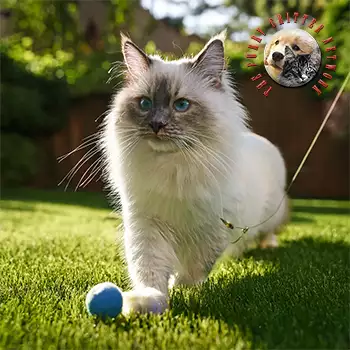
Breed standards emphasize the Birman's medium-to-large body, silky semi-long coat, striking blue eyes, and distinctive white gloves. The ideal Birman has a strong, elongated body with a Roman-shaped nose and a broad, rounded skull. Color points should be clearly defined, with accepted colors including seal, blue, chocolate, lilac, and various tabby and tortie variations depending on the registry.

Breed clubs dedicated to the Birman exist in most countries with active cat fancies. These clubs serve as custodians of the breed standard, organize specialty shows, and provide educational resources for breeders and owners. The Sacred Cat of Burma Fanciers club in the United States and the Birman Cat Club in the United Kingdom are among the most established organizations, both offering mentorship programs for new breeders.

The role of breed clubs extends beyond the show ring. Many Birman clubs are actively involved in health research, maintaining registries of genetic test results and advocating for responsible breeding practices. These efforts have contributed to a breed that, while not without health concerns, benefits from a community committed to its long-term welfare.

The Birman Today

The Birman consistently ranks among the most popular pedigreed cat breeds worldwide. In the United States, it regularly appears in the top fifteen most registered breeds with the Cat Fanciers' Association, while in France and Australia it has at times held the top position. The breed's combination of striking appearance, manageable coat, and affectionate temperament makes it particularly appealing to families and first-time pedigreed cat owners.

Modern Birman breeding programs focus on maintaining the breed's health and temperament alongside its physical standard. Advances in genetic testing have allowed breeders to screen for conditions such as hypertrophic cardiomyopathy and polycystic kidney disease, both of which have been identified in the breed. Responsible breeders now routinely test their breeding stock, and breed clubs increasingly require or strongly encourage health testing as a condition of membership.

The internet age has brought the Birman a new kind of visibility. Social media accounts featuring Birmans attract large followings, and the breed's photogenic qualities make it a favorite subject for cat photography. Online communities have also made it easier for prospective owners to connect with reputable breeders and for breed enthusiasts to share knowledge across international borders.

Despite its popularity, the Birman remains a breed whose breeders tend to prioritize quality over quantity. Litters are typically small, and reputable breeders often maintain waiting lists. This careful approach to breeding has helped preserve the Birman's characteristic temperament and has kept the breed relatively free of the health problems that can arise from overproduction.

Notable Birmans & Their Legacy

While the Birman has not produced as many individually famous cats as some other breeds, several notable Birmans have left their mark on the breed's history. Dieu d'Arakan, a seal point male, is often cited as one of the most important early sires in the breed's post-war reconstruction. His contribution to restoring the breed's gene pool during the 1950s and 1960s is a cornerstone of modern Birman pedigrees.

In the show world, a number of Birmans have achieved grand champion and supreme grand champion titles across multiple registries. These cats have helped define the modern interpretation of the breed standard and have influenced breeding decisions around the globe. Show-winning Birmans from French, British, and American catteries have been particularly influential, with their descendants appearing in pedigrees on every continent where the breed is established.

The Birman has also gained notable admirers among public figures. Several celebrities and cultural personalities have owned Birmans, drawn to the breed's combination of beauty and companionship. While individual ownership stories are less well-documented than those involving some other breeds, the Birman's presence in the homes of well-known individuals has contributed to its broader cultural visibility.

Perhaps the most enduring legacy of the Birman lies not in any single cat but in the breed community itself. The network of breeders, judges, and enthusiasts who have dedicated decades to the Birman's preservation and improvement represents a living legacy of passion and commitment. Their collective efforts ensure that the breed's ancient legends and modern excellence continue to inspire new generations of cat lovers.

Always consult a qualified professional before making any health-related decisions. This content is provided for informational reference only and should not replace professional guidance specific to your animal.