
Origins & Development

The American Wirehair owes its existence to a single spontaneous genetic mutation that appeared in a litter of barn cats in Verona, New York, in 1966. A red-and-white male kitten named Council Rock Adam of Hi-Fi was born with an unusual coat unlike anything breeders or geneticists had previously documented in domestic cats. Each hair was crimped, hooked, or bent along its length, giving the coat a coarse, springy texture that set it apart from every other feline coat type known at the time.

Local cat breeder Joan O'Shea recognized the kitten's potential and acquired Adam along with one of his littermates, a normal-coated female named Tip-Toe. O'Shea began a careful breeding program to determine whether the wiry coat could be reliably reproduced. Early crosses between Adam and Tip-Toe produced kittens with the distinctive wire coat, confirming that the trait was governed by a dominant gene. This meant that only one copy of the mutation was needed for the wiry texture to express itself, simplifying the task of establishing a breeding population.

O'Shea collaborated with geneticists to study the mutation in detail. Hair samples examined under a microscope revealed that American Wirehair fur differs structurally from the coats of other rex or wire-coated breeds. Unlike the Cornish Rex or Devon Rex, whose curls result from the absence of guard hairs or changes in hair follicle shape, the American Wirehair's coat features all three hair types—guard, awn, and down—each individually crimped and hooked. This unique structure confirmed that the mutation was entirely novel and unrelated to any previously documented curly-coat gene in cats.

Throughout the late 1960s and 1970s, O'Shea and a small circle of dedicated breeders worked to expand the gene pool while preserving the wiry coat. They outcrossed American Wirehairs to American Shorthairs, a closely related breed with a robust body type and a broad gene pool. These crosses helped to ensure genetic diversity and good health in the fledgling breed while maintaining the desired conformation and temperament.

Historical Roles

Unlike many cat breeds that were developed to fill a specific working role—such as rodent control on ships or grain storage facilities—the American Wirehair emerged purely as a companion animal. Its origins on a rural New York farm connect it loosely to the tradition of American barn cats, but the breed was never selectively bred for hunting ability or any utilitarian purpose. From the very beginning, its appeal lay entirely in its unusual coat and amiable personality.

The breed's development coincided with a period of growing interest in pedigreed cats across the United States during the late 1960s and 1970s. Cat shows were expanding in popularity, and organizations like the Cat Fanciers' Association were actively evaluating new breeds for recognition. The American Wirehair benefited from this climate of curiosity and enthusiasm. Breeders who encountered the wiry coat at shows were often captivated by its novelty, and the breed attracted a small but passionate following.

In the broader context of feline genetics, the American Wirehair has served as an important case study. Geneticists have used the breed to explore how single-gene mutations can produce dramatic phenotypic changes without affecting overall health or vitality. The Wirehair mutation has been compared and contrasted with other coat-texture genes in cats, contributing to scientific understanding of hair follicle biology and the mechanics of keratin formation.

Despite its significance to genetics and its appeal as a companion, the American Wirehair has always remained a relatively uncommon breed. Its limited numbers have meant that it occupies a quiet niche in cat fancy rather than a prominent historical role. However, its story as a uniquely American breed—born from a chance mutation in upstate New York and carefully developed by a small community of devoted breeders—gives it a distinctive place in the narrative of domestic cat breeding in the United States.

Cultural Symbolism

The American Wirehair carries symbolic weight as a breed that is entirely and unmistakably American in origin. While many popular cat breeds trace their roots to Europe, Asia, or the Middle East, the Wirehair's story begins and remains firmly rooted in the rural Northeast of the United States. This origin story resonates with broader cultural themes of American ingenuity and the celebration of the unexpected—a farm kitten with a strange coat who became the foundation of an entirely new breed.

The breed's wiry coat itself has become a symbol of individuality within the cat fancy community. In a world of sleek, smooth-coated breeds and elegantly curled rex varieties, the Wirehair's rough, springy fur stands apart. Enthusiasts often describe the coat as having a tactile quality unlike any other cat, and this distinctiveness has become central to the breed's identity. To admirers, the American Wirehair represents the idea that beauty and appeal can take unconventional forms.

Within the small community of Wirehair breeders and owners, the breed is often spoken of with a sense of guardianship. Because the breed remains rare—consistently ranking among the least-registered breeds with the Cat Fanciers' Association—those who breed and show American Wirehairs often see themselves as custodians of a living piece of American feline heritage. This sense of responsibility has fostered a tight-knit community that shares knowledge, mentors newcomers, and works to maintain the breed's health and genetic diversity.

The American Wirehair's rarity has also given it a certain mystique. Many cat enthusiasts have never seen one in person, and the breed's scarcity at shows and in the general pet population makes encounters with a Wirehair memorable. This combination of rarity and distinctiveness has elevated the breed to something of a collector's treasure within the cat fancy world, even as it remains virtually unknown to the general public.

Breed Clubs & Standards

The Cat Fanciers' Association accepted the American Wirehair for registration in 1967, just one year after the original mutation appeared. This remarkably swift recognition reflected both the novelty of the coat mutation and the organized, well-documented breeding program that Joan O'Shea had established from the outset. The breed advanced through CFA's provisional status and achieved full championship status in 1978, allowing American Wirehairs to compete for titles at CFA-sanctioned shows.

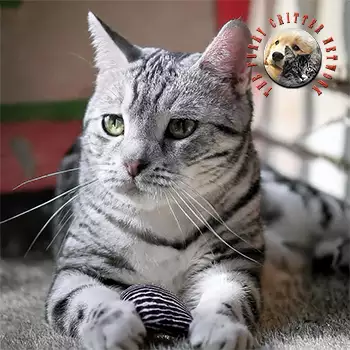
The CFA breed standard for the American Wirehair emphasizes the coat as the breed's defining feature. The standard describes the ideal coat as dense, coarse, and resilient, with individual hairs that are crimped, hooked, or bent. Even the whiskers should ideally be curled or crimped. The standard also calls for a medium to large, well-muscled body with a round head, prominent cheekbones, and large, round eyes—a profile that closely parallels the American Shorthair, reflecting the breed's outcross heritage.

The International Cat Association also recognizes the American Wirehair, though the breed is shown less frequently in TICA events due to its small population. Other international registries have been slower to grant recognition, in part because the breed has had very limited distribution outside North America. A small number of American Wirehairs have been exported to Europe and Japan, but breeding populations outside the United States remain extremely small.

Breed clubs devoted to the American Wirehair are modest in size but active. Within the CFA, the breed is represented by dedicated breed council members who vote on proposed changes to the standard and advocate for the breed's interests. Online communities and social media groups have also become important gathering points for Wirehair enthusiasts, providing forums to share breeding advice, health information, and show results. These communities have been vital in connecting breeders across geographic distances and maintaining momentum for a breed with a very small active breeding population.

The Breed Today

The American Wirehair remains one of the rarest cat breeds in the world. In many recent years, it has recorded the fewest new registrations of any CFA-recognized breed, sometimes numbering in the single digits annually. This extreme rarity presents both a challenge and an opportunity for the breed's future. On one hand, the tiny breeding population raises concerns about genetic bottleneck and the long-term viability of the breed. On the other hand, the small community of breeders is deeply committed and works collaboratively to make thoughtful breeding decisions.

Outcrossing to the American Shorthair continues to be an essential strategy for maintaining genetic health. The CFA permits these crosses, and the resulting kittens that carry the wire-coat gene are registered as American Wirehairs. This arrangement provides access to a vast and genetically diverse partner breed, helping to prevent the inbreeding depression that can threaten small populations. Breeders carefully select their American Shorthair outcross partners for health, temperament, and conformation.

In the show ring, the American Wirehair appears infrequently but can be competitive when presented. Judges and spectators often find the breed charming and distinctive, and a well-prepared Wirehair can attract considerable attention at shows simply because many attendees have never encountered the breed before. However, the low number of active show cats means that Wirehairs rarely accumulate the points needed for national or regional awards.

Interest in the breed has seen modest growth in recent years, partly driven by social media exposure. Photos and videos of American Wirehairs shared online have introduced the breed to audiences who might never encounter one at a show or through a breeder. Some prospective owners are drawn specifically to the breed's rarity and unique appearance. However, finding an available kitten remains difficult, and most breeders maintain waiting lists. The breed's future depends on attracting new breeders who are willing to commit to the long-term work of preserving and promoting this uniquely American cat.

Notable Individuals

Council Rock Adam of Hi-Fi holds the distinction of being the founding cat of the entire American Wirehair breed. Born in 1966 on a farm in Verona, New York, Adam was the red-and-white male kitten whose spontaneous coat mutation caught the attention of breeder Joan O'Shea. Every American Wirehair alive today traces its wiry coat back to Adam's unique genetic contribution. His name is preserved in pedigrees and breed histories as the single point of origin for this remarkable mutation.

Joan O'Shea herself deserves recognition as the human individual most responsible for the breed's existence. Without her quick recognition of Adam's potential, her willingness to acquire and breed the kitten, and her systematic approach to documenting the inheritance pattern of the wire coat, the mutation might have simply disappeared into the general barn cat population. O'Shea's meticulous record-keeping and her collaboration with geneticists established the scientific credibility that helped the breed gain rapid recognition from the CFA.

Over the decades, a number of American Wirehairs have earned distinguished show titles, including CFA Grand Champion and Grand Premier designations. While the breed's small numbers mean that these achievements are less widely publicized than those of more popular breeds, they represent significant accomplishments for the cats and their breeders. Each titled Wirehair demonstrates that the breed can compete successfully against the highest standards of the cat fancy.

In the broader world, the American Wirehair has occasionally appeared in educational materials about feline genetics and breed diversity. Veterinary textbooks and genetics references have cited the breed as an example of a simple dominant mutation that produces a visible and harmless phenotypic change. While no individual Wirehair has achieved the kind of mainstream fame enjoyed by cats of more popular breeds, the breed collectively serves as a living testament to the power of a single genetic event to create something entirely new.

Always consult a qualified professional before making any health-related decisions. This content is provided for informational reference only and should not replace professional guidance specific to your animal.