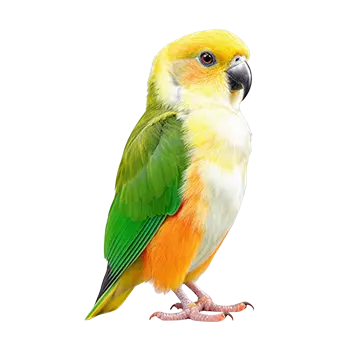

Preparing Your Caique for Travel

Successful travel with a White-Bellied Caique begins well before the day of departure. Caiques are active, curious birds that can find unfamiliar environments both stimulating and stressful, so preparation is essential for minimizing anxiety and ensuring safety. The first step is selecting an appropriate travel carrier. For caiques, a carrier should be sturdy enough to withstand the bird's powerful beak, well-ventilated on multiple sides, and sized to allow the bird to turn around and shift position comfortably without being so large that the bird is tossed about during movement. Hard-sided carriers designed specifically for birds are generally preferable to soft-sided bags for any trip longer than a brief car ride.

Acclimating your caique to the carrier is one of the most important preparatory steps and should begin weeks before any planned travel. Place the carrier in the bird's living area with the door open, allowing the caique to explore it at its own pace. Offer treats and favored toys inside the carrier to build positive associations. Gradually increase the time the bird spends inside with the door closed, then progress to short practice trips around the house and eventually brief car rides. A caique that views its carrier as a familiar, safe space will handle the stress of actual travel far more calmly than one being confined for the first time.

Gathering the necessary documentation before travel is equally critical. At a minimum, most forms of transport and most jurisdictions require a health certificate issued by a licensed veterinarian within a specified window before travel, often seven to ten days for domestic trips. International travel requires additional documentation including CITES permits, import or export licenses, and potentially quarantine arrangements. Assembling these documents takes time, particularly for international journeys, and last-minute scrambling can result in missed flights or denied boarding.

Packing a travel kit for your caique ensures that essential supplies are accessible throughout the journey. This kit should include the bird's regular food and fresh water in spill-resistant containers, familiar treats for comfort and reinforcement, a small selection of toys that can be safely attached to the carrier, paper towels or cage liners for quick cleanup, and any medications the bird takes regularly. Having these items organized and within reach prevents unnecessary disruption during transit and allows you to respond quickly if the bird shows signs of distress.

Air Travel with a Caique

Flying with a White-Bellied Caique is possible but requires careful planning and an understanding of airline-specific policies that can vary widely between carriers and change without much advance notice. Some airlines permit small birds to travel in the cabin as carry-on pets, provided the carrier meets dimensional requirements and the owner pays an applicable pet fee. Others restrict live birds to the cargo hold, where they travel in pressurized and temperature-controlled compartments. A small number of airlines do not accept birds at all. Researching and confirming the specific policy of your chosen airline well before booking is essential, and it is advisable to obtain written confirmation of the policy to avoid surprises at the gate.

For caiques traveling in the cabin, the carrier must fit under the seat in front of you and conform to the airline's published dimensions for in-cabin pet containers. Most airlines require that the bird remain inside the carrier for the entire duration of the flight, with the carrier stowed beneath the seat during takeoff, landing, and whenever the seatbelt sign is illuminated. The carrier should have adequate ventilation and a secure latch that the caique cannot manipulate open, a genuine concern given the species' dexterity and persistence with mechanical objects. Lining the bottom of the carrier with absorbent material and providing a small, securely attached water dish helps maintain hygiene and hydration during the flight.

Cargo travel introduces a different set of considerations. Airlines that transport birds as cargo typically require an airline-approved shipping crate that meets International Air Transport Association live animal regulations. These crates must be constructed of rigid material, labeled with orientation arrows and live animal stickers, and equipped with food and water containers accessible from outside the crate. Temperature restrictions apply to cargo shipments, and most airlines will not accept live animals when ground temperatures at the origin, destination, or any connecting airport exceed or fall below specified thresholds. This means that summer and winter travel dates may be restricted or unavailable depending on the route.

Regardless of whether a caique travels in the cabin or in cargo, the stress of air travel is significant for a small bird. Pressure changes, engine noise, unfamiliar surroundings, and disrupted routines can all contribute to anxiety. Owners can mitigate these effects by partially covering the carrier with a light cloth to reduce visual stimulation, maintaining a calm demeanor, and offering reassuring verbal cues during the journey. Upon arrival, providing a quiet space for the bird to decompress and resume its normal routine as quickly as possible supports a smooth recovery from the travel experience.

Ground Transportation

Car travel is the most common form of ground transportation for White-Bellied Caiques and is generally less stressful than air travel, provided that basic safety precautions are observed. The bird should always travel in a secured carrier, never loose in the vehicle. Even a well-socialized caique that is comfortable sitting on a shoulder at home becomes a dangerous projectile in a sudden stop, and a loose bird in a car can interfere with the driver's controls, escape through an opened window, or injure itself on hard surfaces during sudden maneuvers. The carrier should be positioned on a stable surface, ideally on the floor of the back seat or secured to the seat with a seatbelt threaded through the carrier's handle.

Temperature management is one of the most important considerations during car travel with a caique. Birds are highly sensitive to temperature extremes, and the interior of a parked car can reach lethal temperatures within minutes on a warm day. Never leave a caique unattended in a parked vehicle, even with the windows cracked or the car in shade. During summer travel, run the air conditioning before placing the bird in the vehicle, and during winter trips, ensure that the car's heating system is active and that the carrier is positioned away from direct blasts of cold air from vents or poorly sealed windows.

For longer road trips, plan regular stops to check on the bird, offer fresh water, and provide small amounts of food. Caiques have high metabolic rates and should not go extended periods without access to nutrition and hydration. A rest stop every two to three hours is a reasonable interval for trips lasting more than half a day. During stops, keep the bird in its carrier and do not open the carrier doors in any unsecured environment. Public rest areas, gas stations, and parking lots all present escape risks and exposure to potential hazards including other animals, vehicle exhaust, and unfamiliar people.

Public transit and rideshare services present their own challenges for caique travel. Policies regarding live animals on buses, trains, and subway systems vary by transit authority, and many urban systems restrict or prohibit non-service animals entirely. Rideshare drivers may decline trips involving birds, and not all vehicles are suitable for transporting a caged animal. When public transit or rideshare is the only option, confirm the relevant policy in advance, keep the carrier fully covered to minimize disturbance to other passengers, and have a contingency plan in case transport is denied at the point of boarding.

Accommodation & Destination Considerations

Finding suitable accommodation when traveling with a White-Bellied Caique requires advance research and clear communication with lodging providers. The majority of hotels, motels, and vacation rentals do not explicitly address bird guests in their pet policies, and a property that welcomes dogs or cats may not extend the same hospitality to a parrot. Contacting the property directly to confirm that birds are permitted, to disclose the species and its characteristics, and to discuss any applicable pet fees or deposits is essential before booking. Written confirmation of the arrangement protects both the traveler and the establishment in the event of a misunderstanding.

When staying in a hotel or rental property with a caique, setting up a safe temporary environment for the bird is the first priority upon arrival. A travel cage or a pop-up play tent designed for birds provides a secure space where the caique can stretch, eat, and play without the risks associated with an unfamiliar room. Windows and mirrors should be covered or marked to prevent collision injuries, electrical cords should be concealed or moved out of reach, and any gaps behind furniture or appliances should be blocked. Caiques are exceptionally curious and physically agile, and a hotel room that appears safe at first glance may contain hazards that a determined bird can find in minutes.

Noise is a practical consideration that can affect both the caique and neighboring guests. White-Bellied Caiques are not the loudest parrot species, but they are capable of producing sharp, carrying calls that can penetrate walls and doors. Morning and evening flock-calling behavior is instinctive and may be difficult to suppress, particularly in a novel environment where the bird feels uncertain. Choosing a room away from other guests, maintaining a consistent routine with familiar cues, and providing engaging enrichment activities can help manage noise levels and reduce stress-driven vocalizations.

For extended stays or relocations, identifying local avian veterinary resources at the destination should be part of the planning process. Knowing where the nearest avian-experienced veterinarian is located, confirming their availability and after-hours emergency protocols, and having their contact information readily accessible provides critical peace of mind. Caiques can develop stress-related health issues during or after travel, and having a veterinary contact already established eliminates delays if medical attention becomes necessary.

International Travel Requirements

Crossing international borders with a White-Bellied Caique involves a layered set of regulatory requirements that demand meticulous preparation. As a CITES Appendix II species, the caique requires an export permit from the country of departure and, in many cases, a corresponding import permit from the destination country. These permits must be obtained from the designated CITES management authority in each country, and processing times can range from several weeks to several months depending on the jurisdiction. Travelers should initiate the permitting process as early as possible, ideally at least three to four months before the planned departure date.

Health certification requirements for international travel are typically more stringent than those for domestic trips. Most countries require a veterinary health certificate issued within a narrow window before departure, often as little as 48 to 72 hours for some destinations. The certificate must confirm that the bird has been examined by a licensed veterinarian, is free of visible signs of disease, and in many cases has been tested for specific pathogens including avian influenza and Chlamydia psittaci, the bacterium responsible for psittacosis. Some countries require that these tests be performed at government-approved laboratories, adding logistical complexity to the pre-travel timeline.

Quarantine is a reality of international bird transport that travelers must prepare for. Some countries, particularly island nations with strict biosecurity protocols, require imported birds to spend a period of quarantine at an approved facility upon arrival. Quarantine durations vary from a few days to 30 days or more, during which the bird is held in a controlled environment and monitored for signs of infectious disease. The costs of quarantine, including facility fees, veterinary monitoring, and daily care, are borne by the bird's owner and can be substantial. Understanding the quarantine requirements of the destination country before committing to travel prevents unwelcome surprises upon arrival.

Returning home with a caique after international travel involves its own set of requirements, which may differ from the outbound journey. The United States, for example, requires that psittacine birds returning from abroad undergo quarantine at a USDA-approved facility, and the returning owner must arrange and pay for this quarantine in advance. European Union member states have their own re-entry procedures for pet birds, which may include additional health testing and documentation. The administrative burden of round-trip international travel with a parrot is considerable, and travelers should weigh this burden carefully against alternatives such as leaving the bird with a trusted caretaker or professional boarding facility.

Emergency Planning & Contingencies

No amount of preparation can eliminate the possibility of unexpected events during travel with a White-Bellied Caique, and having contingency plans in place is an important element of responsible travel. Flight cancellations, vehicle breakdowns, severe weather, and sudden illness can all disrupt carefully laid plans, and the presence of a live animal adds urgency and complexity to any such disruption. Building flexibility into travel schedules, maintaining a list of emergency contacts including avian veterinarians along the route, and carrying supplies sufficient for at least 48 hours beyond the planned travel duration help ensure that both bird and owner can weather unexpected delays.

Escapes represent one of the most serious emergencies a caique owner can face while traveling. A bird that slips out of an improperly latched carrier, bolts through an open door, or escapes during a transfer between vehicles can be extremely difficult to recover, especially in an unfamiliar location. Prevention is the most effective strategy: double-check carrier latches before every transfer, use secondary containment such as a harness or a carrier placed inside a larger bag when moving through high-risk environments like airports, and never open the carrier in any unsecured space. If an escape does occur, remaining in the area, playing recorded caique calls, and displaying the bird's cage or familiar items can sometimes attract a disoriented bird back to its owner.

Medical emergencies during travel require quick access to veterinary care, which may not be readily available in all locations. Assembling a small avian first-aid kit for travel is a prudent precaution. Such a kit should include styptic powder for minor bleeding, a clean towel for restraining an injured bird, a heat source such as a chemical hand warmer for maintaining body temperature, and contact information for the Association of Avian Veterinarians or a similar organization that can help locate the nearest avian practitioner. Knowing the symptoms of common travel-related health issues in birds, including dehydration, respiratory distress, and shock, allows owners to provide appropriate initial care while seeking professional help.

Natural disasters and severe weather events pose particular risks for travelers with birds. Hurricanes, wildfires, extreme heat events, and winter storms can close roads, cancel flights, and overwhelm local resources. Caique owners who live in or travel through disaster-prone regions should include their bird in household emergency plans, designating evacuation routes that account for the needs of the animal, identifying pet-friendly emergency shelters, and pre-positioning supplies in a go-bag that can be grabbed at a moment's notice. The bird's carrier should be clearly labeled with the owner's name, contact information, and veterinary details, so that if separation occurs during an emergency, the bird can be identified and its medical needs communicated to caregivers.

Always consult a qualified professional before making any health-related decisions. This content is provided for informational reference only and should not replace professional guidance specific to your animal.