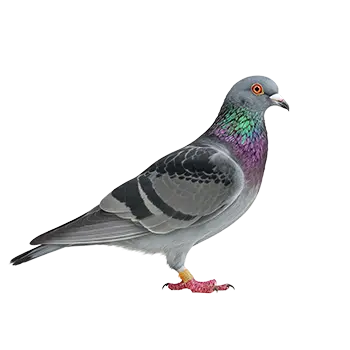

Racing Pigeons in Film & Documentary

The Racing Homer Pigeon has appeared in cinema in roles ranging from wartime hero to comedic sidekick, reflecting the bird's versatile cultural image. Among the most prominent depictions is the 2005 animated film Valiant, produced by Vanguard Animation, which told a fictionalized story of homing pigeons serving in the Royal Air Force Pigeon Service during World War II. The film drew on the real history of military pigeon operations and introduced younger audiences to the concept of pigeons as courageous participants in human conflict, even if the tone was lighthearted and the characters anthropomorphized. While Valiant was not a major commercial success, it brought international visibility to a chapter of avian history that had previously been known mainly within the pigeon fancying community.

Documentary filmmakers have given the Racing Homer more sustained and nuanced attention. The 2009 British documentary Pigeon Racing: The Real Highflyers offered viewers an intimate look at the competitive culture of pigeon racing in northern England, profiling fanciers whose lives revolved around their lofts and whose birds represented years of careful breeding and training. The film captured both the quiet routines and the intense drama of race day, conveying the emotional investment that fanciers pour into their birds. Similarly, the 2013 Dutch documentary De Duif (The Pigeon) explored the sport's deep roots in Belgian and Dutch working-class culture, examining how economic pressures and generational change were reshaping a tradition that had endured for nearly two centuries.

In feature films outside the animation genre, pigeons have frequently appeared as atmospheric elements in war movies and period dramas. The homing pigeon's wartime role has been referenced in films depicting both World Wars, though rarely as a central plot device. More commonly, pigeons appear in brief scenes that establish the communication constraints of pre-electronic warfare, serving as visual shorthand for urgency, ingenuity, and the fragility of the link between front lines and command. These appearances, while fleeting, have cumulatively reinforced the public association between homing pigeons and military heroism.

The rise of streaming platforms and short-form documentary series has created new opportunities for pigeon racing content. YouTube channels dedicated to pigeon racing and breeding have attracted substantial followings, with videos covering topics from loft management to race analysis to auction previews. Some of these channels function as de facto media outlets for the pigeon racing community, broadcasting live race releases, interviewing champion fanciers, and covering major events with a professionalism that rivals traditional sports journalism. This digital documentary ecosystem has made the world of competitive pigeon racing more accessible to curious outsiders than at any previous point in the sport's history.

Literature & Published Works

The Racing Homer Pigeon occupies a distinctive niche in published literature, appearing in works that range from children's fiction to adult literary novels to technical breeding manuals. In children's literature, pigeons have served as protagonists in stories that emphasize themes of loyalty, perseverance, and finding one's way home. The bird's homing instinct provides a natural narrative engine for tales of separation and reunion, and several children's authors have built stories around young characters whose relationships with racing pigeons mirror their own coming-of-age journeys. These books have introduced generations of young readers to the concept of pigeon racing and have often served as a first point of contact between children and the broader world of aviculture.

In adult fiction, the pigeon racing milieu has provided rich material for novels exploring working-class life, intergenerational tension, and the meaning of craft in an industrialized world. British and Belgian authors have been particularly drawn to the subject, using the pigeon loft as a setting in which characters confront questions of tradition, identity, and belonging. The loft functions in these narratives as a space apart from the pressures of daily life, a place where patience and attentiveness are rewarded and where the relationship between human and animal carries an emotional weight that transcends the mechanics of competition.

Non-fiction writing about racing pigeons constitutes a substantial body of work in its own right. Breeding manuals, training guides, and loft management handbooks have been published continuously since the mid-nineteenth century, with foundational texts by Belgian and British fanciers remaining in print and in active use today. More recent non-fiction has taken a broader view, placing pigeon racing within larger cultural, historical, and scientific contexts. Books examining the navigational science behind homing behavior, the economics of the global pigeon market, and the social history of the sport have found audiences well beyond the fancying community, appealing to readers interested in natural history, animal behavior, and the intersection of human culture and the animal world.

Pigeon racing also maintains a vibrant tradition of specialist periodicals. Magazines such as the Racing Pigeon, the British Homing World, and the Belgian De Duivensport have served for decades as forums for race results, breeding theory, veterinary advice, and community news. These publications, many of which now operate in both print and digital formats, function as institutional pillars of the pigeon racing world, preserving knowledge, shaping opinion, and connecting fanciers across geographic boundaries. The depth and longevity of this specialist press reflect the intellectual seriousness with which dedicated fanciers approach their birds and their sport.

Television & Broadcast Media

Television coverage of pigeon racing has waxed and waned over the decades, reflecting broader shifts in programming priorities and audience interests. In the United Kingdom, the BBC and regional broadcasters periodically featured pigeon racing segments in sports magazines and countryside programming during the mid-twentieth century, when the sport's participation base was at its peak. These broadcasts typically focused on major championship events, profiling champion fanciers and explaining the basics of the sport to a general audience. The tone was often affectionate and slightly nostalgic, positioning pigeon racing as a charming relic of working-class culture even as the sport remained vigorously competitive.

Reality television and lifestyle programming have given pigeon racing renewed visibility in the twenty-first century. Formats that explore unusual hobbies, competitive subcultures, and eccentric British traditions have occasionally turned their cameras on pigeon lofts, presenting the sport to audiences who might otherwise never encounter it. While these programs sometimes lean toward the quirky or the sentimental, the best of them manage to convey the genuine skill, knowledge, and emotional investment that pigeon racing demands. The contrast between the humble setting of a backyard loft and the athletic drama of a long-distance race has proven to be inherently compelling television.

In Asia, television coverage of pigeon racing has developed along different lines, reflecting the sport's higher public profile and greater financial stakes in countries such as China and Taiwan. Chinese state and regional broadcasters have covered major one-loft racing events as significant sporting occasions, and dedicated pigeon racing channels have emerged on digital television platforms. In Taiwan, where pigeon racing was for many years associated with large-scale wagering, the sport received extensive and sometimes controversial media attention, with broadcasters covering both the competitive spectacle and the regulatory debates surrounding gambling on race outcomes.

The transition from traditional broadcasting to digital and social media has fundamentally altered how pigeon racing reaches its audience. Live streaming of race releases and returns, once available only to those physically present at the liberation point or the home loft, is now accessible to viewers worldwide. Fanciers and clubs broadcast their own content directly, bypassing traditional media gatekeepers and reaching niche audiences with targeted content. This shift has democratized access to pigeon racing media and enabled the sport to maintain and even grow its visibility despite declining coverage on mainstream broadcast platforms.

Art, Photography & Visual Culture

The Racing Homer Pigeon has a long and varied presence in the visual arts, beginning well before the sport of pigeon racing itself was formalized. Pigeons and doves appear throughout the history of Western painting, from early Christian mosaics depicting the dove of the Holy Spirit to Dutch Golden Age still life compositions featuring domestic pigeons alongside other symbols of home and hearth. While these earlier works depicted pigeons generically rather than as racing athletes, they established a visual vocabulary of grace, fidelity, and domestic life that continues to inform how pigeons are perceived in art today.

With the rise of competitive pigeon racing in the nineteenth century, a specialized tradition of pigeon portraiture emerged. Belgian and British artists were commissioned by successful fanciers to paint portraits of champion birds, much as equestrian artists painted racehorses for their owners. These portraits, rendered in meticulous detail, documented the physical characteristics of winning birds and served as both personal keepsakes and breeding references. The best pigeon painters developed reputations within the fancying community, and original works by notable artists of the genre are now collected as historical artifacts by enthusiasts and breed historians.

Photography has largely supplanted painting as the primary medium for recording individual racing pigeons, and the photography of racing pigeons has become a specialized discipline with its own aesthetic conventions and technical challenges. Champion birds are typically photographed against plain backdrops in standardized poses that display their conformation, plumage quality, and eye characteristics. The best pigeon photographers develop an eye for capturing the subtle physical qualities that distinguish an exceptional bird from an ordinary one, and their images circulate widely in breed publications, auction catalogs, and online forums.

Beyond portraiture, the Racing Homer has inspired broader artistic engagement. Contemporary artists have used the pigeon as a subject for works exploring themes of urban ecology, migration, surveillance, and the relationship between wildness and domestication. Sculptors, printmakers, and installation artists have all drawn on the pigeon's cultural resonance, finding in the bird a potent symbol of resilience, adaptability, and the persistence of nature within human-dominated landscapes. The pigeon's visual presence in street art and murals, particularly in cities with strong racing traditions, reflects a popular affection for the bird that transcends the formal boundaries of the art world.

Digital Media & Online Communities

The internet has transformed the Racing Homer Pigeon's media presence more profoundly than any development since the invention of photography. Online forums dedicated to pigeon racing appeared in the early days of the consumer internet, providing fanciers with a platform for discussion, debate, and knowledge sharing that was previously limited to club meetings and printed magazines. Sites such as Pigeon Talk and Racing Pigeon Mail became gathering places for fanciers worldwide, hosting thousands of threads on topics ranging from breeding theory and loft design to race strategy and veterinary care. These forums created a sense of global community that bridged geographic and linguistic barriers, connecting a fancier in rural England with counterparts in South Africa, China, and Argentina.

Social media platforms expanded this digital community further. Facebook groups dedicated to pigeon racing now count tens of thousands of members, with some of the largest groups functioning as active marketplaces where birds are bought, sold, and traded alongside the sharing of race results and breeding advice. Instagram accounts showcasing racing pigeons attract followers drawn to the birds' beauty and the aesthetic appeal of well-designed lofts, while TikTok has introduced pigeon racing to a younger demographic through short-form videos that capture the drama of race returns, the tenderness of handling young birds, and the eccentricities of loft life.

Online auction platforms have had a particularly dramatic impact on the pigeon racing world. Sites such as PIPA (Pigeon Paradise) in Belgium have created a global marketplace in which champion birds and their offspring can be sold to buyers anywhere in the world, with prices for top lots reaching hundreds of thousands of dollars. These auctions generate media coverage that extends well beyond the pigeon community, drawing attention from mainstream news outlets when record-breaking prices are achieved. The sale of individual racing pigeons for sums comparable to fine art or luxury automobiles has become a recurring news story, introducing the Racing Homer to audiences who may have no prior awareness of the sport.

The Racing Homer has also become a subject of viral internet content, though in forms that sometimes diverge from the bird's identity as a competitive athlete. Videos of pigeons performing feats of navigation, interacting with their handlers, or simply looking photogenic have circulated widely on platforms designed to surface novel and shareable content. While some of this content is produced by knowledgeable fanciers, much of it comes from casual observers who encounter pigeons in urban settings and are struck by the birds' charisma or intelligence. This viral visibility, while sometimes superficial, has contributed to a broader cultural reevaluation of the pigeon as a creature worthy of attention and respect.

Cultural Legacy & Continuing Influence

The Racing Homer Pigeon's cumulative presence in media and popular culture has shaped public perceptions of pigeons more broadly, lending dignity and narrative richness to a bird that is often dismissed in its feral form as a common urban nuisance. The wartime stories of decorated military pigeons, amplified through books, films, and museum exhibitions, have created a durable counter-narrative to the stereotype of the pigeon as a dirty or unwelcome bird. This counter-narrative positions the pigeon as an animal of proven courage, loyalty, and physical prowess, qualities that resonate with audiences even if they have no connection to the sport of pigeon racing.

Museums and heritage institutions in several countries have curated exhibitions devoted to pigeon racing and the homing pigeon's military and cultural history. The Pigeon Museum in Liege, Belgium, and the Royal Pigeon Racing Association's archive in Cheltenham, England, preserve artifacts, trophies, photographs, and documents that chronicle the sport's development and the breed's contributions to communication and warfare. These collections serve both as community resources for fanciers and as educational assets for a general public that may encounter pigeon history for the first time through a museum visit.

The Racing Homer's influence extends into unexpected cultural domains. Fashion designers have occasionally drawn on pigeon racing imagery, and the aesthetic of the racing loft, with its clean lines, functional design, and meticulous organization, has been cited as an influence by architects and interior designers working in the industrial and utilitarian traditions. The language of pigeon racing has contributed phrases and metaphors to everyday speech in languages from English to Dutch to Arabic, reflecting the sport's deep integration into the cultures where it has thrived.

Looking forward, the Racing Homer Pigeon's media presence is likely to continue evolving as new platforms and storytelling formats emerge. The bird's combination of athletic drama, scientific mystery, and deeply human emotional bonds provides narrative material that adapts readily to changing media landscapes. Whether encountered through a feature-length documentary, a social media post, a museum exhibit, or a conversation with a passionate fancier, the Racing Homer invites engagement with a world of competitive excellence and interspecies partnership that few other domestic animals can match. The bird's story is far from finished, and each new generation of storytellers will find fresh angles on a subject that has captivated human imagination for centuries.

Always consult a qualified professional before making any health-related decisions. This content is provided for informational reference only and should not replace professional guidance specific to your animal.