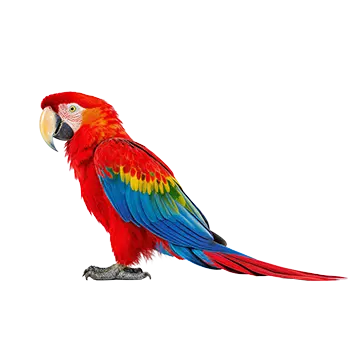

Traveling by car with a Scarlet Macaw requires thoughtful preparation to keep the bird safe, comfortable, and calm throughout the journey. The most important consideration is a sturdy, appropriately sized travel carrier or cage. For a bird as large as a Scarlet Macaw, the carrier should be spacious enough for the bird to turn around and extend its wings partially, but not so large that it slides or shifts during sudden stops. Stainless steel or powder-coated metal carriers designed for large parrots are the safest option, as Scarlet Macaws can chew through plastic and soft-sided carriers with ease.
Secure the carrier on a flat, stable surface in the vehicle — the back seat or cargo area of an SUV are common choices. The carrier should be strapped down with a seatbelt or cargo straps to prevent movement during turns, braking, or minor collisions. Never place a macaw carrier in the front passenger seat where it could be struck by an airbag deployment. Avoid placing the carrier in direct sunlight, near heating or air conditioning vents, or in the bed of a truck where temperature extremes and road debris pose serious risks.
Maintain a comfortable temperature inside the vehicle throughout the trip. Scarlet Macaws are tropical birds and are sensitive to cold drafts and rapid temperature changes. A range of 65–80°F (18–27°C) is generally comfortable for most macaws. If traveling in warm weather, ensure adequate ventilation and never leave a macaw unattended in a parked car, as interior temperatures can reach dangerous levels within minutes even on mild days.
For longer road trips, plan regular breaks to offer the bird fresh water and a small amount of familiar food. Minimize stops where the car doors are opened frequently, as an unsecured macaw can escape in a moment of inattention. Consider covering the carrier partially with a breathable cloth to reduce visual stimulation and help the bird remain calm. Familiar toys or a favorite perch inside the carrier can also provide comfort. Acclimate your macaw to the travel carrier well in advance of the trip by allowing the bird to spend supervised time in it at home.