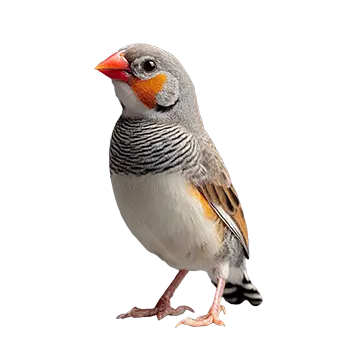

Zebra finches have made quiet but memorable appearances in film and television, often cast as ambient companions in domestic or laboratory settings. Their small size, attractive plumage, and gentle chirping make them naturals for scenes requiring a touch of warmth or whimsy without the visual or auditory dominance of a larger parrot. Production designers frequently choose zebra finches when a script calls for a caged bird because they are easy to work with on set and their soft vocalizations do not overpower dialogue.
Documentary filmmakers have featured the zebra finch prominently in natural history programming about Australian wildlife, avian biology, and the science of animal communication. Programs exploring birdsong and vocal learning invariably turn to the zebra finch as a primary case study, using high-speed footage and sonogram visualizations to illustrate how males learn and refine their songs. These segments have introduced millions of viewers to the bird's remarkable neurobiology and its parallels with human speech.
The zebra finch has also appeared in educational children's programming, where its bright colors and sociable nature make it an engaging subject for teaching young viewers about animal care, life cycles, and the diversity of the bird world. Several animated series have included finch characters loosely inspired by zebra finch markings, though these portrayals tend to take creative liberties with size and behavior for narrative purposes.
In independent and art-house cinema, the zebra finch occasionally serves as a visual metaphor for confinement, fragility, or the tension between nature and domesticity. Directors have used close-up shots of caged finches to underscore themes of isolation or longing, leveraging the bird's delicate beauty and constant motion to evoke emotional responses without a single line of dialogue.