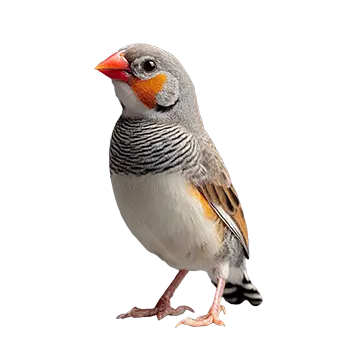

Origins & Natural Habitat

The zebra finch (Taeniopygia guttata) is native to the arid and semi-arid regions of Australia, where it thrives across grasslands, open woodlands, and scrubby plains. The species has adapted remarkably well to the harsh conditions of the Australian interior, developing the ability to breed opportunistically whenever rainfall produces sufficient seed crops. This resilience in unpredictable environments would later make the zebra finch an ideal candidate for captivity and scientific study.

European naturalists first documented the zebra finch during expeditions to Australia in the late eighteenth and early nineteenth centuries. The bird was formally described by Louis Jean Pierre Vieillot in 1817, and its distinctive black-and-white chest barring—reminiscent of a zebra's stripes—gave rise to its common name. A second subspecies, the Timor zebra finch (T. guttata guttata), inhabits the Lesser Sunda Islands of Indonesia and was actually described before the more familiar Australian form.

In the wild, zebra finches are nomadic, traveling in flocks that can number in the hundreds as they follow water sources and seeding grasses across the outback. Their social nature and constant vocalizations make them one of the most conspicuous small birds in the Australian landscape. This gregarious behavior, combined with their hardiness and willingness to nest in a variety of sites, laid the foundation for their eventual success as one of the world's most popular caged birds.

The species occupies a fascinating ecological niche as one of the few birds that can survive extended periods without surface water, deriving moisture from seeds and metabolic processes when necessary. This physiological adaptation has attracted the attention of biologists studying water regulation in arid-zone vertebrates, adding another dimension to the zebra finch's scientific importance long before it became a staple of genetics and neuroscience research.

Early Domestication & Aviculture

Zebra finches were first brought into European aviaries during the mid-nineteenth century, arriving alongside a wave of exotic Australian birds that captivated Victorian-era collectors. Their ease of care and willingness to breed in modest enclosures quickly set them apart from more temperamental species. By the 1870s, zebra finches were being bred reliably across England, Germany, and the Netherlands, establishing a captive population that would eventually become genetically distinct from wild birds.

The early aviculture community prized zebra finches for their prolific breeding habits, which allowed hobbyists to experiment with selective pairing and observe inheritance patterns in plumage variation. Fawn, white, and pied mutations appeared in captive flocks within a few decades of importation, and breeders eagerly documented and stabilized these color forms. This hands-on engagement with genetics, though informal, predated the formal adoption of the zebra finch as a laboratory model by nearly a century.

By the early twentieth century, zebra finches had become one of the most affordable and widely available cage birds in Europe and North America. Their modest space requirements, simple diet of seed and fresh water, and cheerful vocalizations made them accessible to families who could not accommodate larger parrots or softbills. The species thus played an important role in democratizing bird keeping, bringing aviculture out of the exclusive domain of wealthy collectors and into ordinary households.

Japanese and Australian breeders further refined color varieties through the mid-twentieth century, producing silver, cream, charcoal, and orange-breasted mutations among many others. National finch societies began publishing standards for exhibition, and competitive showing of zebra finches became a dedicated hobby with its own judges, point scales, and championship circuits.

Cultural Symbolism & Folklore

In Aboriginal Australian cultures, the zebra finch appears in Dreamtime narratives associated with water, resourcefulness, and community. Several Indigenous language groups have specific names for the bird, reflecting its prominence in the daily soundscape of the outback. Stories often highlight the finch's ability to find water in seemingly barren landscapes, casting it as a guide or messenger spirit connected to survival and adaptation.

In Western culture, the zebra finch has come to symbolize simplicity, cheerfulness, and the beauty of small things. Unlike parrots, which are often associated with exoticism and verbal mimicry, zebra finches represent a quieter, more contemplative form of companionship. Their soft beeping songs and constant social interactions have inspired writers and poets to use them as metaphors for community, communication, and the rhythms of domestic life.

The zebra finch also holds symbolic weight in the scientific community as an emblem of accessible research. Because the bird is small, inexpensive to maintain, and breeds readily, it has become a kind of mascot for the principle that groundbreaking discoveries do not require exotic or expensive subjects. Researchers often speak of the zebra finch with genuine affection, recognizing that this unassuming bird has contributed enormously to humanity's understanding of vocal learning, neurobiology, and genetics.

In contemporary culture, the zebra finch appears frequently in minimalist and nature-inspired art and design. Its clean lines, warm orange cheek patches, and striking barred tail feathers make it a favorite subject for illustrators, textile designers, and ceramicists seeking to evoke the natural world without overwhelming detail.

The Zebra Finch in Science

Few birds have contributed as much to scientific knowledge as the zebra finch. Beginning in the 1960s, researchers recognized that the species offered a powerful model for studying vocal learning—a trait shared by only a handful of animal groups, including humans, cetaceans, and certain other birds. Male zebra finches learn their songs from adult tutors during a critical developmental window, and this process parallels human speech acquisition closely enough to yield insights into language development, neural plasticity, and the genetics of communication.

The mapping of the zebra finch genome, completed in 2010, marked a milestone in avian genomics and provided researchers with a comprehensive toolkit for investigating gene expression in the brain. The zebra finch became only the second bird species, after the chicken, to have its genome fully sequenced. This achievement opened new avenues for studying how genes influence behavior, how neural circuits form during learning, and how environmental factors shape brain development.

Neuroscientists have used the zebra finch to identify specific brain regions involved in song production and perception, drawing parallels with the human cortical areas responsible for speech. Studies on the bird's song system have contributed to understanding conditions such as stuttering, aphasia, and developmental language disorders. The clarity and repeatability of zebra finch song make it an ideal natural behavior for controlled experimentation.

Beyond vocal learning, zebra finches have been subjects in studies of mate choice, sexual selection, hormonal regulation, immune function, and stress physiology. Their short generation time and large clutch sizes allow researchers to conduct multigenerational experiments that would be impractical with longer-lived species. The cumulative body of zebra finch research spans thousands of peer-reviewed papers and continues to grow, cementing the bird's place as one of the most important model organisms in modern biology.

Breed Societies & Exhibition Standards

Zebra finch enthusiasts around the world have established dedicated societies that set exhibition standards, host shows, and promote responsible breeding practices. In the United Kingdom, the Zebra Finch Society was founded in 1952 and remains one of the oldest and most influential organizations devoted to a single finch species. Its published standard describes the ideal exhibition zebra finch in precise terms, covering body shape, feather quality, color intensity, and markings for dozens of recognized mutations.

In Australia, the country of the zebra finch's origin, multiple state-level bird societies include zebra finch classes in their annual championships. Australian breeders have been instrumental in developing and stabilizing color mutations, and the country's shows often feature varieties rarely seen elsewhere. The Finch Society of Australia and various state ornithological societies maintain registries and band birds to track lineage and ensure genetic diversity within exhibition lines.

North American zebra finch keeping is supported by organizations such as the National Finch and Softbill Society, which publishes care guides, breeding records, and show results. The American Federation of Aviculture also includes zebra finches in its broader mission of promoting responsible bird keeping. Regional clubs across the United States and Canada hold annual exhibitions where breeders compete for best-in-show honors across color classes.

Exhibition standards generally evaluate zebra finches on type (body shape and proportions), condition (feather quality and overall health), color (intensity, clarity, and correct distribution of markings), and deportment (calm, upright posture on the show perch). Judges look for birds that conform closely to the written standard while also displaying vigor and alertness. The competitive showing community has driven significant refinement in captive zebra finch lines, producing birds that are noticeably larger and more robust than their wild counterparts.

The Zebra Finch Today

Today the zebra finch stands as one of the most widely kept and scientifically studied birds on Earth. Captive populations number in the millions across every inhabited continent, and the species remains a top recommendation for first-time bird owners due to its forgiving care requirements and engaging social behavior. Pet shops, breeders, and rescue organizations all serve a robust market of zebra finch enthusiasts ranging from casual keepers to serious exhibitors.

The internet has transformed the zebra finch community, connecting breeders and hobbyists who once relied on local club meetings and printed newsletters. Online forums, social media groups, and video platforms host vibrant discussions about mutation genetics, aviary design, diet optimization, and breeding strategies. Breeders in different countries can now share photographs, pedigrees, and breeding outcomes in real time, accelerating the development and dissemination of new color varieties.

In the scientific arena, the zebra finch continues to be indispensable. Advances in optogenetics, CRISPR gene editing, and high-resolution brain imaging have opened new experimental possibilities, and the zebra finch's well-characterized genome and song system make it a natural platform for these cutting-edge techniques. Ongoing research projects explore topics as diverse as the molecular basis of memory consolidation, the evolution of vocal learning, and the effects of environmental noise on communication.

Conservation of wild zebra finch populations has not been a major concern, as the species remains abundant across its native range. However, habitat degradation, water extraction, and climate change in arid Australia could pose long-term challenges. The enormous captive population serves as a genetic reservoir, but conservationists note that domesticated lines have diverged significantly from wild birds in size, color, and behavior. Maintaining awareness of the wild zebra finch's ecology ensures that the species' natural heritage is not overshadowed by its success in aviaries and laboratories.

Always consult a qualified professional before making any health-related decisions. This content is provided for informational reference only and should not replace professional guidance specific to your animal.