
Origins in the Scottish Canary Fancy

The Fife Fancy Canary owes its existence to a group of dedicated breeders in the county of Fife, Scotland, who began working toward a distinct variety in the late 1950s. At the time, the Border Canary had been the dominant type canary in Scottish and English bird rooms for generations, prized for its rounded form, clean outline, and cheerful disposition. However, over the preceding decades the Border had been selectively bred toward an increasingly larger frame, drifting away from what many fanciers considered its ideal proportions. A faction of breeders, concentrated in and around the towns of Kirkcaldy, Methil, and Dunfermline, believed that the original charm of the Border lay in its compactness and felt strongly that this quality was being lost.

These dissenting breeders did not set out to create an entirely new breed so much as to preserve what they saw as the true Border type. Their selective breeding programs favored the smallest, most neatly proportioned birds, prioritizing a rounded head, a short body, and an overall impression of miniature refinement. Over the course of several breeding seasons, the resulting birds began to diverge noticeably from the mainstream Border, both in size and in the subtle details of posture and conformation that judges evaluated on the show bench.

The decision to seek recognition for these smaller birds as a separate variety was driven as much by practical necessity as by aesthetic conviction. As the Border standard continued to reward larger specimens, breeders committed to the compact type found their birds increasingly penalized in competition. Establishing a distinct breed with its own standard offered the only viable path to preserve the qualities they valued without being forced to compete against birds bred to a fundamentally different ideal.

The name chosen for the new variety reflected its geographic cradle. By identifying the breed with the county of Fife, the founders rooted their creation in a specific place and community, lending it an identity that distinguished it from the Border while acknowledging the shared ancestry. This regional naming convention was consistent with traditions in the British canary fancy, where breeds such as the Yorkshire, the Norwich, and the Lancashire had long carried the names of their places of origin.

Formation of the Breed Society

The formal establishment of the Fife Fancy as a recognized breed is inseparable from the founding of the Fife Fancy Fanciers Society in 1957. The society was organized by a small but determined group of Scottish breeders who understood that official recognition required more than good birds; it demanded an organized body capable of drafting a standard, registering breeders, and coordinating with the national bodies that governed competitive exhibition. Walter Lumsden is frequently cited among the key figures in this organizational effort, though the society's formation was fundamentally a collective achievement.

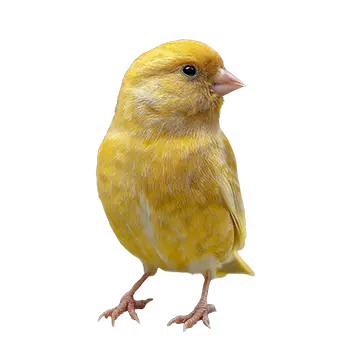
The breed standard drafted by the society described a canary not exceeding four and a half inches in length, with a neat, well-rounded head, a compact body showing good width across the chest, and a short, closely folded tail. The standard emphasized proportion and balance above all, specifying that no single feature should dominate the bird's overall silhouette. This philosophy of harmonious proportion became the defining principle of the Fife Fancy and distinguished it from breeds where a single trait, such as the crest of a Gloster or the length of a Yorkshire, served as the primary point of evaluation.

Gaining recognition from the Canary Colour and Type Federation and, more broadly, from the Confederation of Old Breed Canary Societies required years of patient advocacy. Established breed societies were not always enthusiastic about what some viewed as a splinter movement, and Border Canary loyalists occasionally characterized the Fife as an unnecessary redundancy. The Fife Fancy Fanciers Society responded by demonstrating the consistency and distinctiveness of their birds on the show bench, steadily building a competitive record that made the case for separate breed status difficult to dismiss.

By the mid-1960s the Fife Fancy had achieved formal recognition in the United Kingdom, a milestone that opened the door to dedicated classes at regional and national shows. This recognition provided the institutional framework necessary for the breed to grow beyond its Scottish heartland, attracting new breeders who might otherwise have hesitated to invest in a variety without an established competitive pathway.

Spread Beyond Scotland

Recognition by the national canary bodies marked the beginning of a rapid expansion that carried the Fife Fancy well beyond the borders of its native county. English breeders were among the first to adopt the variety in significant numbers during the late 1960s and 1970s, drawn by the Fife's manageable size, appealing temperament, and relative ease of breeding compared to some of the more specialized type canaries. The breed's compact dimensions also made it practical for fanciers with limited space, a consideration that resonated with urban and suburban bird keepers who could not accommodate the larger flight cages required by breeds like the Yorkshire.

The Fife Fancy's international spread accelerated through the 1980s and 1990s. Breeders in continental Europe, particularly in the Netherlands, Belgium, and Germany, began importing stock from Scottish and English bird rooms. The Confederation Ornithologique Mondiale, the international governing body for ornamental bird breeding and exhibition, recognized the Fife Fancy and incorporated it into its show standards, enabling the breed to compete at world championship level. This international endorsement gave the Fife a global platform and encouraged breeders in South America, Australia, and parts of Asia to take up the variety.

Several factors contributed to the Fife Fancy's success abroad. Its small size reduced feed costs and housing requirements, making it accessible to hobbyists who might have found larger type canaries impractical. The breed's fertility and robust parenting behavior made it a reliable producer in the breeding cage, an important consideration for fanciers who depended on consistent output to maintain competitive programs. Additionally, the Fife's pleasant song, while not the equal of dedicated song breeds, added an auditory dimension that enhanced its appeal as a household companion.

By the turn of the 21st century, the Fife Fancy had become one of the most widely kept type canaries in the world. National breed societies and regional clubs had been established on every inhabited continent, and the breed regularly drew some of the largest entries at international shows. This global popularity represented a remarkable trajectory for a variety that had begun as a regional response to a perceived drift in another breed's standard.

Cultural Significance in the British Bird Fancy

Within the culture of the British bird fancy, the Fife Fancy occupies a distinctive position as both a product of tradition and a challenge to it. The breed's origins in a disagreement over the direction of the Border Canary placed it at the center of a broader debate about the purpose of selective breeding and the tension between aesthetic innovation and historical fidelity. For supporters, the Fife represented a principled stand in favor of preserving qualities that had made the original Border Canary so beloved. For critics, it was an unnecessary fracture in a breed community that would have been better served by reforming the Border standard from within.

This debate, while sometimes heated, ultimately enriched the culture of the canary fancy by forcing a public reckoning with questions that apply across all breeds and species: Who owns a breed standard? How much change is too much? And when does a variant become sufficiently distinct to warrant recognition as something new? The Fife Fancy's successful establishment answered these questions in practical terms, demonstrating that the fancy's institutional structures could accommodate diversity and dissent without collapsing.

The Fife Fancy has also played a role in sustaining the broader canary keeping tradition during a period of demographic change. As the hobby's traditional base of older, working-class men has given way to a more diverse community of keepers, the Fife's accessibility has made it a popular entry point for newcomers. Its manageable size, forgiving temperament, and straightforward care requirements lower the barrier to participation, helping to ensure that the skills and knowledge of canary breeding are passed to new generations.

In Scotland specifically, the Fife Fancy carries a degree of regional pride that extends beyond the bird room. The breed is occasionally referenced in local heritage contexts as an example of Fife's contributions to British cultural life, sitting alongside the county's associations with golf, linen weaving, and coal mining. While the Fife Fancy will never rival St Andrews in name recognition, its story reflects the same pattern of local ingenuity producing something of lasting value.

Evolution of the Breed Standard

The Fife Fancy breed standard has undergone periodic refinement since its original drafting, though its core principles have remained remarkably stable. The founding emphasis on compactness, proportion, and a maximum length of four and a half inches continues to anchor the standard, providing a clear and measurable criterion that distinguishes the Fife from larger type canaries. Revisions have typically focused on clarifying descriptive language, adjusting the allocation of points among different features, and addressing emerging trends in breeding that threatened to distort the intended type.

One of the most persistent challenges in maintaining the standard has been the temptation to breed for extremes. In any exhibition breed, competitive pressure tends to push breeders toward exaggerated versions of desirable traits, and the Fife has not been immune to this dynamic. Periods in which winning birds displayed overly large heads, excessively short tails, or body shapes tending toward the spherical have prompted the breed society to issue guidance reaffirming the importance of overall balance. The standard's insistence that no single feature should dominate the bird's impression has served as a corrective principle, though its application inevitably involves subjective judgment.

Color has been another area of ongoing discussion. The Fife Fancy is bred in the full range of canary colors, including clear yellow, clear buff, green, cinnamon, blue, white, and variegated patterns. While the breed standard allocates a relatively modest proportion of points to color and markings, the visual impact of color in exhibition has led to periodic debates about whether certain colors receive disproportionate favor on the show bench. These discussions mirror similar conversations in virtually every exhibition breed and reflect the inherent tension between objective measurement and aesthetic preference.

The breed standard's stability over more than six decades is itself a notable achievement. Many exhibition breeds have experienced dramatic shifts in type as successive generations of breeders reinterpret the standard through their own aesthetic lens. The Fife Fancy's resistance to radical change suggests that its founding principles were articulated with sufficient clarity and conviction to guide breeders across multiple generations, a testament to the thoughtfulness of the breed's original architects.

The Breed Today

The Fife Fancy Canary enters the second quarter of the 21st century as one of the most popular and numerically strong type canaries in international aviculture. At major shows in the United Kingdom, continental Europe, and South America, Fife classes routinely attract entries that rival or exceed those of longer-established breeds. The Fife Fancy Fanciers Society remains active, coordinating shows, maintaining the breed register, and providing educational resources for both novice and experienced breeders. Parallel national societies exist in numerous countries, and international communication among Fife breeders has been greatly facilitated by online forums and social media groups.

Breeding programs today benefit from a deep gene pool and decades of accumulated knowledge about pairings, color genetics, and line management. Experienced Fife breeders maintain detailed records spanning multiple generations, enabling them to make informed decisions about which birds to pair and which lines to outcross. The availability of high-quality pellet diets, specialized supplements, and improved veterinary care for cage birds has contributed to healthier stock and more consistent breeding results than earlier generations of fanciers could have expected.

The Fife Fancy has also established itself as one of the most recommended canary breeds for beginners. Its small size, adaptable nature, and willingness to breed readily in modest accommodations make it an ideal introduction to the canary fancy for people who may eventually move on to more demanding breeds or who may find in the Fife a lifelong companion. Bird keeping publications and online resources frequently highlight the Fife as a gateway breed, and many experienced fanciers trace their involvement in the hobby back to their first pair of Fifes.

Looking ahead, the breed faces the same broad challenges confronting the avicultural hobby as a whole, including competition from digital entertainment, rising costs of housing and feed, and an aging demographic among show breeders. However, the Fife Fancy's inherent accessibility and the enduring appeal of its compact, expressive form position it well to attract new enthusiasts. The breed that began as a quiet rebellion on the show benches of eastern Scotland has secured a durable place in the global canary fancy, and its future appears as robust as its neatly rounded silhouette.

Always consult a qualified professional before making any health-related decisions. This content is provided for informational reference only and should not replace professional guidance specific to your animal.