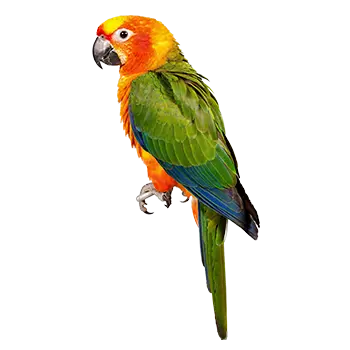

The Jenday Conure is listed under Appendix II of the Convention on International Trade in Endangered Species of Wild Fauna and Flora (CITES), which regulates the international commercial trade of species that could become threatened without such controls. Under Appendix II, international trade in Jenday Conures is not prohibited but requires export permits from the country of origin certifying that the trade is not detrimental to wild populations. This framework applies to wild-caught birds and, in many cases, to captive-bred specimens crossing international borders.
Brazil, as the Jenday Conure's country of origin, has enacted domestic legislation that goes beyond CITES requirements. Brazilian law prohibits the capture and sale of native wildlife, including parrots, without specific authorization from the Brazilian Institute of the Environment and Renewable Natural Resources (IBAMA). These protections reflect the country's commitment to conserving its rich avian biodiversity and have effectively curtailed the export of wild-caught Jenday Conures for the pet trade.
For owners in countries that are CITES signatories, the practical implication is that any Jenday Conure acquired through legal channels should come with documentation tracing its lineage to captive breeding. Prospective buyers should request and retain proof of captive-bred status, as this documentation may be required for legal ownership, veterinary purposes, or if the bird is later sold or rehomed. Lack of proper documentation can result in confiscation of the bird and legal penalties for the owner.
It is important for prospective owners to understand that CITES regulations are implemented through domestic legislation in each signatory country, and the specific requirements can vary. Consulting with local wildlife authorities or an avicultural organization before acquiring a Jenday Conure from an international source is advisable to ensure full compliance with applicable laws.