
Origins & Native Range

The Jenday Conure (Aratinga jandaya) is native to the lowland forests and palm groves of northeastern Brazil. Its range extends across the states of Maranhão, Piauí, Tocantins, Goiás, and Pará, where it inhabits woodland edges, savannas, and areas of secondary growth. The species thrives in semi-open habitats where fruiting trees and palms provide reliable food sources throughout the year.

European naturalists first encountered the Jenday Conure during expeditions to Brazil in the eighteenth century. The bird was formally described by the German naturalist Johann Friedrich Gmelin in 1788, drawing on earlier accounts from Portuguese explorers and missionaries who had noted the brilliantly colored parrots during their travels. Early taxonomic classification grouped the Jenday alongside several other South American conures, and its scientific naming has been revised multiple times as ornithological understanding deepened.

The name "Jenday" is derived from an indigenous Tupi word, reflecting the deep familiarity that native peoples of Brazil had with this species long before European contact. Archaeological and ethnographic evidence suggests that indigenous communities kept parrots as companions and prized their feathers for ceremonial regalia, though the specific role of the Jenday Conure in these traditions is less documented than that of larger macaw species.

In the wild, Jenday Conures are gregarious birds that form flocks of ten to twenty or more individuals. They forage cooperatively, roosting communally in the canopy and moving through the landscape in noisy, conspicuous groups. This social nature would later become one of their most endearing traits in captivity, as the species bonds closely with human caregivers.

Introduction to Aviculture

The Jenday Conure entered the European avicultural trade during the nineteenth century as collectors and dealers sought colorful parrot species from South America. Early imports were sporadic and largely confined to wealthy private aviaries and zoological gardens in England, France, and Germany. The birds were considered exotic curiosities, admired for their vivid yellow, orange, and green plumage but not yet widely bred in captivity.

Breeding success in aviculture came gradually. By the mid-twentieth century, aviculturists had established reliable captive breeding protocols for the Jenday Conure, making the species less dependent on wild-caught imports. This shift was significant because it reduced pressure on wild populations and made the birds more accessible to hobbyist bird keepers around the world.

The species gained particular popularity in the United States during the 1970s and 1980s, when the pet bird trade expanded rapidly. Jenday Conures were prized for their manageable size, striking colors, and affectionate personalities. Unlike larger parrots, they could be comfortably housed in modest-sized cages while still offering the interactivity and companionship that parrot enthusiasts valued. Breeders developed networks to share bloodlines and improve the health and genetic diversity of captive populations.

The passage of the Wild Bird Conservation Act of 1992 in the United States effectively ended the importation of wild-caught Jenday Conures for the pet trade. This legislation accelerated domestic breeding programs and reinforced the importance of responsible aviculture. Today, virtually all Jenday Conures available as pets in North America and Europe are captive-bred, a testament to decades of accumulated breeding expertise.

Cultural Symbolism

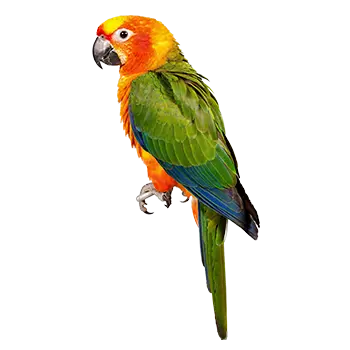
In Brazilian culture, parrots hold a place of deep symbolic importance, representing the tropical abundance and biodiversity of the nation's forests. The Jenday Conure, with its sunset-colored plumage, embodies this symbolism vividly. Its feathers transition from rich yellow on the head through fiery orange on the breast to deep green on the wings and tail, a palette that evokes the landscapes of the Brazilian interior.

Indigenous peoples of Brazil have long associated parrots with communication, community, and spiritual connection. Featherwork traditions among groups such as the Kayapó and Bororo incorporated parrot feathers into headdresses and body adornments used in ritual contexts. While macaw feathers were most commonly used for these purposes, smaller parrot species including conures contributed to the broader material culture of feather art.

In the modern pet-keeping community, the Jenday Conure symbolizes the accessible side of parrot ownership. It represents a bridge between the smaller, quieter parakeets and the larger, more demanding macaws and cockatoos. For many owners, the Jenday becomes a symbol of joyful companionship, its exuberant personality and affectionate nature earning it a devoted following among bird enthusiasts.

The species also carries ecological symbolism as a representative of the cerrado and transitional forest ecosystems of Brazil, habitats that face ongoing pressure from agricultural expansion. Conservation organizations have used colorful parrot species like the Jenday Conure to draw public attention to the importance of protecting these biomes.

Breed Clubs & Avicultural Organizations

The Jenday Conure has benefited from the organizational infrastructure of avicultural societies that promote responsible breeding, husbandry standards, and conservation awareness. In the United States, the American Federation of Aviculture (AFA) has long served as a resource for conure breeders, offering educational materials, hosting conferences, and maintaining studbook records for various parrot species.

Specialty groups focused on conures and small parrots have also played a role in advancing knowledge of the Jenday. Online communities, regional bird clubs, and national organizations provide forums where breeders exchange information on genetics, diet, veterinary care, and behavioral enrichment. These networks have been instrumental in maintaining healthy captive populations and promoting best practices in aviculture.

Internationally, organizations such as the Parrot Society of Australia, the Parrot Society UK, and various European avicultural federations include the Jenday Conure in their breeding programs and educational outreach. These groups often coordinate with conservation initiatives in Brazil, supporting field research and habitat protection efforts that benefit wild populations.

Avicultural shows and exhibitions provide another venue where Jenday Conure breeders showcase their birds and compete for recognition. Judging standards typically evaluate plumage condition, color intensity, body conformation, and overall health, encouraging breeders to maintain high standards of care and genetic quality.

The Jenday Conure Today

The Jenday Conure occupies a secure and popular position in contemporary aviculture. It consistently ranks among the most sought-after medium-sized parrots for pet ownership, valued for its combination of beauty, personality, and manageable size. The species is widely available from reputable breeders across North America, Europe, and Australia, and captive populations are genetically healthy and self-sustaining.

In the wild, the Jenday Conure's conservation status is currently listed as Least Concern by the International Union for Conservation of Nature (IUCN), indicating that wild populations are relatively stable. However, habitat loss from deforestation and agricultural conversion in northeastern Brazil remains an ongoing concern. The species' adaptability to disturbed habitats has helped buffer it against the worst effects of land-use change, but continued monitoring is necessary.

The modern Jenday Conure community is vibrant and well-connected, with social media platforms enabling owners and breeders to share experiences, seek advice, and celebrate their birds. Online groups dedicated to conure care attract thousands of members, creating a global network of enthusiasts who support one another in providing the best possible lives for their feathered companions.

Advances in avian veterinary medicine have also improved outcomes for captive Jenday Conures. Owners today have access to specialized avian veterinarians, advanced diagnostic tools, and a growing body of research on parrot nutrition and behavioral health. These resources contribute to longer, healthier lives for pet Jenday Conures and a deeper understanding of their needs.

Notable Individuals

While the Jenday Conure has not achieved the individual celebrity status of some larger parrot species, a number of notable Jenday Conures have gained recognition within the avicultural community and on social media. Individual birds known for their impressive vocabularies, trick repertoires, or particularly vibrant plumage have attracted followings on platforms such as Instagram, YouTube, and TikTok, serving as ambassadors for the species.

Several Jenday Conures have gained attention through educational programs at aviaries, nature centers, and wildlife rehabilitation facilities. These ambassador birds help introduce the public to parrot biology and conservation, demonstrating the intelligence and social nature of conures in interactive presentations. Their engaging personalities make them effective educators, capturing the attention of visitors of all ages.

In the breeding community, certain lineages of Jenday Conures are recognized for producing birds of exceptional color quality and temperament. Breeders who have dedicated years to refining their flocks are respected within avicultural circles, and their birds are sought after by new owners looking for well-socialized, healthy companions.

The Jenday Conure's close genetic relationship to the Sun Conure has also produced a notable hybrid, the Sunday Conure (a cross between a Sun Conure and a Jenday Conure). While hybridization is a topic of debate within avicultural circles, the existence of these crosses has contributed to broader discussions about species boundaries, genetic management, and the ethics of intentional hybridization in captive parrot populations.

Always consult a qualified professional before making any health-related decisions. This content is provided for informational reference only and should not replace professional guidance specific to your animal.