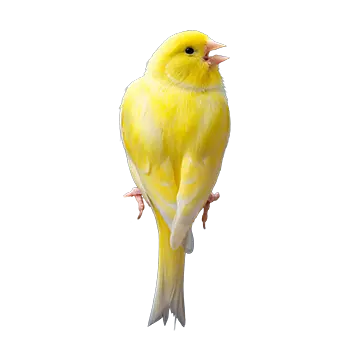

The domestic canary has occupied a prominent place in Western literature and idiomatic language for centuries, and the American Singer Canary inherits that rich cultural backdrop. The phrase canary in a coal mine, derived from the 19th- and early 20th-century mining practice of carrying caged canaries underground to detect toxic gases, has become one of the most widely recognized metaphors in the English language. It signifies an early warning indicator, and its pervasive use in journalism, political commentary, and everyday conversation ensures that the canary remains a familiar cultural reference point even for people who have never kept one.
In literature, canaries have appeared as symbols of confinement, beauty, and fragile domesticity. Susan Glaspell's 1916 play Trifles and its prose adaptation A Jury of Her Peers feature a strangled canary as a pivotal symbol of a woman's suppressed spirit and the isolation of rural life. The bird's silenced song becomes a metaphor for voice and agency, themes that have resonated with literary scholars for over a century. Similarly, canaries appear in the works of writers ranging from Charles Dickens to Maya Angelou, often serving as emblems of hope, captivity, or the tension between the two.
The American Singer Canary, as a breed defined by its song, aligns particularly closely with literary traditions that emphasize the canary's voice as its most meaningful attribute. The breed's free-chopper singing style, which values spontaneity and melodic variety, lends itself to poetic description in ways that more regimented song breeds may not. While few literary works name the American Singer specifically, the qualities that define the breed — a bright, projecting, musically inventive song from a lively and appealing bird — are precisely the qualities that have made the canary such a durable literary figure.
Beyond English-language literature, canaries hold symbolic significance in many cultural traditions. In parts of the Middle East and Central Asia, canary keeping has deep roots, and the birds appear in poetry and proverbs as symbols of beauty, fidelity, and the pleasures of domestic life. The global resonance of the canary as a cultural symbol ensures that the American Singer, as one of the most accessible and popular canary breeds, benefits from and contributes to a literary and linguistic heritage that spans centuries and continents.