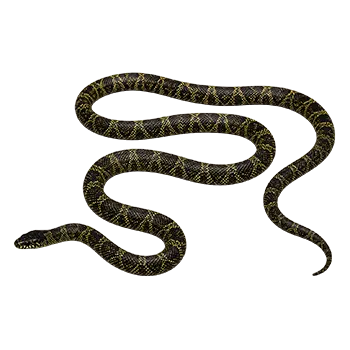

Selecting the right enclosure for a Desert Kingsnake involves balancing the animal's spatial requirements with the practical considerations of temperature control, security, and long-term maintenance. An adult Desert Kingsnake in the three-to-four-foot range requires a minimum enclosure footprint of thirty-six inches long by eighteen inches deep by twelve to eighteen inches tall. A forty-gallon breeder-style glass terrarium meets this minimum, but many experienced keepers recommend upgrading to a four-foot-long enclosure when space permits, as the additional floor area allows for a more effective thermal gradient and more naturalistic habitat design.
Glass terrariums with screen tops are the most widely available and affordable enclosure option for kingsnakes. They offer excellent visibility, are easy to clean, and accommodate a wide range of heating and lighting equipment designed to mount on or above screen lids. However, glass terrariums have significant drawbacks for a desert-adapted species: screen tops allow heat and humidity to escape rapidly, making it more difficult to maintain stable environmental parameters. Keepers using glass enclosures often cover a portion of the screen lid with aluminum foil, a custom acrylic panel, or a commercially manufactured screen cover to retain heat without completely eliminating ventilation.
PVC and molded plastic enclosures have become the preferred housing choice among serious kingsnake keepers for several compelling reasons. These enclosures are typically front-opening, which reduces the overhead approach that can startle snakes and trigger a defensive response. PVC panels provide superior insulation compared to glass, maintaining temperature gradients with less energy expenditure and greater consistency. They are also lighter than glass, stackable for multi-animal collections, and available in a wide range of standard sizes that suit Desert Kingsnakes at every life stage. The primary disadvantage is that PVC enclosures cost more than comparable glass terrariums, though the improved performance and longevity typically justify the investment.
Wood and melamine enclosures are a viable option for keepers who prefer a custom-built approach. These enclosures excel at heat retention and can be constructed to exact specifications, which is particularly useful for fitting an enclosure into an existing shelving system or furniture arrangement. However, wood absorbs moisture and is vulnerable to bacterial and fungal contamination if not properly sealed with a waterproof coating on all interior surfaces. Any wood enclosure used for a Desert Kingsnake must have every interior surface sealed with a non-toxic, reptile-safe marine-grade sealant or pond liner to prevent water damage and to facilitate thorough disinfection during cleaning.
Security is a non-negotiable priority regardless of enclosure type. Kingsnakes are persistent and remarkably strong escape artists that will exploit any gap, loose-fitting lid, or unsecured access point. Every enclosure must have a locking mechanism — clips, latches, or a sliding lock — that physically prevents the lid or door from being pushed open. A Desert Kingsnake that escapes its enclosure can travel considerable distances within a home and may enter walls, ductwork, or appliances where retrieval is extremely difficult. Testing every potential escape route before introducing the snake to its new enclosure is an essential step in setup.