
Play Style & Drive

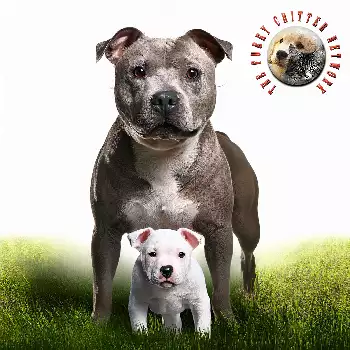
Staffordshire Bull Terriers approach play with an intensity and joy that few breeds can match. They are powerful chewers, enthusiastic tuggers, and tireless retrievers who bring their considerable jaw strength and muscular energy to every play session. Understanding your Stafford's natural play style is essential for choosing toys that will last more than a few minutes and provide the kind of engagement this breed craves.

Most Staffords exhibit a strong grip-and-shake play pattern inherited from their terrier lineage. They latch onto toys with impressive force and shake vigorously, which means lightweight or thinly constructed toys are quickly dismantled. This is not destructive behavior in the negative sense — it is the breed doing exactly what its instincts compel it to do. Selecting toys designed to withstand this style of interaction prevents frustration for you and ensures your dog gets satisfying play experiences.

The Stafford's play drive is closely linked to their bond with their people. While they can entertain themselves with solo enrichment toys, Staffords are at their happiest during interactive play sessions with their owners. Tug-of-war, fetch, and hide-and-seek games engage both their physical energy and their desire for social connection. Plan for at least two dedicated play sessions daily, each lasting 15 to 30 minutes, to keep your Stafford mentally satisfied and physically tired.

It is worth noting that Staffords can become overaroused during intense play, particularly tug games. Teaching a reliable "drop it" or "leave it" command early in your dog's life ensures that play can be interrupted and redirected when energy levels escalate beyond productive engagement. A Stafford that has learned to regulate arousal during play is safer around children and other dogs and can enjoy a wider variety of interactive games.

Interactive & Puzzle Toys

Puzzle toys and interactive feeders are outstanding enrichment tools for Staffordshire Bull Terriers, channeling their intelligence and food motivation into focused problem-solving. This breed is smarter than it often gets credit for, and mental stimulation through puzzle toys can tire a Stafford as effectively as physical exercise. A bored Stafford is a destructive Stafford, so investing in quality puzzle toys pays dividends in household harmony.

Rubber puzzle toys that can be stuffed with food are a staple for most Stafford households. Filling one with a mixture of wet food, kibble, and a smear of dog-safe peanut butter, then freezing it overnight, creates a long-lasting challenge that occupies your dog for 30 minutes or more. The frozen filling forces the dog to work harder and slower, extending the enrichment value and providing a soothing chewing activity that can reduce anxiety during alone time.

Slider puzzles, flip-board games, and treat-dispensing balls add variety to the enrichment rotation. Start with simpler designs and progress to more complex multi-step puzzles as your dog masters each level. Staffords are persistent problem solvers but can become frustrated with puzzles that are too difficult too soon, sometimes resorting to brute force rather than the intended manipulation. Gradually increasing difficulty builds confidence and teaches patience.

Snuffle mats and lick mats offer lower-intensity enrichment options that are excellent for calming a wound-up Stafford or providing a settling activity before bedtime. Scattering kibble across a snuffle mat engages the dog's nose and slows eating, while a lick mat spread with yogurt or pureed pumpkin provides repetitive licking that releases calming endorphins. These tools are particularly useful for dogs with anxiety or those recovering from surgery when vigorous play is restricted.

Chew Toys & Durability

Chew toy selection for a Staffordshire Bull Terrier is not a place to cut corners. This breed's jaw strength is exceptional for its size, and toys rated for "aggressive chewers" or "power chewers" should be your baseline rather than a premium upgrade. Standard rubber toys, plush toys, and rope toys marketed for general use will be destroyed within hours or minutes by most Staffords, creating both a waste of money and a potential safety hazard from ingested materials.

Solid rubber toys designed for extreme chewers are the most reliable daily option. Look for toys made from natural rubber compounds that have some give — hard enough to withstand sustained chewing but with enough flexibility to avoid cracking teeth. Toys that are completely rigid, like antlers or certain nylon bones, can fracture teeth in a dog that chews with the force a Stafford generates. If you can't dent the toy with your thumbnail, it may be too hard for safe unsupervised chewing.

Rubber toys with varying textures — ridges, nubs, and grooves — provide additional oral stimulation and can help maintain dental health by massaging gums and scraping plaque as the dog chews. Multi-textured designs also tend to hold a dog's interest longer than smooth surfaces, as the varied surfaces create different sensations that keep the chewing experience engaging rather than monotonous.

Always inspect chew toys regularly for signs of wear. Even the most durable toys will eventually show gouges, tears, or missing pieces after sustained use by a Stafford. Replace any toy that has been compromised, as chunks of rubber, nylon, or fabric that break free during chewing can cause intestinal blockages if swallowed. Establishing a rotation of three to four chew toys and cycling them every few days helps extend the life of each toy while maintaining novelty.

Fetch & Outdoor Toys

Fetch is a natural fit for Staffordshire Bull Terriers, who combine athleticism with a strong retrieve drive and a genuine desire to interact with their owners. The key to good fetch toys for this breed is selecting items that are large enough not to be swallowed, durable enough to survive repeated gripping and carrying, and visible enough to be tracked during fast-paced outdoor games.

Solid rubber balls designed for power chewers are the safest fetch option. Standard tennis balls are risky for Staffords — the felt covering is abrasive to teeth over time, and the balls are soft enough for a Stafford's jaws to compress and potentially lodge in the throat. Choose balls that are slightly larger than a tennis ball and made from solid rubber or similar high-durability material. Bright colors improve visibility in grass, and some options include handles or ropes that make throwing easier and add a tug element to the retrieve.

Flying discs designed for dogs offer an alternative to ball fetch that adds a jumping and tracking dimension to outdoor play. Choose flexible rubber or fabric discs rather than hard plastic models, which can injure a dog's mouth or teeth during enthusiastic catches. Staffords are surprisingly agile and many take to disc play quickly, though their stocky build means they are more likely to catch on short, accurate throws than the long-distance floaters that leaner breeds excel at.

Tug toys with long handles or rope attachments transition well between fetch and interactive tug-of-war, allowing you to vary the game within a single session. Many Staffords enjoy a hybrid game where they retrieve the toy, then engage in a brief tug exchange before releasing for another throw. This combination provides physical exercise, reinforces training commands like "drop" and "wait," and satisfies the breed's desire for close interactive play with their handler.

Comfort & Companion Toys

Despite their tough exterior, Staffordshire Bull Terriers have a remarkably soft and sentimental side that often manifests in attachment to comfort toys. Many Staffords will adopt a specific plush toy or stuffed animal and carry it around the house, sleep with it, and treat it with surprising gentleness — a stark contrast to how they demolish other toys during active play. Providing a designated comfort toy satisfies this nurturing instinct and can reduce anxiety during stressful situations like thunderstorms, fireworks, or owner absences.

Selecting a durable comfort toy is the challenge. Most plush toys on the market are designed for dogs that mouth gently, and a Stafford's casual carry can quickly escalate into a shredding session. Look for plush toys with reinforced stitching, minimal small parts like plastic eyes or squeakers that can be extracted and swallowed, and machine-washable construction. Some manufacturers produce plush toys with double-layered fabric and internal reinforcement specifically for strong breeds, which offer a much longer functional life.

Squeaker toys hold special appeal for many Staffords, though they also present the greatest destruction risk. If your dog is a squeaker hunter who tears toys apart to extract and destroy the noise-making element, consider toys with squeakers sewn into reinforced internal pockets or toys that use crinkle material instead, which produces a satisfying sound without the choking hazard of a removed squeaker. Some squeaker-free designs use a grunting or growling mechanism that is too large to swallow, offering a safer alternative.

For Staffords that experience separation anxiety, a comfort toy paired with an article of the owner's recently worn clothing can provide measurable calming effects. Placing a worn t-shirt over or around the dog's favorite toy creates a scent association that eases the transition when the dog is left alone. This low-tech approach is often more effective and certainly less expensive than pharmaceutical interventions for mild to moderate separation distress.

DIY & Budget Options

Not every enrichment activity requires a retail purchase. Staffordshire Bull Terriers are easily entertained by simple homemade toys and games that cost little or nothing while providing excellent mental and physical stimulation. DIY enrichment is also a useful supplement to commercial toys, adding variety and novelty to your dog's routine without expanding your budget.

A muffin tin puzzle is one of the simplest and most effective DIY enrichment tools. Place treats or kibble in the cups of a standard muffin tin and cover each cup with a tennis ball. Your Stafford must figure out how to remove the balls to access the food, providing a satisfying problem-solving challenge. As the dog masters this, increase difficulty by using only some cups or adding a second layer of challenge, like placing the tin inside a shallow box.

Frozen enrichment projects are ideal for warm weather and require minimal investment. Freeze a mixture of low-sodium broth, diced vegetables, and kibble in a bundt pan, large bowl, or bucket to create a frozen block that takes extended time to lick, gnaw, and dismantle. For a simpler version, freeze a carrot or apple slices in a block of water. Supervise your dog during frozen enrichment to ensure they do not attempt to swallow large chunks as the block melts.

Cardboard box destruction is a favorite activity for many Staffords and costs nothing beyond saving your delivery boxes. Place treats inside a sealed cardboard box and let your dog tear it apart to find the food. This satisfies the breed's natural shredding instinct in a productive way. Use plain cardboard without heavy ink printing, tape, or staples, and clean up the remnants afterward to prevent ingestion of non-food materials. Layer boxes inside boxes for added complexity as your dog becomes proficient at the basic version.

Old towels and fleece blankets can be repurposed into simple tug toys by braiding strips together and tying knots at the ends. While these homemade rope toys are not as durable as commercial options, they are perfectly functional for supervised tug sessions and can be discarded and replaced at no cost. Do not leave braided fabric toys with your Stafford unsupervised, as the material can be unraveled and ingested in strips that pose a linear foreign body risk.

Always consult a qualified professional before making any health-related decisions. This content is provided for informational reference only and should not replace professional guidance specific to your animal.