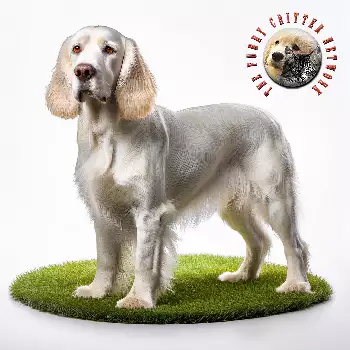

Play Style & Drive

Understanding how a Clumber Spaniel plays is essential to choosing toys that will actually get used rather than ignored in a corner. Unlike high-drive sporting breeds that play with explosive intensity, the Clumber Spaniel approaches play with methodical curiosity and steady engagement. They are thinkers, not sprinters. A Clumber will investigate a new toy carefully, carry it around with a soft mouth, and work at a puzzle feeder with patient determination rather than frantic pawing.

The breed's sporting heritage shows most clearly in their love of carrying and retrieving. Clumber Spaniels were developed to work slowly and steadily through dense cover, flushing game for hunters, and that deliberate search-and-carry instinct translates directly into their play preferences. Toys that can be held, carried, and paraded around the house satisfy a deep behavioral need. Many Clumber owners notice their dogs selecting a favorite toy and transporting it from room to room as they follow the family through their daily routine.

Scent-driven play is where the Clumber Spaniel truly comes alive. Their powerful nose and natural tracking instinct mean that any game involving hidden treats, scent trails, or nose-work challenges will engage them far more deeply than a simple game of fetch. This is a breed that finds more satisfaction in a five-minute scent puzzle than in twenty minutes of ball chasing.

Social play with other dogs tends to be gentle and brief. Clumber Spaniels enjoy companionship but are not rough-and-tumble wrestlers. They prefer side-by-side activities — parallel chewing, shared sniffing excursions — over direct physical play. Toy selection for multi-dog households should account for this preference, providing options for independent enjoyment alongside shared activities.

Interactive & Puzzle Toys

Puzzle toys are arguably the single best enrichment category for Clumber Spaniels. These dogs possess genuine problem-solving ability and the patience to work through multi-step challenges that would frustrate more impulsive breeds. Treat-dispensing puzzles with sliding compartments, lift-up covers, and rotating elements engage the Clumber's mind and satisfy their foraging instinct in a way that simple toys cannot match.

Start with beginner-level puzzles and progress to more complex designs as the dog masters each stage. A Clumber Spaniel that has never encountered a puzzle toy may need encouragement to interact with it initially — placing a high-value treat in an obvious location teaches the concept, and most Clumbers quickly understand the game. Within a few sessions, they will tackle intermediate puzzles with focused determination, using their nose and paws to manipulate components.

Snuffle mats are an excellent low-cost enrichment option for this breed. These fabric mats with deep fleece strips mimic the experience of foraging through ground cover, which resonates perfectly with the Clumber's field-bred instincts. Scattering a portion of the dog's regular kibble through a snuffle mat transforms an ordinary meal into a twenty-minute enrichment session that provides mental stimulation without adding extra calories.

Interactive toys that involve owner participation — tug ropes, flirt poles operated at a gentle pace, and hide-and-seek games with toys or treats — strengthen the bond between Clumber and owner while providing mental engagement. The Clumber Spaniel is a deeply social breed that derives as much satisfaction from shared activity as from the toy itself. Rotating puzzle toys every few days prevents habituation and keeps the challenge fresh.

Chew Toys & Durability

Clumber Spaniels are moderate chewers with strong jaws but a generally soft mouth. They do not typically destroy toys with the ferocity of a terrier or power breed, but their size and jaw strength mean that flimsy toys will not survive long. Medium-durability chew toys — those rated for moderate to strong chewers — hit the right balance, offering enough resistance to be satisfying without being so hard that they risk cracking teeth.

Rubber chew toys in the medium-firm range are a staple for this breed. Hollow designs that can be stuffed with treats or frozen peanut butter provide extended engagement and satisfy both the chewing and foraging instincts simultaneously. The act of working food out of a stuffed toy occupies a Clumber Spaniel for far longer than gnawing on an empty chew, making these excellent tools for crate time or periods when the owner is occupied.

Natural chew options like bully sticks, tendons, and pressed rawhide alternatives offer variety and satisfy the desire for something consumable. Choose appropriately sized pieces — large enough that the dog cannot swallow them whole — and supervise chewing sessions, especially with any product that softens and reduces in size as it is consumed. Discard pieces that become small enough to pose a choking risk.

Avoid extremely hard chew products like antlers, weight-bearing bones, and nylon chews that do not give under pressure. While Clumber Spaniels are not aggressive power chewers, any dog can fracture a tooth on an unyielding surface, and dental repairs are expensive and painful. A good rule of thumb is that if you cannot indent the surface with your thumbnail, the chew is too hard for safe unsupervised use.

Fetch & Outdoor Toys

Fetch is an enjoyable activity for most Clumber Spaniels, though their version of the game looks quite different from a Border Collie's relentless ball obsession. A typical Clumber will retrieve enthusiastically for several throws, then decide they have had enough and either lie down with the toy or wander off to investigate something more interesting. This is perfectly normal breed behavior, not a training failure, and toy selection should match this moderate engagement style.

Soft-bodied retrieving bumpers and canvas dummies appeal to the Clumber's sporting instincts and are gentle on their soft mouth. These toys float, making them excellent for water retrieval if your Clumber enjoys swimming — many do, though not all. Bright colors or high-visibility orange help you locate the bumper in tall grass or underbrush, and the fabric surface is easier for the dog to grip than a slick rubber ball.

Balls remain a classic outdoor toy, and medium to large sizes are appropriate for the Clumber's broad muzzle. Avoid balls small enough to lodge in the throat, and opt for those with some texture or give rather than rock-hard rubber. Balls that bounce unpredictably add an element of surprise that some Clumbers find amusing, though others find it bewildering and lose interest — know your dog's preference.

Outdoor scent games can replace or supplement traditional fetch and often provide superior enrichment for this nose-driven breed. Hiding toys or treats in the yard and encouraging the dog to find them taps into the Clumber Spaniel's natural tracking ability and provides exercise without the joint impact of repetitive sprinting and stopping. This is particularly valuable for older Clumbers or those with orthopedic concerns who benefit from lower-impact activity.

Comfort & Companion Toys

Clumber Spaniels frequently form strong attachments to specific soft toys, carrying them gently from room to room and sleeping with them. This behavior reflects the breed's soft mouth and retriever instinct — they are bred to carry game without damaging it, and a plush toy serves as an acceptable substitute. Selecting durable plush toys with reinforced stitching and minimal small parts reduces the frequency of replacement and the risk of ingested stuffing or squeakers.

Stuffing-free plush toys are a practical compromise for Clumber owners who want to provide soft comfort toys without the mess and safety concern of polyester fill scattered across the living room. These flat-bodied toys retain the soft fabric texture and squeaker elements that dogs enjoy while eliminating the most common destruction hazard. Many Clumber Spaniels seem equally satisfied with stuffed and unstuffed versions, suggesting that the fabric and shape matter more than the filling.

Squeaker toys can be polarizing with Clumber Spaniels. Some find the sound deeply satisfying and will work a squeaker with focused dedication, while others seem indifferent. Multi-squeaker toys — those with several squeakers distributed throughout the body — maintain interest even if one fails, and the variation in sound location adds a layer of engagement. Be aware that the breed's patient, methodical chewing style means they will eventually locate and extract a squeaker, so supervision is appropriate.

For puppies and newly adopted Clumber Spaniels, a soft toy combined with a familiar scent — a worn t-shirt or a blanket from their previous environment — can ease the transition to a new home. The toy becomes a portable comfort object that the dog associates with safety and familiarity. This simple strategy significantly reduces anxiety-related behaviors during the adjustment period.

DIY & Budget Options

Effective enrichment for a Clumber Spaniel does not require expensive specialty products. Many of the best activities use household items and a little creativity. A muffin tin with tennis balls placed over treats in each cup creates an instant puzzle feeder. A cardboard box filled with crumpled paper and scattered kibble becomes a foraging challenge. A towel with treats rolled inside provides a satisfying unrolling exercise that engages the nose and paws.

Frozen enrichment is another budget-friendly approach that delivers extended engagement. Freezing a mixture of plain yogurt, mashed banana, and kibble in a silicone mold or inside a hollow rubber toy creates a long-lasting treat that keeps a Clumber occupied for twenty to thirty minutes. Frozen broth cubes with small treats suspended inside offer a similar time-release reward. These frozen options have the added benefit of being soothing for teething puppies and cooling during warm weather.

DIY scent trails require nothing more than a handful of treats and an outdoor space. Dragging a treat-scented cloth along a path through the yard and placing rewards at intervals creates a tracking exercise that taps directly into the Clumber Spaniel's field instincts. Increasing the complexity of the trail over time — adding turns, crossing back over the trail, varying the treats — keeps the challenge proportional to the dog's growing skill.

Rotating toys is the single most cost-effective enrichment strategy available. Rather than leaving all toys accessible at once, keep half the collection stored away and swap the available selection every few days. Toys that have been out of sight for a week feel new again, rekindling interest without any additional expense. This approach is particularly effective with Clumber Spaniels, whose methodical nature means they tend to fixate on one or two favorites while ignoring the rest of a large collection.

Always consult a qualified professional before making any health-related decisions. This content is provided for informational reference only and should not replace professional guidance specific to your animal.