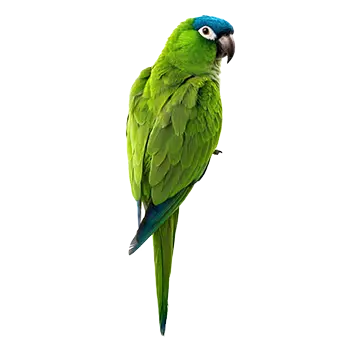

Play and Enrichment Needs

Blue-Crowned Conures are among the more intellectually engaged conure species, combining the physical energy typical of Aratinga-group parrots with a problem-solving curiosity that demands consistent mental stimulation. In the wild, these birds spend the majority of their waking hours foraging, socializing, and exploring their environment, activities that engage both body and mind in ways that a bare cage with a single perch and food dish cannot begin to approximate. Without adequate enrichment, captive Blue-Crowned Conures reliably develop behavioral problems including feather destructive behavior, excessive screaming, stereotypic movements, and social withdrawal.

The goal of an enrichment program is not simply to fill the cage with objects but to create an environment that encourages the bird to make choices, solve problems, and engage in species-appropriate behaviors throughout the day. A well-enriched cage provides multiple types of stimulation simultaneously: textural variety through different materials, cognitive challenge through foraging and puzzle devices, physical engagement through climbing and swinging structures, and sensory stimulation through items that produce sound, movement, or color variation when manipulated.

Blue-Crowned Conures display distinct individual preferences that emerge over time and should inform toy selection. Some individuals are aggressive chewers who will demolish a wooden toy in hours, while others prefer manipulative play, spending extended periods working locks, untying knots, or threading objects through openings. Observing which types of toys a bird gravitates toward and which it ignores helps refine purchasing decisions and ensures that enrichment spending produces genuine engagement rather than cage clutter.

Enrichment is not a substitute for social interaction. Blue-Crowned Conures are deeply social birds that form strong bonds with their human companions, and no toy can replace the stimulation provided by direct interaction, training sessions, and out-of-cage time. The best enrichment programs integrate toys, foraging, and social time into a daily rhythm that keeps the bird engaged during both supervised and unsupervised periods.

Chewing and Foraging Toys

Chewing is a fundamental behavioral need for Blue-Crowned Conures, serving both beak maintenance and psychological satisfaction. In the wild, these birds spend considerable time stripping bark, breaking open seed pods, and gnawing on branches, activities that keep the beak naturally trimmed and provide an outlet for the restless energy characteristic of the species. Captive birds deprived of appropriate chewing opportunities will redirect this drive toward cage bars, perches, furniture, or their own feathers, making a reliable supply of chew toys one of the most important investments an owner can make.

Wood-based chew toys are the backbone of most conure enrichment programs. Softwoods such as pine, balsa, and yucca provide satisfying destruction that a medium-sized conure can accomplish in a reasonable timeframe, while harder woods like birch and manzanita offer longer-lasting chewing that exercises the jaw muscles more intensively. The best chew toys combine multiple wood types and textures, often threaded on stainless steel or vegetable-tanned leather strings with wooden beads, blocks, and shaped pieces of varying sizes. Toys that incorporate dyed wood using bird-safe vegetable dyes add visual interest without introducing chemical hazards.

Foraging toys transform feeding from a passive activity into an engaging problem-solving exercise. At their simplest, foraging toys are containers or wrappings that require the bird to work to access hidden food. Stainless steel foraging cups with movable lids, acrylic puzzle boxes with sliding panels, and natural materials like palm leaf bundles stuffed with treats all serve this purpose. The difficulty level should be calibrated to the individual bird's experience, starting with simple foraging challenges and gradually increasing complexity as the bird develops its skills. A bird that has never encountered a foraging device may need to see treats partially visible and easily accessible before it understands the concept.

Shredding toys occupy a space between pure chewing and foraging that appeals strongly to many Blue-Crowned Conures. These toys typically feature palm fronds, corn husks, coconut fiber, or paper strips that the bird can systematically disassemble. The appeal lies in the process rather than the end result, and shredding toys are often among the most intensively used items in a well-stocked cage. Because they are designed to be destroyed, shredding toys should be viewed as consumable enrichment rather than durable goods, and budgeting for regular replacement is part of responsible conure ownership.

Puzzle and Interactive Toys

Puzzle toys engage the cognitive abilities that make Blue-Crowned Conures such compelling companions. These devices require the bird to perform a sequence of actions, manipulate mechanisms, or develop strategies to achieve a goal, usually accessing a food reward hidden inside. Acrylic puzzle boxes with sliding drawers, rotating compartments, or stacked layers offer escalating difficulty levels that can challenge a conure for weeks before the solution becomes routine. Once a puzzle is mastered, it still provides value as a familiar foraging station, but rotating it out for a new challenge and reintroducing it later preserves its novelty.

Mechanical toys with moving parts capture the attention of conures drawn to manipulation and cause-and-effect relationships. Toys with wheels that spin, levers that move, bells that ring when struck, and beads that slide along tracks all provide interactive feedback that rewards engagement. The most effective mechanical toys are those where the bird's actions produce a clear, immediate result, reinforcing the behavior and encouraging extended play sessions. Stainless steel and hardened plastic components hold up better to beak pressure than softer materials in these applications.

Teaching toys designed to build specific skills, such as color matching, shape sorting, or object retrieval, can provide structured enrichment for particularly intelligent individuals. These activities are typically conducted outside the cage during supervised interaction time and serve the dual purpose of mental stimulation and bonding. Blue-Crowned Conures are capable of learning multi-step sequences and can master tasks like placing rings on a peg in order, sorting colored objects into matching containers, and retrieving specific items on verbal cue. The training process itself provides cognitive enrichment beyond the completed trick.

Noise-making toys deserve mention as a category that polarizes both birds and owners. Blue-Crowned Conures often enjoy toys that produce sound when manipulated, including bells, rattles, and clackers. These toys provide auditory feedback that enriches the sensory environment and can become part of the bird's play repertoire. However, the noise can be considerable, and owners living in apartments or shared housing should consider whether a bell-laden toy will create conflicts. Positioning noisy toys where they can be temporarily removed during quiet hours offers a practical compromise.

Physical Activity Toys

Physical exercise is essential for preventing the obesity, muscle atrophy, and cardiovascular decline that affect sedentary captive birds. Blue-Crowned Conures are naturally agile and enjoy climbing, swinging, and aerial maneuvering, and toys that promote these activities contribute directly to physical fitness. Swings are one of the simplest and most effective activity toys, providing a moving platform that engages balance and core muscles while the bird rides, climbs, or hangs from the structure. Flat-platform swings, ring swings, and trapeze-style swings each offer distinct movement patterns and physical challenges.

Ladders and climbing structures encourage vertical and lateral movement through the cage or play area. Rope ladders with wooden rungs, rigid wooden ladders, and chain-link climbing walls all provide routes that the bird must actively navigate. Positioning these structures to connect different areas of the cage or play gym creates pathways that encourage movement throughout the day rather than sedentary perching at a single preferred spot. Boing-style spiral rope perches function as both perching surfaces and activity toys, bouncing and swaying in response to the bird's movements.

Play gyms and tabletop stands extend the physical activity environment beyond the cage. A well-designed play gym provides a dedicated out-of-cage space with perches at multiple heights, toy attachment points, feeding stations, and often a tray for easy cleanup. For Blue-Crowned Conures, play gyms with ladders, bridges, and swings encourage active exploration rather than passive sitting. The gym should be sturdy enough that the bird's movements do not tip it, and weighted bases or table clamps add stability for more active birds.

Foot toys, small handheld items the bird manipulates with its feet while perched, provide fine motor exercise that complements the gross motor activity of climbing and swinging. Wiffle balls, small wooden blocks, leather knots, plastic chain links, and bamboo finger traps are all popular foot toy formats that Blue-Crowned Conures grasp, chew, toss, and retrieve. These items are inexpensive, easily replaceable, and provide a style of play that differs fundamentally from fixed cage toys, making them a valuable addition to the enrichment arsenal.

DIY Enrichment and Rotation Strategies

Commercial toys form the foundation of most enrichment programs, but homemade and improvised toys extend the variety available to the bird while managing costs. Simple DIY foraging devices can be constructed from common household materials with minimal effort. Paper cups filled with treats and crumpled closed, paper towel rolls stuffed with shredded paper and pellets, and popsicle sticks bundled with paper strips all create disposable foraging challenges that provide genuine engagement. Untreated cardboard boxes with holes cut in the sides become exploration stations when treats are hidden inside, and phone books with treats tucked between pages offer hours of shredding entertainment.

Natural materials gathered from safe, unsprayed sources provide enrichment that closely mimics the bird's wild foraging substrates. Fresh branches from safe tree species, including apple, pear, willow, and elm, offer chewing material, bark stripping opportunities, and leaves to investigate. Pine cones cleaned and dried make excellent foraging platforms when pellets or small seeds are pressed into the scales. Coconut shells with the meat partially removed invite chewing, foraging, and nesting-type behaviors. All natural materials should be sourced from areas free of pesticide application and washed thoroughly before introduction.

Toy rotation is the single most effective strategy for maintaining enrichment value without continuous purchasing. Birds, like humans, habituate to constant stimuli and eventually ignore familiar toys regardless of their initial appeal. Maintaining a collection of fifteen to twenty toys and rotating five to seven into the cage at any given time, with changes every one to two weeks, creates a cycle of novelty that sustains engagement far more effectively than a permanently full cage of stale options. Storing out-of-rotation toys in a clean container and reintroducing them after an absence of several weeks renews their interest value.

Seasonal and occasion-based enrichment adds another dimension of variety. Fresh pumpkin in autumn, safe evergreen branches in winter, edible flowers in spring, and frozen fruit treats in summer connect the bird's environment to the changing world outside. Wrapping treats in tissue paper or placing foraging challenges inside small paper bags creates event-style enrichment that breaks routine and provides a burst of stimulation. The effort required to prepare these special enrichment sessions is modest, and the behavioral engagement they produce is disproportionately high.

Safety Considerations

Toy safety is a non-negotiable priority that requires ongoing attention rather than a one-time purchasing decision. The most common toy-related injuries in Blue-Crowned Conures involve entanglement, ingestion, and mechanical trapping. String, rope fibers, loose threads, and chain links can wrap around toes, legs, or necks with potentially fatal consequences. Every toy should be inspected before introduction and regularly thereafter for fraying rope, loosening components, and developing entanglement hazards. The moment a toy shows significant fiber fraying or structural loosening, it should be removed and replaced.

Material safety extends beyond the obvious exclusion of lead and zinc to encompass a broader range of concerns. Tanned leather, unless specifically vegetable-tanned, may contain chromium and other toxic compounds. Plastic components should be made from food-grade or toy-grade polymers free of phthalates and BPA. Dyed materials should use only vegetable-based or food-grade dyes, and any toy that leaves color residue on wet hands should be viewed with suspicion. Metal components, including chains, quick links, and hooks, should be stainless steel or nickel-plated rather than zinc-plated or galvanized.

Size-appropriate toy selection prevents both injury and frustration. Toys designed for larger parrots may have components heavy enough to injure a conure or hardware large enough for the bird to become trapped inside. Conversely, toys designed for finches or budgies may contain small parts that a conure can break off and swallow, creating impaction or obstruction risks. Selecting toys marketed for medium parrots or conures specifically ensures appropriate sizing, though individual component inspection remains important regardless of labeling.

Jingle bells, a ubiquitous component in commercial bird toys, present a specific hazard that warrants attention. Open-seam jingle bells, where the bell halves are crimped together with a visible gap, can trap a bird's toenail or beak tip. Closed-construction bells or liberty bells without seam gaps are safer alternatives. Similarly, key rings and split rings used as toy attachments can catch and compress a toe. Quick links or purpose-built toy connectors with smooth, secure closures are the preferred attachment hardware for any toy that will be within beak and foot reach.

Always consult a qualified professional before making any health-related decisions. This content is provided for informational reference only and should not replace professional guidance specific to your animal.