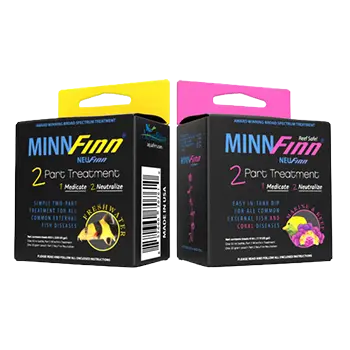
MinnFinn for Fish

MinnFinn - Broad Spectrum Fish Treatment

Quick Facts

💊 Generic Name
Hydrogen Peroxide / Peracetic Acid
🏷️ Brand Names
MinnFinn, MinnFinn Max, MinnFinn Mini
📂 Category
Pond & Aquarium Fish Medications
📁 Subcategory
N/A
🔬 Drug Class
Oxidizing Anti-Parasitic/Antibacterial/Antifungal
🎯 Primary Use
Broad-spectrum treatment of parasitic, bacterial, and fungal infections in pond and aquarium fish
💉 Formulations
Liquid concentrate (two-part system: MinnFinn treatment + NeuFinn neutralizer)
📋 Administration
Pond/aquarium immersion treatment, hospital tank dip, topical application
📝 Prescription Required
No - OTC aquarium/pond medication
✅ Fda Approved
Not FDA regulated (ornamental fish product; not for use in food fish)
AD POSITION
AdSense · In-Content
Slot: 5112328707
728 × 90  |  Responsive

MinnFinn Overview

MinnFinn is a broad-spectrum treatment for external diseases in pond and aquarium fish, manufactured by AquaFinn. It uses a two-part system consisting of the MinnFinn treatment solution and a neutralizer called NeuFinn, which together provide a controlled one-hour treatment that can be halted on command. The active ingredients are hydrogen peroxide and peracetic acid, compounds borrowed from disinfection technology used in the healthcare, medical, and biotechnology industries. Unlike treatments that rely on chemical toxicity, MinnFinn works by breaking apart the cell walls and membranes of microbes through oxidation, making it effective against a broad range of parasites, bacteria, and fungi simultaneously.

The oxidative mechanism is what gives MinnFinn its breadth of coverage. Hydrogen peroxide and peracetic acid release reactive oxygen that rapidly damages pathogen cell membranes, proteins, and genetic material. This oxidative destruction is lethal to disease organisms but occurs at concentrations that fish tolerate due to their more robust cellular defenses and larger body mass. Because the mechanism physically destroys cell structures rather than poisoning organisms chemically, pathogens cannot develop microbial resistance to MinnFinn the way they can to some conventional treatments.

After treatment, MinnFinn decomposes naturally into water, oxygen, and vinegar. The NeuFinn neutralizer converts the residual vinegar into carbon dioxide and water. All of these are naturally occurring substances that are safe for fish, humans, and the environment. This decomposition profile stands in contrast to treatments based on organophosphates, which are known toxins to animals, or malachite green and formalin, both of which are known carcinogens. MinnFinn is safe to discharge directly into open water bodies, and the product from which it was derived is registered with the EPA.

MinnFinn is available in three sizes. MinnFinn Max treats up to 8,000 gallons per kit. MinnFinn Regular treats up to 2,240 gallons per kit. MinnFinn Mini treats up to 110 gallons in a pond setting or 220 gallons in an aquarium setting, making it practical for hobbyist tanks and quarantine dips. All three sizes include the matched NeuFinn neutralizer. MinnFinn won the 2009 Pond Trade Magazine Product of the Year Award.

Uses & Indications

MinnFinn is effective against a wide range of external disease-causing organisms including protozoan parasites, flukes, and many external bacterial and fungal infections. According to the manufacturer, MinnFinn successfully treats eleven categories of conditions: Costia, Trichodina, Chilodonella, Ich (white spot disease), flukes (both gill and skin), mouth rot, fin rot, bacterial gill disease, Columnaris, fungus, and anchor worm. This breadth of coverage exceeds that of most individual treatments on the market. Praziquantel, by comparison, covers only flukes. Organophosphates cover flukes and anchor worm. Malachite green and formalin combinations cover five of the eleven conditions MinnFinn addresses.

External parasitic infections represent a primary indication. Protozoan parasites including Trichodina, Chilodonella, and Costia respond well to MinnFinn's oxidative action, with the reactive oxygen damaging parasite tissues and causing detachment and death. Flukes — both gill flukes (Dactylogyrus) and skin flukes (Gyrodactylus) — are effectively treated, with MinnFinn performing at least as well as praziquantel against these organisms while simultaneously addressing any co-occurring bacterial or fungal infections that praziquantel would miss.

Bacterial infections, particularly those manifesting as ulcers, represent another major application. Koi ulcer disease, caused primarily by Aeromonas and Pseudomonas bacteria, creates open lesions that can progress rapidly. MinnFinn's oxidative action destroys bacteria within and around ulcer sites. Bacterial gill disease, Columnaris, mouth rot, and fin rot all respond to treatment. Field experience from koi keepers and fish farmers has demonstrated visible improvement in bacterial conditions within 24 hours of treatment.

Fungal infections including Saprolegnia and related water molds are destroyed through the same oxidative mechanism. Mixed infections involving bacteria and fungi simultaneously can be addressed with a single treatment protocol, simplifying management of complex disease presentations that would otherwise require multiple medications administered sequentially.

Beyond disease treatment, MinnFinn serves as a quarantine tool for disease prevention. When introducing new fish to an established pond or aquarium, a one-hour MinnFinn dip in a small tank or tub eliminates parasites, bacteria, and fungus on the outside of the fish before they enter the main system. This quick quarantine approach is practical for hobbyists who lack dedicated quarantine systems, which is the majority of pond keepers. Traditional quarantine protocols require separate systems and treatments lasting days to weeks; MinnFinn's one-hour treatment with neutralization makes meaningful disease prevention accessible to any fish keeper with a spare tub.

Dosage & Administration

MinnFinn treatment follows a structured protocol that distinguishes it from most other fish medications. The measured dose is added to the pond or aquarium and allowed to circulate for one hour. During this treatment period, fish are observed for signs of distress and the system must have adequate aeration. At the end of the treatment hour, NeuFinn is added to immediately halt the oxidative action and return the water to safe conditions. No water change is required after neutralization — once NeuFinn is added, the treatment is effectively erased from the system.

The number of treatments required varies by condition. Protozoan infections such as Chilodonella and Trichodina can be eliminated in a single treatment. Costia typically requires two treatments. Fungus and flukes clear in one to three treatments. External bacterial infections like bacterial gill disease are effectively treated in one to two treatments. A minimum interval of 48 hours should be maintained between successive treatments.

Ich (white spot disease) and Cryptocaryon require special attention due to their complex lifecycle. The treatment can only eradicate the free-swimming stages of the parasite — the trophont stage embedded under the fish's epithelium is protected. The manufacturer recommends a minimum of five treatments, each 48 hours apart, to catch successive generations as they emerge. When possible, elevating water temperature to 84-86°F speeds the lifecycle so the trophont remains on the fish for approximately three days before releasing into the water. In reef tanks with temperature-sensitive corals where elevated temperatures are not feasible, one or two additional treatments beyond the minimum five may be necessary. It is worth noting that Ich does not always present as visible white spots — outbreaks without white spots have been observed, particularly in koi.

MinnFinn also works as a topical treatment for localized conditions. For open sores, fungus patches, or lymphocystis, the affected fish does not need a full-tank treatment. Place a small amount of MinnFinn in a glass. If using MinnFinn Max, dilute one part MinnFinn Max to three parts water. Dip a cotton swab or small paintbrush into the solution, squeeze out most of the liquid on the side of the glass, then apply directly to the affected area while holding the fish in a net at the water surface. Significant healing is typically visible within one to two days. This topical method is effective for both fish and invertebrates including corals.

For quarantine dips, place new fish in a small tank or tub with water from the source system. Add MinnFinn Mini at the labeled dose and treat for one hour. Add NeuFinn to neutralize, then transfer the fish to the main system. This eliminates external parasites, bacteria, and fungus acquired during transport and handling stress without requiring a full quarantine setup.

MinnFinn is compatible with salt treatments and can be used in water containing salt. It is not recommended for use in combination with any other treatments. If multiple treatments are indicated, they should be administered sequentially with a minimum 48-hour interval between them.

Side Effects

Fish treated with MinnFinn typically display some behavioral changes during the treatment hour. Increased activity and surface swimming are commonly observed as fish respond to the oxidative environment. Temporary darkening of coloration may occur during treatment, typically resolving after neutralization with NeuFinn. Some fish produce excess mucus as their epithelial tissues mount a protective response; this is normal and resolves within 24 hours of treatment completion.

Biological filtration experiences less disruption from MinnFinn than from most conventional medications. The treatment duration is limited to one hour and the neutralization step halts oxidative activity before extensive bacterial die-off can occur in filter media. Some impact may occur with repeated or extended treatments, and ammonia and nitrite monitoring following treatment is advisable as a precaution.

Aquatic plants may show temporary stress following treatment, though impacts are generally milder than those from malachite green or copper-based treatments. Sensitive plants may display some leaf discoloration or slowed growth, typically recovering within one to two weeks. Floating plants with leaves above the water line are largely unaffected. When plant preservation is a priority, treatment can be conducted in a hospital tank.

Invertebrates face varying degrees of risk depending on species and treatment intensity. MinnFinn is generally gentler on invertebrates than many conventional treatments and can be used on corals and other invertebrates for topical application. Standard immersion treatment concentrations may cause mortality in sensitive species including ornamental shrimp. Snails typically survive but may become inactive during exposure. Valued invertebrates should be removed prior to full-tank treatment when possible.

Water quality may show temporary changes following treatment and neutralization as oxidized organic matter disperses through the water column. Slight cloudiness sometimes develops as dead pathogens and debris are processed by the filtration system, typically clearing within 24 to 48 hours. The neutralization process produces no harmful byproducts — only carbon dioxide and water.

Contraindications

Scaleless fish species including loaches and certain catfish may show increased sensitivity to MinnFinn due to greater absorption of the treatment through unprotected skin. These species may benefit from reduced treatment duration rather than reduced dosing, since the neutralization capability allows precise control of exposure time. When scaleless species must be treated alongside scaled fish, shortening the treatment period and neutralizing early provides the safest approach. Alternatively, sensitive species can be isolated in untreated water while their tankmates receive treatment.

Fish that are already severely compromised by disease may lack the physiological reserves to tolerate treatment stress. Supportive care including optimal water quality and adequate oxygenation should be established before medication is administered to compromised individuals. In extreme cases, beginning with a shortened treatment duration and assessing response before proceeding to full-length treatments is a conservative approach.

Water quality problems should be corrected before treatment. Elevated ammonia or nitrite levels indicate compromised biological filtration that may experience additional stress during treatment. Low dissolved oxygen levels are a particular concern — the oxidative treatment increases fish oxygen demand while temporarily affecting available oxygen. Adequate aeration must be confirmed and maximized before adding MinnFinn.

Ponds or tanks with extremely heavy organic loads present challenges because organic matter consumes the oxidative capacity of the medication before it can effectively address pathogens. Heavy debris accumulation, thick algae growth, or excessive waste should be reduced through cleaning and water changes before treatment to ensure adequate medication remains available for pathogen elimination.

MinnFinn should not be used in combination with any other treatments. If fish have recently undergone treatment with other medications, a recovery interval of at least 48 hours should be allowed before MinnFinn administration. The 48-hour minimum between MinnFinn treatments also applies. MinnFinn is not for use in food fish.

Precautions & Warnings

Adequate aeration is the most critical precaution during MinnFinn treatment. The oxidative process can temporarily reduce available dissolved oxygen while simultaneously increasing fish oxygen demand through metabolic stress. Surface agitation should be maximized before treatment through air stones, waterfalls, fountains, or venturi systems. Fish showing any signs of respiratory distress during treatment — including surface gasping or rapid gill movement — should prompt immediate addition of NeuFinn rather than completion of the treatment hour.

Having NeuFinn pre-measured and ready to add before beginning treatment is essential. The neutralizer provides a safety net — if too much MinnFinn is applied or fish show distress at any point, NeuFinn immediately halts the treatment. Once neutralized, the treatment is effectively removed from the system. This safety mechanism is unique to MinnFinn among fish treatments and should be treated as the primary emergency response for any treatment complication.

Activated carbon should be removed from filtration systems before treatment, as carbon adsorbs components of the treatment solution and reduces efficacy. Carbon can be replaced after treatment and neutralization. UV sterilizers should be turned off during the treatment hour to prevent premature degradation of the active compounds. UV can be restarted after neutralization.

Observation of fish throughout the entire treatment hour is essential. Individual fish may respond differently to the oxidative environment, and compromised individuals may show distress that warrants early neutralization. Treatment should never be left unattended.

Human safety considerations apply when handling MinnFinn. The product has a strong smell and contact should be avoided. Gloves should be worn when measuring and dispensing. Eye protection prevents injury from accidental splashes. The product should be handled in well-ventilated areas and hands washed thoroughly after handling. While MinnFinn's active ingredients are non-toxic in the environmental sense — decomposing to water, oxygen, and vinegar — the concentrated treatment solution is an oxidizer that can irritate skin, eyes, and respiratory membranes on direct contact. Both MinnFinn and NeuFinn should be stored away from children and pets.

Storage & Handling

MinnFinn should be stored in a cool place out of direct sunlight in its original container. Heat accelerates degradation of the oxidative compounds, so storage temperatures below 25°C (77°F) are ideal. The shelf life for MinnFinn Regular is two years from manufacture with proper storage. MinnFinn Max has a shorter shelf life of 18 months due to its higher concentration. Specific expiration dates should be verified on product packaging.

The two-part system requires that both the MinnFinn treatment and the NeuFinn neutralizer remain viable. If either component shows signs of degradation — changes in color or consistency, separation of the solution, or unusual odors — the system should not be used. The treatment and neutralizer are chemically matched; substituting other products for either component is not recommended. Using the provided NeuFinn ensures complete and safe deactivation. Other reducing agents might theoretically work but could create unpredictable byproducts.

Disposal of unused or expired MinnFinn follows standard practices for oxidizing chemicals. Small quantities can be neutralized using NeuFinn before disposal. The neutralized solution — water, carbon dioxide, and trace vinegar — is environmentally benign and safe for standard drain disposal. MinnFinn is safe to discharge directly into open water bodies according to the manufacturer. Empty containers should be rinsed before disposal or recycling.

Related Medications

Praziquantel is the standard treatment for flukes in pond fish but addresses only that single category of parasite. MinnFinn matches or exceeds praziquantel's efficacy against flukes while simultaneously controlling bacteria, fungi, and protozoan parasites that praziquantel cannot address. MinnFinn is also less expensive to apply per treatment and has no negative environmental impact. Praziquantel remains appropriate when flukes are the confirmed sole pathogen present and the keeper prefers a targeted approach.

Organophosphates treat flukes and anchor worm but carry significant safety concerns. These compounds are known toxins to animals and pose handling risks to the applicator. They do not address protozoan parasites, bacteria, or fungi. MinnFinn covers both conditions that organophosphates treat plus nine additional condition categories, without the toxicity profile.

Malachite green and formalin combinations have been a traditional mainstay for treating parasites and fungi in fish. These products address five of the eleven condition categories that MinnFinn covers — Costia, Trichodina, Chilodonella, Ich, and fungus — but cannot treat bacterial infections, flukes, or anchor worm. Both malachite green and formalin are known carcinogens that pose serious health risks to the applicator and can create long-term environmental contamination. Treatment with these products takes days to weeks compared to MinnFinn's one-hour protocol, and they require water changes that MinnFinn does not.

Hydrogen peroxide as a standalone treatment shares part of MinnFinn's oxidative mechanism but lacks the peracetic acid component that broadens MinnFinn's efficacy, and it does not include a matched neutralizer for controlled treatment duration. Potassium permanganate is another oxidative option traditionally used in ponds but requires careful dosing, stains everything it contacts, and must be allowed to naturally degrade rather than being neutralized on command.

Salt treatment provides gentle osmotic stress that can help control some parasites and support healing. MinnFinn is compatible with salt and the two can be used together, unlike most other medications which require exclusive use. Salt alone does not address the breadth of conditions MinnFinn treats but can complement MinnFinn treatment as a supportive measure.