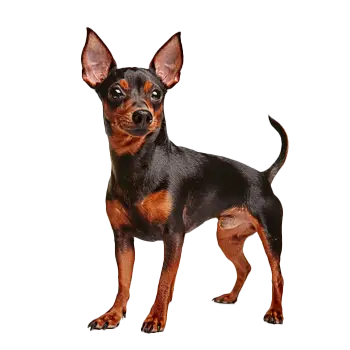

Growth & Physical Development

Miniature Pinschers grow rapidly during the juvenile period, which spans roughly from eight weeks to about ten months of age. Most Min Pins reach their full adult height by eight to ten months, though they may continue to fill out slightly in muscle and chest breadth through their first year. Because this is a toy breed, growth happens on a compressed timeline compared to larger dogs, and the transition from gangly puppy to sleek adult can seem remarkably fast.

During this phase, you will notice the characteristic Min Pin build taking shape. The legs lengthen, the chest deepens, and the distinctive hackney-like gait becomes more pronounced. The ears, whether naturally erect or cropped, settle into their adult position. The coat transitions from the softer puppy fur to the smooth, hard, glossy coat that defines the breed.

Regular weigh-ins help ensure your Min Pin is growing at an appropriate rate. Toy breeds are susceptible to hypoglycemia, particularly during growth spurts when energy demands are high. A puppy that suddenly becomes lethargic, wobbly, or unresponsive may be experiencing a blood sugar drop and needs immediate attention with a small amount of sugar solution followed by a proper meal.

Monitor the development of the legs and joints carefully. Miniature Pinschers are prone to patellar luxation, a condition in which the kneecap slips out of its normal groove. If you notice your puppy skipping on a hind leg, holding a leg up intermittently, or moving with an unusual gait, consult your veterinarian for an orthopedic evaluation.

Nutrition & Diet Transition

Feeding a juvenile Miniature Pinscher requires attention to both the quality and frequency of meals. Puppies in this age range should be fed a high-quality small-breed puppy formula that provides the concentrated calories and nutrients their fast metabolism demands. Small-breed formulations feature smaller kibble sizes appropriate for the Min Pin's tiny mouth and typically have higher caloric density per cup than standard puppy foods.

From eight to twelve weeks, most Min Pin puppies do best with three to four small meals per day. This frequent feeding schedule helps prevent hypoglycemia, which is a genuine risk in toy-breed puppies. By four to six months, you can usually reduce to three meals daily, and by eight to ten months, many Min Pins transition comfortably to twice-daily feeding, which is generally maintained for life.

Portion control is essential even during the growth phase. Miniature Pinschers have hearty appetites that belie their small frames, and overfeeding can lead to rapid weight gain that stresses developing joints and bones. Follow the feeding guidelines on your chosen food as a starting point, but adjust based on your individual puppy's body condition. You should be able to feel the ribs easily without pressing hard, and the puppy should have a visible waist when viewed from above.

Avoid the temptation to supplement with table scraps or excessive treats during training. Many human foods are dangerous for dogs, and even safe foods can unbalance a carefully formulated diet. When using treats for training, choose small, low-calorie options and account for them in the daily caloric intake. Fresh water should be available at all times.

Behavioral Changes

The adolescent Miniature Pinscher is a force of personality packed into a very small body. As puppies enter the juvenile phase, their innate confidence, curiosity, and independence come into full bloom. This is the period when the Min Pin earns its reputation as the "King of Toys," displaying a self-assurance and boldness that can catch unprepared owners off guard. Understanding that these behaviors are deeply rooted in the breed's temperament helps you respond with patience rather than frustration.

Teenage Min Pins frequently test boundaries. A puppy that previously responded reliably to commands may suddenly develop selective hearing, particularly when something more interesting has captured their attention. This is a normal phase of canine adolescence, amplified by the Min Pin's naturally independent streak. Consistency in expectations and routines is your most effective tool during this stage.

Resource guarding can emerge during adolescence in some Miniature Pinschers. Despite their size, they may growl or snap when approached while eating, chewing a toy, or resting in a favorite spot. Address this behavior early with positive reinforcement techniques rather than confrontation, as punitive methods tend to intensify guarding behavior in this breed. Trading games, where you offer something of higher value in exchange for the guarded item, can be very effective.

Separation anxiety is another behavior that may appear or intensify during adolescence. Min Pins bond closely with their people and can become distressed when left alone. Gradually building tolerance to alone time, providing enrichment activities, and avoiding dramatic departures and arrivals all help. If the anxiety is severe, consult a veterinary behaviorist for a comprehensive management plan.

Training Priorities

Training a juvenile Miniature Pinscher is both rewarding and challenging. These dogs are intelligent, quick to learn, and highly motivated, but they are also easily bored by repetition and resistant to heavy-handed methods. Short, upbeat training sessions of five to ten minutes yield far better results than longer, more demanding sessions. Positive reinforcement using treats, play, and praise aligns well with the Min Pin's eager but independent nature.

Housetraining is often the first and most persistent training challenge with Miniature Pinschers. Toy breeds have small bladders and fast metabolisms, which means more frequent trips outside. Crate training, when done properly, is an invaluable housetraining tool. The crate should be just large enough for the puppy to stand, turn around, and lie down. Take the puppy out immediately after meals, naps, and play sessions, and reward successful outdoor elimination generously.

Leash training deserves early and consistent attention. Miniature Pinschers are naturally curious and driven by movement, making them prone to lunging, pulling, and attempting to chase anything that catches their eye. Begin with short walks in low-distraction environments, rewarding loose-leash walking. A harness rather than a collar is often recommended for this breed, as their small tracheas can be vulnerable to pressure from pulling against a collar.

Recall training is perhaps the most critical skill for a Min Pin owner to develop. This breed's prey drive and fearless temperament mean that an off-leash Miniature Pinscher can cover surprising ground in seconds, heedless of danger. Practice recall in enclosed areas with high-value rewards, and gradually increase distractions. Many experienced Min Pin owners advise that a reliable recall may never be foolproof with this breed, and a secure leash or fenced area remains the safest default.

Exercise & Activity

Despite their small stature, juvenile Miniature Pinschers have substantial exercise needs. They are naturally active and energetic dogs that require daily physical and mental stimulation to remain happy and well-behaved. A bored or under-exercised Min Pin will find ways to entertain itself, often through destructive behaviors like chewing furniture, digging at carpet, or barking incessantly.

Daily walks are a cornerstone of exercise for this breed, but the walks should be appropriate for a growing toy-breed puppy. Short, frequent outings of 15 to 20 minutes are preferable to long endurance walks during the juvenile period. Avoid high-impact activities like jumping from heights or running on hard surfaces for extended periods, as the developing joints and growth plates need protection.

Indoor play is equally important for Miniature Pinschers, especially during extreme weather. Puzzle toys, interactive feeders, and games of fetch down a hallway can burn energy and engage the mind simultaneously. Many Min Pins enjoy learning tricks, which serves double duty as both mental stimulation and training reinforcement. Their natural agility also makes them good candidates for introductory agility courses designed for small breeds once they are old enough.

Socialization outings count as exercise too. Trips to pet-friendly stores, calm outdoor patios, or puppy playgroups appropriate for small breeds expose your Min Pin to new sights, sounds, and smells while burning physical and mental energy. Always supervise interactions with larger dogs carefully, as the Min Pin's fearlessness can lead it into confrontations with animals many times its size.

Spay/Neuter Considerations

The decision of when to spay or neuter a Miniature Pinscher is one that should be made in consultation with your veterinarian, taking into account the individual dog's health, development, and your household circumstances. Current veterinary opinion on optimal timing has evolved significantly, and there is no single answer that applies to every dog. For toy breeds like the Min Pin, some veterinarians recommend waiting until the dog is closer to physical maturity, typically around eight to twelve months.

Early spaying or neutering, performed before six months of age, has been common practice for decades and offers certain benefits including elimination of the risk of unwanted litters and reduction of certain reproductive cancers. However, research has raised questions about potential effects on orthopedic development and long-term health when the procedure is performed before growth plate closure, even in small breeds.

For female Miniature Pinschers, spaying before the first heat cycle has traditionally been recommended to minimize the risk of mammary tumors later in life. However, some veterinary professionals now suggest allowing one heat cycle before spaying, arguing that the hormonal exposure supports more complete physical development. Discuss the risks and benefits specific to your dog's situation with your veterinarian.

Behavioral changes following spaying or neutering vary by individual. Some owners report reduced roaming behavior and decreased marking in males, while others notice little change. It is important to understand that spaying or neutering is not a substitute for training and does not resolve behavioral issues rooted in inadequate socialization, lack of exercise, or inconsistent boundaries.

Socialization & Exposure

The critical socialization window for puppies begins to close around 14 to 16 weeks of age, making the early juvenile period an irreplaceable opportunity for building confidence and social skills. For Miniature Pinschers, whose natural temperament already leans toward alertness and suspicion of the unfamiliar, thorough socialization during this window is especially important. A well-socialized Min Pin is confident without being aggressive and alert without being anxious.

Expose your juvenile Min Pin to a wide variety of people, including men, women, children, people wearing hats or uniforms, and people of different sizes and appearances. Each encounter should be positive and pressure-free. Allow the puppy to approach new people at its own pace rather than forcing interactions. Pair new experiences with treats and calm praise to build positive associations.

Environmental exposure is just as important as social exposure. Introduce your puppy to different surfaces such as grass, gravel, metal grates, and tile. Expose them to household sounds like vacuum cleaners, blenders, and doorbells. Take them for car rides, walk them near busy streets, and allow them to observe bicycles, strollers, and skateboards from a safe distance. The goal is to build a broad base of neutral or positive experiences that prevent fear-based reactivity in adulthood.

Interactions with other dogs should be carefully managed. Because Miniature Pinschers are small and can be injured easily, puppy socialization classes specifically for small breeds or well-supervised mixed groups are ideal. Avoid dog parks during the juvenile period, as the unpredictable nature of the environment and the presence of large, boisterous dogs pose too great a risk for a developing toy-breed puppy. Positive early experiences with a few well-mannered dogs are far more valuable than overwhelming exposure to many.

Always consult a qualified professional before making any health-related decisions. This content is provided for informational reference only and should not replace professional guidance specific to your animal.