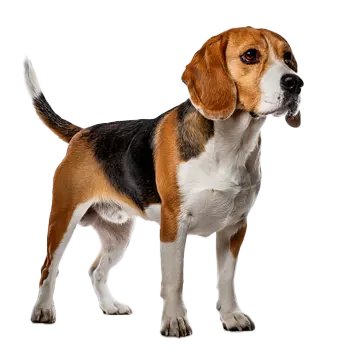

Growth & Physical Development

The juvenile stage for Beagles spans roughly from three months to about 12 to 14 months of age, encompassing some of the most dramatic physical changes in the breed's life. During this period, a Beagle puppy will grow from a small, round bundle into a lean, muscular young dog. Growth rates vary between the two recognized size varieties, with the 13-inch variety typically reaching full height sooner than the 15-inch variety.

Beagle puppies experience growth spurts that may cause temporary awkwardness in their gait and proportions. Their legs may seem too long for their bodies, or their paws may appear oversized relative to their frame. These proportional imbalances are entirely normal and resolve as the puppy fills out. By around nine to ten months, most Beagles have reached their adult height, though they will continue to add muscle and body mass for several more months.

Monitoring weight during this phase is particularly important for Beagles, as the breed is genetically predisposed to weight gain. A healthy juvenile Beagle should have a visible waist when viewed from above and ribs that can be felt but not prominently seen. Your veterinarian can help you track growth against breed-standard curves and adjust feeding accordingly.

Teething is a significant event during the juvenile period. Beagle puppies begin losing their baby teeth around four months of age, with the adult set fully in place by six to seven months. This process can cause discomfort, increased chewing behavior, and occasionally a temporary decrease in appetite. Providing appropriate chew items helps alleviate discomfort and protects your belongings.

Nutrition & Diet Transition

Juvenile Beagles require a nutrient-dense diet that supports their rapid growth without encouraging excessive weight gain. A high-quality puppy food formulated for small to medium breeds provides the appropriate balance of protein, fat, calcium, and phosphorus. Feeding guidelines on packaging are starting points, but individual needs vary based on activity level, metabolism, and growth rate.

Most Beagle puppies do well on three meals per day from eight weeks through about six months of age, transitioning to twice daily feeding thereafter. Scheduled meals rather than free-feeding are strongly recommended for this breed, as Beagles have a well-deserved reputation for overeating when given the opportunity. Measuring portions with a standard cup and maintaining consistent meal times helps establish healthy eating habits.

The transition from puppy food to adult food typically occurs between 12 and 14 months, though your veterinarian may recommend an earlier or later switch depending on your individual dog's development. The changeover should be gradual, mixing increasing proportions of adult food with decreasing amounts of puppy food over seven to ten days to prevent digestive upset.

Treats play an important role during training but should be factored into the daily caloric intake. Many owners inadvertently overfeed by offering generous training treats on top of full meals. Low-calorie treats or small pieces of dog-safe fruits and vegetables work well for training without contributing to weight gain. Fresh water should always be available.

Behavioral Changes

Adolescence brings a wave of behavioral changes that can challenge even experienced Beagle owners. Around six to eight months of age, many Beagles enter a phase commonly described as the teenage rebellion period. Previously learned commands may seem to vanish, recall becomes unreliable, and the puppy's independent hound instincts begin asserting themselves more strongly.

The Beagle's powerful nose becomes a dominant force during adolescence. Scent-driven behaviors intensify significantly, and a juvenile Beagle who catches an interesting smell may become completely deaf to commands. This is not willful disobedience but rather the awakening of deeply ingrained tracking instincts. Understanding this biological drive helps owners approach training with patience rather than frustration.

Vocalization also tends to increase during this period. Beagles are one of the most vocal breeds, and adolescence is when many dogs discover the full range of their vocal repertoire, including the distinctive bay, howls, and alert barking. While some vocalization is natural and breed-appropriate, excessive barking or howling can become a nuisance if not managed early. Identifying triggers and redirecting the behavior is more effective than punishment.

Some juvenile Beagles develop resource guarding behaviors around food, toys, or resting spots. Because of the breed's food motivation, this tendency can be more pronounced than in less food-driven breeds. Early intervention through positive training techniques can prevent these behaviors from becoming entrenched. If guarding behavior escalates, consulting a certified behaviorist is recommended.

Training Priorities

Training a juvenile Beagle requires understanding the breed's unique combination of intelligence, independence, and scent drive. Beagles are smart dogs, but they were bred to follow their noses independently, not to await human instruction. This means that traditional obedience methods that rely on a dog's eagerness to please may need adaptation for this breed.

Recall training is arguably the single most important skill for a Beagle owner to develop, and the juvenile period is the time to invest heavily in it. A Beagle that catches a scent trail will follow it with single-minded determination, and unreliable recall in an unfenced area can lead to a lost dog. Training recall with high-value food rewards, practiced in progressively more distracting environments, builds a foundation for safety throughout the dog's life.

Leash training deserves special attention, as the Beagle's nose-to-ground tracking style creates a natural tendency to pull. Teaching loose-leash walking with frequent rewards for checking in with the handler transforms walks from a battle of wills into cooperative outings. A front-clip harness can assist during the training process without causing the discomfort associated with corrective collars.

Crate training and basic household manners round out the juvenile training priorities. A Beagle who is comfortable in a crate has a safe space for rest and a management tool for times when supervision is not possible. Teaching impulse control around food, doors, and greetings channels the breed's enthusiastic energy into appropriate behavior. Short, positive training sessions of five to ten minutes produce better results than longer sessions with this easily distracted breed.

Consistency across all household members is essential. Beagles are quick to identify which family members enforce rules and which do not, and they will adjust their behavior accordingly. Everyone in the home should follow the same training protocols and reward criteria.

Exercise & Activity

Juvenile Beagles have substantial energy reserves that require daily outlets. As a breed developed for long hours of tracking in the field, Beagles possess endurance that belies their compact size. A young Beagle who does not receive adequate physical and mental stimulation will find ways to burn off energy that are unlikely to align with household rules.

During the early juvenile period, exercise should be moderate and age-appropriate. The general guideline of five minutes of structured exercise per month of age, twice daily, helps protect developing joints and growth plates. A four-month-old Beagle, for example, benefits from two 20-minute sessions rather than a single long outing. Free play in a securely fenced yard provides additional activity without the repetitive stress of forced exercise.

As the Beagle matures toward the end of the juvenile stage, exercise duration and intensity can increase. Longer walks, hiking on moderate terrain, and structured play sessions become appropriate. Scent-based activities are particularly satisfying for this breed. Hiding treats in the yard, introducing basic nosework games, or laying simple scent trails taps into the Beagle's natural abilities and provides mental exhaustion that physical exercise alone cannot achieve.

Always exercise your juvenile Beagle in a securely fenced area or on leash. The breed's tracking instinct can override all training in the presence of a compelling scent, and a loose Beagle can cover surprising distances in a short time. Off-leash exercise should only occur in fully enclosed spaces until recall is extremely reliable, which for many Beagles may be never.

Spay/Neuter Considerations

The decision of when to spay or neuter a Beagle is one that benefits from a thoughtful conversation with your veterinarian. Current research suggests that the optimal timing varies based on the individual dog's sex, size, and overall health. For Beagles, many veterinarians recommend waiting until the dog has reached skeletal maturity, typically between 12 and 18 months, to allow for proper hormonal development of bones and joints.

Early spaying or neutering, performed before six months of age, was once standard practice but is now the subject of ongoing veterinary discussion. Some studies have associated very early sterilization with increased risks of certain orthopedic conditions and some cancers, while other research highlights the benefits of early sterilization in reducing reproductive cancers and preventing unwanted litters. The evidence continues to evolve.

For female Beagles, the timing of spaying relative to heat cycles is a consideration. Some veterinarians recommend spaying before the first heat to minimize mammary cancer risk, while others prefer to wait until after the first heat to allow for more complete physical development. Each approach carries its own set of benefits and trade-offs that should be weighed with professional guidance.

Regardless of timing, spaying and neutering are important components of responsible pet ownership for dogs not intended for a carefully planned breeding program. Unplanned litters contribute to pet overpopulation, and reproductive hormones can drive behaviors such as roaming, marking, and inter-dog aggression that complicate life in a family home.

Socialization & Exposure

The socialization window that opened during the neonatal period reaches a critical phase during the juvenile stage. Between 8 and 16 weeks of age, Beagle puppies are in their primary socialization period, during which positive experiences with new people, animals, environments, and stimuli shape their temperament for life. Missed opportunities during this window can result in fearfulness or reactivity that is difficult to address later.

Exposure should be broad and positive. Introduce your juvenile Beagle to people of various ages, appearances, and mannerisms. Allow supervised interaction with well-vaccinated, temperamentally stable dogs. Expose the puppy to different surfaces, sounds, environments, and situations at a pace that keeps the experience enjoyable rather than overwhelming. The goal is confident curiosity, not flooding.

Beagles are pack-oriented dogs that generally enjoy the company of other dogs, but positive early experiences are essential for building good social skills. Puppy socialization classes provide controlled environments for learning appropriate play styles and canine communication. These classes also offer valuable training practice in a distracting environment, reinforcing commands when competing stimuli are present.

Socialization does not end at 16 weeks. While the primary window closes, ongoing exposure throughout the juvenile period reinforces early lessons and builds resilience. Adolescent Beagles may go through secondary fear periods around six to nine months of age, during which previously confident dogs may suddenly react to familiar stimuli. Handling these periods with patience and gentle encouragement rather than forcing confrontation helps the dog work through the phase without developing lasting anxiety.

Urban and suburban socialization priorities include vehicle traffic, household appliances, delivery personnel, and neighborhood wildlife. For Beagles specifically, learning to manage their vocal response to doorbells, passersby, and small animals is an investment that pays dividends throughout their lives.

Always consult a qualified professional before making any health-related decisions. This content is provided for informational reference only and should not replace professional guidance specific to your animal.