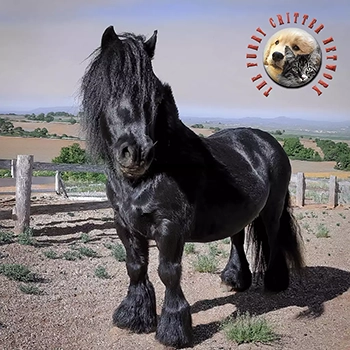
The Dales Pony is the largest of England's five native mountain and moorland breeds, standing ideally between 14 and 14.2 hands at maturity, compared to the 14-hand limit maintained for the closely related Fell Pony. This additional height, combined with substantial bone and muscular development, creates a pony of impressive strength and presence that approaches small horse proportions while retaining essential pony characteristics.
The head is neat and pony-like, broad between bright, alert eyes that convey intelligence and awareness. Pony ears curve slightly inward at the tips, and a long forelock of straight hair falls down the face. The overall expression should suggest alertness, courage, and calm confidence rather than coarseness or heaviness. The throat and jaw are clean-cut and well-defined, connecting to a strong neck of ample length.
The body demonstrates the power and substance that enabled Dales Ponies to carry 240-pound pack loads over rough terrain. Shoulders are well-laid, long, and sloping with well-developed muscles, while withers provide adequate definition without excessive prominence. The body is short-coupled and deep through the chest with well-sprung ribs that provide ample heart and lung room. The back is short and strong.
Hindquarters are deep, long, and powerful, with well-developed second thighs providing the muscular drive that distinguishes Dales movement. The tail is well set, not high, and features abundant long, straight hair reaching to the ground when mature. The powerful hindquarters generate the high, energetic trot for which Dales Ponies are famous.
Legs display the dense, flat bone characteristic of the breed, with measurements of 8 to 9 inches below the knee on mature ponies. Joints are clean with good definition, and the legs feature silky feathering at the fetlocks that is fine rather than coarse. The hooves are famously hard, well-shaped, and blue in color, developed through centuries of work on rocky terrain. Movement is straight, high, and true, with energy and drive from the hocks.
Black predominates among Dales colors, distinguishing the breed visually from many other ponies. Brown, bay, and gray also occur, with roan appearing rarely. White markings are restricted to a star and/or snip on the head and white on the hind fetlocks only. Ponies with more extensive white are downgraded to Section B and cannot produce stallions eligible for licensing.
Riding Suitability
★★★★★
Dales Ponies make excellent riding ponies for adults and older children, easily carrying heavy riders despite their pony size. Their short, strong backs and powerful builds support substantial weight over long distances. Sure-footed and steady, they excel in trail riding, trekking, and competitive distance events while remaining suitable for arena work.
Temperament
★★★★★
The Dales possesses an ideal combination of calm, sensible nature with bold spirit and great courage. They are intelligent and willing workers, displaying the reliable disposition developed through centuries of partnership with lead miners and hill farmers. Alert without being spooky, they approach challenges with confidence rather than anxiety.
Activity Level
★★★★★
Dales Ponies have moderate activity levels appropriate for versatile work. They possess tremendous stamina and iron constitutions that support extended work periods, yet they are not hyperactive or demanding of constant exercise. Regular work satisfies them without requiring intensive programs, making them manageable for various ownership situations.
Space Requirements
★★★★★
As medium-sized ponies evolved to thrive on sparse moorland grazing, Dales require relatively modest space. One to two acres per pony provides adequate grazing with appropriate management. Their hardy constitutions reduce facility requirements, with many thriving year-round outdoors with only basic shelter from extreme weather.
Grooming Requirements
★★★★★
Dales Ponies feature silky feathering at the heels and long, flowing manes and tails that require regular attention to prevent matting. The feathers need cleaning and drying after wet conditions to prevent skin problems. Their predominantly black coats show dust less than lighter colors but still benefit from regular brushing.
Climate Adaptability
★★★★★
Developed in the harsh climate of the Pennine uplands, Dales Ponies demonstrate exceptional hardiness in cold, wet conditions. They thrive outdoors in the worst weather northern England offers, growing thick winter coats that provide natural insulation. They adapt adequately to warmer climates with appropriate shade and water access.
Health Hardiness
★★★★★
Dales Ponies possess iron constitutions and tremendous natural hardiness developed through centuries on sparse upland grazing. They are generally healthy and long-lived, though the breed carries the genetic condition Foal Immunodeficiency Syndrome requiring breeding management. Like all native ponies, they may develop laminitis if overfed.
Feed Management
★★★★★
As classic easy keepers, Dales Ponies evolved to thrive on minimal, poor-quality forage and require careful feeding management to prevent obesity. Most maintain excellent condition on grass hay alone without grain supplementation. Rich pastures and concentrated feeds pose laminitis risks for these metabolically efficient ponies.