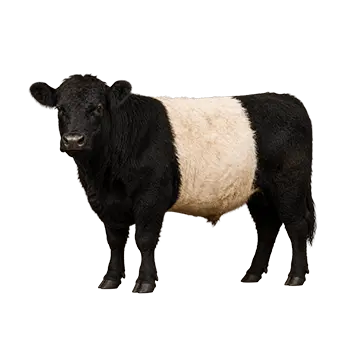
Belted Galloway cattle present one of the most striking and immediately recognizable appearances in the bovine world, dominated by their distinctive white belt encircling the body against solid dark coloring. These medium-sized cattle display compact, hardy builds emphasizing functionality over extreme size or production characteristics. Mature cows typically weigh between 1,000 and 1,500 pounds, while bulls range from 1,500 to 2,000 pounds, creating substantial animals smaller than large commercial breeds but larger than miniature cattle - a moderate size supporting both beef production and easier management.
The most distinctive and defining feature is the white belt - a band of white hair completely encircling the body roughly from shoulder to mid-rib area. This belt should be clearly defined with sharp boundaries between white and the base color, creating the dramatic contrast that makes Belted Galloway unmistakable. Belt width varies between individuals and bloodlines, ranging from narrow bands of a few inches to wide belts extending from behind the shoulders nearly to the hips. Breed standards prefer well-defined, complete belts without breaks or irregular edges, though minor variations occur.
The base body coloring surrounding the white belt comes in three primary colors: black, red (ranging from light red to deep mahogany), and dun (a dilute grayish-brown). Black remains most common and creates the most dramatic contrast with the white belt, producing the classic "Oreo cow" appearance. Red Belted Galloway show solid red coloring with white belts, while dun (sometimes called silver-dun or bluish-gray) represents a dilution gene creating silvery gray cattle with white belts. All three colors are equally acceptable in breed standards, with color preference varying among breeders and markets.
The breed's remarkable double-layered hair coat represents a critical adaptation to Scottish highland weather and contributes significantly to their exceptional cold hardiness. The outer coat consists of long, coarse guard hairs - sometimes reaching 4-6 inches length in winter - that shed rain and snow while protecting the insulating undercoat. Beneath this protective layer lies dense, soft undercoat providing insulation equivalent to additional fat layer. This double coat grows thick for winter and largely sheds during spring, creating dramatic seasonal appearance changes. The heavy coat eliminates the need for expensive shelter even in harsh climates but requires shade and cooling in hot weather.
Belted Galloway are naturally polled (hornless), eliminating dehorning procedures and reducing injury risks to cattle and handlers. The polled characteristic breeds true when pure Belted Galloway are mated, creating consistently hornless offspring. Heads show medium length with slightly dished or straight profiles characteristic of Scottish cattle breeds, carried on strong necks of moderate thickness. Ears are medium-sized and alert, while eyes show calm, intelligent expressions. The overall head appearance suggests a hardy, practical beef breed without excessive refinement.
Body conformation emphasizes moderate frame size with balanced muscling appropriate for efficient beef production on grass-based nutrition. Belted Galloway lack the extreme length of some continental breeds, instead showing compact, well-proportioned builds combining adequate size with maternal functionality and hardiness. Backs are relatively short and straight, shoulders are well-muscled without excessive heaviness, and hindquarters show good width appropriate to their frame size. The compact build helps them conserve heat in cold climates while supporting efficient movement across rough terrain.
Cows display feminine characteristics with adequate udder development, moderate frame, and maternal conformation. Bulls show masculine development with thicker necks, heavier fronts, and more muscular builds while maintaining the moderate frame and polled head. The overall appearance suggests functional, efficient cattle adapted to harsh environments and grass-based production rather than intensive grain feeding and confinement.
Handling Tolerance
★★★★★
Belted Galloway cattle are notably docile and handle well when raised with regular human contact, making them suitable for small farms, beginning cattle producers, and operations requiring manageable livestock. They tolerate routine procedures and close human interaction with minimal stress, creating pleasant working relationships. Their moderate size and calm temperament reduce handling challenges compared to larger or more nervous breeds.
Temperament
★★★★★
These cattle possess calm, gentle temperaments that make them favorites for family farms, sustainable agriculture, and heritage breed conservation. They display steady, reliable dispositions with minimal aggression, adapt well to various management systems, and often become quite personable with regular interaction. Cows demonstrate good maternal behaviors without excessive protectiveness, while bulls remain manageable compared to more aggressive breeds.
Noise Level
★★★★★
Belted Galloway cattle vocalize with typical bovine frequency including bellowing when separated from calves or herd mates, calling during feeding times, and communication sounds within herds. Their noise levels are standard for cattle - acceptable for agricultural and rural areas but louder than smaller livestock. They're generally quiet except when stressed or communicating maternal-calf bonds.
Space Requirements
★★★★★
These medium-sized cattle require moderate space for optimal welfare and performance, with their efficient grazing and moderate frame allowing reasonable stocking rates. Good pasture supports 1-2 acres per cow-calf pair in productive regions, while their ability to thrive on marginal land means they can utilize rougher terrain effectively. Their size creates flexibility between intensive and extensive grazing systems.
Climate Hardiness
★★★★★
Belted Galloway excel in cold hardiness, thriving in conditions that challenge most other breeds through their double-layered hair coat, compact build, and Scottish highland origins. They handle snow, wind, ice, and freezing temperatures with minimal shelter requirements. While adaptable to moderate climates, their heavy coat makes them less suitable for extreme heat and humidity without shade and management adjustments.
Foraging Ability
★★★★★
These cattle demonstrate exceptional foraging ability with strong grazing instincts and capacity to thrive on diverse, marginal vegetation. Belted Galloway efficiently utilize rough pastures, browse woody plants, and maintain condition on forage that would starve less hardy breeds. Their heritage genetics create superior foraging efficiency making them valuable for rough land, sustainable grazing, and low-input systems.
Maintenance Level
★★★★★
Belted Galloway cattle are extremely low-maintenance, demonstrating exceptional hardiness, minimal housing requirements, excellent disease resistance, and easy calving. They thrive with basic care including rough forage, simple shelter, and routine health management without demanding intensive inputs. Their heritage genetics create self-sufficiency and resilience unmatched by specialized commercial breeds, making them ideal for sustainable, low-input operations.
Productivity
★★★★★
These cattle offer moderate productivity with slower growth rates than commercial breeds but exceptional meat quality featuring fine-grained, well-marbled beef commanding premium prices. Cows calve easily, demonstrate excellent mothering, and efficiently convert marginal forage into quality beef calves. While not matching commercial breeds' maximum production, their efficiency on low inputs, unique appearance, and premium beef quality create profitability in appropriate markets.