
Baudet du Poitou Species Guide - Furry Critter Network

Baudet du Poitou

Quick Facts

🔬 Scientific Name
Equus asinus
🥚 Production Type
Mule Production/Conservation/Companion
📊 Care Level
Advanced
😊 Temperament
Calm/Gentle/Intelligent
📏 Adult Size
700-1,000 lbs, 13.1-15.1 hands (53-61 inches)
⏱️ Lifespan
25-30 years
🏠 Space Requirement
1/2 to 1 acre per donkey with shelter
🌡️ Climate Hardiness
Moderate to Cool Climates - requires shelter
🍽️ Diet Type
Herbivore/Grazer
🌍 Origin
Poitou region, France
📐 Size
Large

Baudet du Poitou - Names & Recognition

The Poitou Donkey's official French name is Baudet du Poitou, where 'baudet' means donkey or jackass, and 'Poitou' refers to the historical region in west-central France where the breed developed. In English-speaking countries, they're commonly called Poitou Donkeys or Poitou Asses. The term 'Baudet' specifically refers to breeding jacks, though it's often used generically for the breed regardless of sex or breeding status.

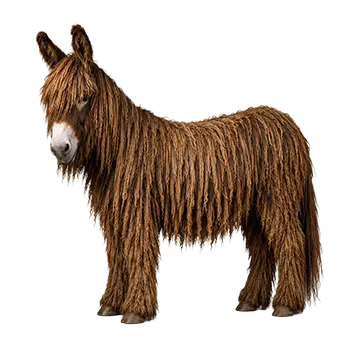
Their distinctive coat has its own terminology. The long, shaggy, corded coat is called a 'cadanette' in French, or 'cadenette.' This unique coat structure distinguishes Poitou Donkeys from all other donkey breeds and is a defining breed characteristic. The cadanette can grow so long it drags on the ground, creating the breed's distinctive woolly, almost rastafarian appearance. Maintenance of this coat requires specialized knowledge and significant commitment.

The breed classification system includes specific terms: jacks (intact males), jennets or jennies (females), and hongres (geldings). Historically, only the finest jacks were used for breeding, with strict selection for size, conformation, and coat quality. The breed came perilously close to extinction in the mid-20th century, falling to fewer than 50 individuals worldwide by the 1970s. Conservation efforts have increased numbers, but Poitou Donkeys remain critically endangered with only around 500-600 pure-bred animals globally, making every individual precious to breed preservation.

Baudet du Poitou Physical Description

The Poitou Donkey's most immediately striking feature is the extraordinary cadanette coat, unlike any other equine. This coat grows in long, rope-like cords or dreadlocks that can reach the ground, sometimes trailing behind the animal. The cords form naturally without human intervention, though they require careful management to prevent matting and maintain coat health. The coat color ranges from dark brown to bay, often with the characteristic lighter belly, muzzle, and eye rings typical of donkeys. This massive coat can add 100 pounds or more to the animal's apparent weight.

Underneath the dramatic coat lies a substantial animal. Poitou jacks must stand at minimum 13.1 hands (53 inches) at the withers to meet breed standards, with many reaching 14.2 to 15.1 hands (58-61 inches). Jennets stand slightly shorter, with a minimum of 12.1 hands. Adults weigh 700 to 1,000 pounds, with exceptional individuals exceeding these figures. The build is powerful and heavily boned, reflecting centuries of selection for mule production and draft capabilities.

The head is large and somewhat heavy, with a straight or slightly convex profile. The ears are distinctively long, thick, and covered in the same shaggy hair as the body, sometimes measuring 14-16 inches in length. Eyes are large, gentle, and expressive, often partially obscured by forelock hair. The face typically shows the classic donkey markings with lighter coloration around the muzzle, eyes, and inside the ears.

Body conformation emphasizes strength and substance. The neck is thick and muscular, flowing into a straight, strong back. The chest is deep and wide, providing heart and lung capacity. The hindquarters are broad and powerful, built for pulling heavy loads. Legs are sturdy with substantial bone, well-suited to their size. The hooves are characteristically upright and somewhat small relative to body size, typical of donkeys. The overall impression is of a powerful, substantial animal made even more imposing by the extraordinary coat that can obscure actual body lines and movement.

Handling Tolerance
Poitou Donkeys are remarkably tolerant and gentle during handling despite their imposing size. Their calm temperaments make routine care manageable for experienced handlers. However, their massive coat requires extensive grooming commitment, and their size demands confident, knowledgeable handling. Early socialization creates cooperative, patient animals who accept the intensive grooming their unique coats require.
Temperament
Exceptionally gentle and calm, Poitou Donkeys possess temperaments that contrast beautifully with their wild appearance. They're patient, affectionate, and remarkably tolerant of handling and interaction. Their intelligence manifests as thoughtful decision-making rather than stubbornness. These gentle giants bond closely with caretakers and show surprising sensitivity and emotional awareness for such large animals.
Noise Level
Poitou Donkeys produce deep, resonant brays that carry long distances. Their vocalizations are loud and distinctive, befitting their size. Jacks tend to be more vocal than jennets, particularly during breeding season. They bray to communicate with companions, greet caretakers, or alert to unusual situations. This vocal nature requires consideration in residential areas where neighbors might be affected.
Space Requirements
Their large size necessitates substantial space, with minimum half-acre per animal recommended, though more is ideal. They need spacious shelters with high clearances, strong fencing, and adequate grazing or exercise areas. Their massive, dragging coats require dry conditions to prevent matting and skin issues, making shelter design critical. Not suitable for small properties or limited acreage.
Climate Hardiness
Poitou Donkeys tolerate cool to moderate climates well but struggle in extreme heat and require exceptional shelter from rain. Their massive coats provide excellent cold protection but make heat management challenging. Extended rain exposure causes serious coat problems, skin issues, and discomfort. They need substantial, well-designed shelter and thrive best in temperate climates similar to their native France.
Foraging Ability
Good foragers who efficiently utilize pasture and browse, though their efficiency means they maintain weight easily and can become obese on rich feed. Their size allows them to reach higher browse than smaller donkeys. However, their long coats collect burrs, seeds, and debris during foraging, requiring extensive grooming afterward. Weight management is essential despite their ability to thrive on modest forage.
Maintenance Level
Extremely high maintenance due to their extraordinary coats, which require daily attention to prevent matting, debris accumulation, and skin problems. Grooming sessions can take hours. They need frequent hoof care, large-animal veterinary access, specialized equipment, and exceptional shelter. Their rarity means finding knowledgeable farriers and veterinarians can be challenging. Only suitable for dedicated, experienced owners with substantial time and resources.
Productivity
Historically bred to produce exceptional Poitevin mules when crossed with Poitevin mares, Poitou jacks remain valuable for mule production. However, their primary value today is conservation of genetic heritage and rare breed preservation. They serve educational roles, participate in breed conservation programs, and function as gentle companions. Limited numbers and breeding restrictions protect the endangered breed.

Temperament

Poitou Donkeys possess remarkably gentle, calm temperaments that seem almost incongruous with their wild, imposing appearance. They're known for exceptional patience and tolerance, rarely displaying aggression even when handled extensively for grooming or veterinary care. Their calm nature makes them suitable for experienced handlers despite their size, and they often surprise people with their gentle, affectionate personalities. Many form deep bonds with their caretakers, showing obvious pleasure in human company and interaction.

Intelligence is evident in their behavior and interactions. Like all donkeys, Poitous are thinking animals who assess situations before acting. This thoughtfulness can manifest as reluctance or refusal when they perceive requests as dangerous or unreasonable. However, with patient, consistent training based on mutual respect, they become willing, cooperative partners. Their memory is exceptional—they remember both positive and negative experiences, locations, routines, and individual people over many years. This intelligence requires handlers to be consistent, fair, and patient in all interactions.

Social needs are significant, as Poitou Donkeys are inherently herd animals who thrive on companionship. They bond deeply with other donkeys, horses, or even human caretakers in the absence of equine companions. Isolation causes stress, anxiety, and behavioral problems. Bonded pairs show strong attachments, calling loudly when separated and displaying obvious distress until reunited. In group situations, they establish social hierarchies but generally coexist peacefully, engaging in mutual grooming and companionable standing.

Curiosity and gentle playfulness characterize much of their behavior. They investigate new objects or situations cautiously but thoroughly, using their sensitive muzzles and keen observation. Younger animals engage in running, bucking, and play-fighting, while adults show more sedate curiosity and occasional playful moments. Their approach to life seems thoughtful and deliberate rather than reactive or impulsive. This calm, measured approach to their environment contributes to their reputation as steady, reliable animals.

Daily behavioral patterns include grazing periods, rumination and rest in preferred locations, social interaction with companions, and periods of standing quietly while monitoring their surroundings. They're more active during cooler morning and evening hours, often resting during midday. Communication includes vocalizations ranging from soft nickering to loud brays, plus extensive body language involving ear position, tail movement, body posture, and facial expressions. Understanding these communication signals helps handlers recognize emotions, needs, and potential problems early.

Enclosure & Husbandry

Housing Poitou Donkeys requires substantial, well-designed facilities appropriate to their size and unique coat requirements. Shelter is absolutely critical—these animals cannot thrive without excellent protection from rain. A three-sided run-in shelter measuring minimum 12x12 feet per animal provides essential weather protection, with 10-12 foot clearances necessary for their height. The shelter must have exceptional drainage to prevent mud accumulation, as their dragging coats collect mud readily. Concrete or well-drained gravel floors work better than dirt. Deep bedding helps keep coats clean and provides comfort.

The coat management implications for housing cannot be overstated. Wet conditions cause the cadanette to mat, collect debris, develop mold, and create serious skin problems. Shelters must keep animals dry during rain, and paddocks need excellent drainage to avoid muddy conditions. Many breeders create extensive covered areas or sacrifice lots with premium footing to protect these valuable coats. The alternative—allowing coats to mat and cutting them off—destroys the breed's defining characteristic and is avoided by serious breeders committed to preservation.

Fencing must be extremely strong and tall to contain these large, powerful animals. Five to six-foot-tall fencing is necessary, with post-and-rail, pipe fencing, or heavy-gauge non-climb fence all suitable options. Barbed wire should be avoided as it can catch and damage their coats in addition to causing injuries. Gates must be extra-strong with secure latches positioned where intelligent donkeys can't manipulate them. All fencing requires regular inspection and maintenance, as these strong animals can damage compromised barriers.

Pasture management balances exercise and grazing needs against coat protection and weight management. Poitou Donkeys are efficient metabolizers who maintain weight easily, meaning rich pasture can lead to obesity. However, turning them out on weedy or burr-filled pasture results in hours of grooming to remove debris from their coats. Many breeders maintain sacrifice paddocks with good footing and limited grazing, providing controlled hay portions and carefully managed pasture access. The coat protection versus natural behavior balance requires thoughtful management.

Predator protection is less critical for adult Poitou Donkeys than smaller livestock, as their size deters most predators. However, foals are vulnerable and require secure fencing and supervision. The greater housing challenge is managing the extensive facilities, exceptional shelter requirements, and coat-protective environment these rare, valuable animals require. Infrastructure investment is substantial and represents a significant barrier to breed ownership.

Water access must be clean, fresh, and always available. Large, sturdy water troughs holding at least 50 gallons ensure adequate supply for these large animals. Automatic waterers should be checked regularly. Winter water heating prevents freezing in cold climates. Clean water is essential not only for health but because dirty water may be refused. Equipment needs include draft-sized halters and leads, specialized grooming tools for managing the cadanette, large feeders, and substantial infrastructure for handling animals this size safely.

Feeding & Nutrition

Poitou Donkey nutrition requires careful management to maintain healthy weight while providing adequate nutrition for their large frames. Despite their size, they're still donkeys with efficient metabolisms that require less feed than horses of comparable weight. A typical adult Poitou needs approximately 1.5-2% of body weight in forage daily—for an 800-pound animal, that's 12-16 pounds of hay. Individual needs vary based on age, activity level, reproductive status, and metabolism.

The diet foundation should be grass hay or mixed grass hay of moderate quality. Rich alfalfa hay can lead to obesity and metabolic issues, though small amounts may supplement pregnant jennets in late gestation, nursing mothers, or growing youngsters. First or second-cut grass hay with some stem material provides appropriate nutrition for most adults. The cadanette coat complicates hay feeding, as loose hay becomes entangled in the cords. Hay nets, racks, or feeders that minimize contact with the coat help maintain cleanliness, though perfect solutions are elusive.

Pasture management balances natural grazing behavior against weight management and coat protection. Lush spring pasture or rich grass can quickly lead to obesity and founder. Many breeders severely limit pasture access, using sacrifice lots or dry lots for the majority of time and providing carefully measured hay portions. Short, controlled grazing periods provide exercise and behavioral enrichment without excessive caloric intake. Poor-quality pasture unsuitable for horses may provide ideal grazing for maintaining healthy weight in Poitous.

Concentrates are rarely necessary for idle adult Poitou Donkeys and often contribute to obesity. When needed for pregnant jennets, nursing mothers, growing animals, or genuinely underweight individuals, equine-appropriate pelleted feeds or specialty donkey feeds should be used in measured quantities. Most mature, non-breeding adults maintain excellent condition on quality hay alone. Any grain feeding should be conservative, as overfeeding is a more common problem than underfeeding in this breed.

Mineral supplementation ensures nutritional completeness. Free-choice equine mineral blocks or loose minerals formulated for donkeys or low-NSC equine diets provide necessary trace minerals often lacking in hay-only diets. Salt should always be available as loose salt or blocks. In selenium-deficient regions, selenium supplementation may be necessary under veterinary guidance. Most Poitous self-regulate mineral intake appropriately when free-choice options are available.

Water consumption typically ranges from 5-10 gallons daily for adults, more during hot weather, lactation, or work. Clean, fresh water must always be available. Poitou Donkeys may refuse water they perceive as dirty or contaminated, so regular cleaning of water sources is essential. Winter heating prevents freezing in cold climates, ensuring adequate hydration year-round. Proper hydration supports the health of their distinctive coats as well as overall wellbeing.

Baudet du Poitou Health & Lifespan

Poitou Donkeys are generally hardy animals with lifespans of 25-30 years when properly cared for, though their unique characteristics create specific health management challenges. Their rare status means finding veterinarians and farriers experienced with the breed can be difficult, requiring owners to educate professionals about breed-specific needs. The extraordinary cadanette coat requires vigilant management to prevent skin problems, parasites, and other coat-related health issues. Their size necessitates large-animal veterinary expertise and appropriate handling facilities. Obesity remains a significant concern despite their size, as their efficient donkey metabolism makes weight gain easy. Proactive preventive care, careful coat management, and prompt attention to problems maintain health in these rare, valuable animals.

The Poitou Donkey's rare status makes proper health management even more critical—every individual represents precious genetic heritage. While their care is more demanding than common breeds, particularly regarding coat management, their robust constitutions reward dedicated care with long, healthy lives. Working with breed organizations, experienced breeders, and educated professionals ensures these rare gentle giants receive the specialized care they deserve.

Common Health Issues

  • Skin problems including dermatitis - Fungal infections, and mite infestations occur under the massive coat if not properly managed. The cadanette traps moisture, debris, and parasites against the skin. Regular thorough grooming, dry housing conditions, and vigilant monitoring prevent serious skin conditions that can develop hidden under the coat.
  • Obesity and associated metabolic problems affect Poitous despite their size - As they retain the efficient donkey metabolism. Excess weight leads to founder, joint stress, insulin resistance, and reduced lifespan. Careful dietary management, regular body condition scoring, and controlled feed intake prevent obesity and its serious consequences.
  • Founder (laminitis) results from obesity - Rich diet, or metabolic issues, causing severe hoof pain and potential permanent lameness. Affected animals stand reluctantly, shift weight constantly, and show characteristic stance. Prevention through weight management is essential, as treatment is difficult and damage may be irreversible in donkeys.
  • Hoof problems including abscesses - White line disease, and contracted heels occur in Poitous whose naturally upright donkey hooves require expert farrier care. Their size can make trimming challenging. Regular professional hoof care every 8-12 weeks, dry footing, and daily hoof inspection maintain healthy hooves.
  • Internal parasites including strongyles and other worms cause poor condition - Colic, and health deterioration. The coat can harbor lice and external parasites difficult to detect. Regular fecal testing determines parasite loads, and targeted deworming manages internal parasites while preventing resistance. External parasite prevention requires diligent grooming.
  • Dental issues develop as molars wear unevenly - Creating sharp points that interfere with chewing and cause mouth pain. Annual dental examinations and floating when necessary ensure proper nutrition and prevent discomfort. Their size and rare status can make finding experienced equine dentists challenging.

Preventive Care & Health Monitoring

  • Establish comprehensive vaccination protocols appropriate for your region - Including tetanus, Eastern and Western equine encephalomyelitis, West Nile virus, and rabies at minimum. Consult with equine veterinarians to develop schedules suited to local disease risks. Maintain detailed records and ensure boosters are administered on schedule.
  • Implement rigorous coat management as essential preventive care. Daily grooming - Regular inspection under the cords, dry housing conditions, and prompt attention to any skin irritation or parasite evidence prevent serious problems from developing hidden under the cadanette. Consider working with experienced Poitou breeders to learn proper coat care.
  • Schedule regular hoof care every 8-12 weeks with farriers experienced with large donkeys and their unique hoof structure - Finding knowledgeable professionals may require networking with breed organizations. Regular trimming prevents crippling problems and maintains comfort and soundness throughout their lives.
  • Conduct annual comprehensive veterinary examinations including dental checks - Body condition scoring, reproductive assessments if breeding, and overall health screening. Semi-annual fecal testing guides parasite management. Given their rare status, educating veterinarians about breed-specific needs may be necessary. Maintain detailed health records including all vaccinations, treatments, and observations.

Handling & Care

Handling Poitou Donkeys safely requires confidence, large-animal experience, and understanding of equine behavior scaled to their substantial size. Despite their gentle temperaments, their mass means any resistance or accident can have serious consequences. Approach calmly and announce your presence, as their coat can obscure their peripheral vision. Most Poitous are remarkably gentle and tolerant when properly socialized, but handlers must be aware, capable, and confident rather than timid around animals this large.

Halter training should begin early, ideally when donkeys are foals. Draft-sized or large horse halters fit adults properly. Strong lead ropes appropriate to their size and strength are essential. Leading usually proceeds smoothly with well-trained animals, though donkeys may occasionally exhibit thoughtful resistance when they perceive requests as problematic. Patience and understanding their perspective works better than force with these intelligent animals. Never try to outmuscle an 800-1000 pound donkey—work with their intelligence instead.

Grooming represents both bonding opportunity and significant time commitment. The cadanette coat requires daily attention to prevent matting, remove debris, check for parasites, and maintain coat and skin health. Grooming sessions can take one to three hours or more depending on coat condition. Use specialized tools including cord separators, gentle detangling sprays, and patient techniques to work through the cords without causing pain or damage. Regular grooming allows thorough skin inspection under the coat, catching problems before they become serious.

Hoof care is critical and requires farriers experienced with large equines, preferably with donkey experience. The naturally upright donkey hoof combined with their size creates specific trimming requirements. Hooves need professional attention every 8-12 weeks to maintain proper angles and prevent problems. Between farrier visits, daily hoof picking removes debris and allows monitoring for thrush, abscesses, or other issues. Teaching donkeys to lift feet on command makes all hoof care safer and easier for everyone involved.

Suitability & Considerations

Poitou Donkeys suit only experienced, deeply committed owners with substantial resources, appropriate facilities, and dedication to breed preservation. Their rare status, demanding coat care, large size, and specific needs make them inappropriate for casual owners or those seeking easy-care livestock. However, for dedicated individuals passionate about rare breed conservation, these gentle giants offer the profound satisfaction of preserving living agricultural heritage while enjoying the companionship of remarkable animals.

Property requirements are substantial. Minimum half-acre per animal with extensive, high-quality shelter is essential. Properties must accommodate large animals, specialized facilities for coat protection, excellent drainage, and strong fencing. The infrastructure investment is considerable, representing a significant barrier to ownership. Urban and suburban properties are generally unsuitable—these animals need rural settings with space and facilities appropriate to their size and needs.

Zoning and legal considerations must be thoroughly researched. Many areas prohibit livestock entirely or restrict large animals. Agricultural zoning is typically required, limiting suitable locations. HOA rules almost universally prohibit livestock. Noise ordinances may be violated by their loud brays. Prospective owners must verify all local regulations, obtain necessary permits, and ensure full compliance before acquiring animals. Legal consequences of violations can include forced removal and significant penalties.

Breed conservation obligations accompany Poitou ownership. With only 500-600 pure-bred animals worldwide, every individual represents precious genetic heritage. Breeders typically work within formal breed registries and conservation programs, following breeding recommendations to maintain genetic diversity. Breeding decisions affect the entire breed's future. Many breeders have waiting lists for animals, and sales may include stipulations about breeding, registration, and care standards. This isn't casual livestock ownership but participation in international conservation efforts.

Financial commitments extend well beyond purchase price (often $5,000-$15,000+ for registered animals) to include facility construction, ongoing feed costs, regular farrier and veterinary care, emergency medical funds, specialized grooming tools and supplies, and potential costs for breeding if pursuing conservation breeding. Their rarity means locating knowledgeable professionals can be challenging and expensive. Prospective owners must honestly assess their ability to provide excellent, lifelong care for these rare animals before making the commitment to preserve this extraordinary breed.